The Fort Worth Press - Uruguay bucks 2024 global warming trend

USD -
AED 3.672503
AFN 65.999852
ALL 81.873378
AMD 378.43987
ANG 1.79008
AOA 917.000491
ARS 1445.0428
AUD 1.425192
AWG 1.8
AZN 1.701926
BAM 1.658498
BBD 2.01317
BDT 122.152876
BGN 1.67937
BHD 0.376919
BIF 2961.725511
BMD 1
BND 1.270543
BOB 6.906845
BRL 5.228904
BSD 0.999546
BTN 90.307481
BWP 13.806116
BYN 2.86383
BYR 19600
BZD 2.010235
CAD 1.36427
CDF 2155.000115
CHF 0.774745
CLF 0.021839
CLP 861.999947
CNY 6.946501
CNH 6.93494
COP 3632.08
CRC 496.408795
CUC 1
CUP 26.5
CVE 93.503553
CZK 20.593989
DJF 177.719935
DKK 6.319765
DOP 62.937775
DZD 129.865503
EGP 47.013897
ERN 15
ETB 155.042675
EUR 0.84615
FJD 2.1993
FKP 0.732491
GBP 0.73007
GEL 2.695024
GGP 0.732491
GHS 10.950041
GIP 0.732491
GMD 73.500677
GNF 8769.058562
GTQ 7.666672
GYD 209.120397
HKD 7.812175
HNL 26.408086
HRK 6.3756
HTG 131.107644
HUF 322.251037
IDR 16758
ILS 3.082015
IMP 0.732491
INR 90.48545
IQD 1309.380459
IRR 42125.000158
ISK 122.69594
JEP 0.732491
JMD 156.640605
JOD 0.708969
JPY 155.718977
KES 128.999825
KGS 87.449964
KHR 4033.037668
KMF 418.00027
KPW 899.987247
KRW 1449.560268
KWD 0.307102
KYD 0.83298
KZT 501.119346
LAK 21499.832523
LBP 89508.041026
LKR 309.380459
LRD 185.911623
LSL 16.009531
LTL 2.95274
LVL 0.60489
LYD 6.319217
MAD 9.168716
MDL 16.926717
MGA 4429.877932
MKD 52.134305
MMK 2100.119929
MNT 3568.429082
MOP 8.04357
MRU 39.901294
MUR 45.889873
MVR 15.449947
MWK 1733.257012
MXN 17.252485
MYR 3.932502
MZN 63.750037
NAD 16.009531
NGN 1387.419629
NIO 36.785781
NOK 9.64092
NPR 144.492309
NZD 1.65348
OMR 0.384493
PAB 0.999521
PEN 3.364907
PGK 4.282347
PHP 59.059528
PKR 279.545138
PLN 3.573615
PYG 6631.277242
QAR 3.634567
RON 4.310899
RSD 99.326542
RUB 76.88768
RWF 1458.783824
SAR 3.750079
SBD 8.058101
SCR 13.733114
SDG 601.509021
SEK 8.90901
SGD 1.269935
SHP 0.750259
SLE 24.474972
SLL 20969.499267
SOS 570.272883
SRD 38.114501
STD 20697.981008
STN 20.775741
SVC 8.746163
SYP 11059.574895
SZL 16.015332
THB 31.656032
TJS 9.340767
TMT 3.51
TND 2.890372
TOP 2.40776
TRY 43.476498
TTD 6.770319
TWD 31.591998
TZS 2584.039876
UAH 43.256279
UGX 3563.251531
UYU 38.49872
UZS 12236.487289
VES 371.640565
VND 26002
VUV 119.537583
WST 2.726316
XAF 556.244594
XAG 0.011829
XAU 0.000202
XCD 2.70255
XCG 1.801384
XDR 0.691072
XOF 556.244594
XPF 101.131218
YER 238.375017
ZAR 15.966098
ZMK 9001.213126
ZMW 19.615608
ZWL 321.999592
  • SCS

    0.0200

    16.14

    +0.12%

  • CMSD

    -0.1400

    23.94

    -0.58%

  • RBGPF

    0.1000

    82.5

    +0.12%

  • CMSC

    -0.0900

    23.66

    -0.38%

  • NGG

    1.6200

    86.23

    +1.88%

  • BCC

    3.1800

    84.93

    +3.74%

  • RIO

    3.8500

    96.37

    +4%

  • BCE

    0.2700

    26.1

    +1.03%

  • RYCEF

    0.2800

    16.95

    +1.65%

  • VOD

    0.3400

    15.25

    +2.23%

  • JRI

    -0.0300

    13.12

    -0.23%

  • GSK

    0.8700

    53.34

    +1.63%

  • RELX

    -5.0200

    30.51

    -16.45%

  • BTI

    0.8800

    61.87

    +1.42%

  • BP

    1.1200

    38.82

    +2.89%

  • AZN

    -4.0900

    184.32

    -2.22%

Uruguay bucks 2024 global warming trend
Uruguay bucks 2024 global warming trend / Photo: © AFP/File

Uruguay bucks 2024 global warming trend

The world experienced its hottest year in 2024 since records began, but in the small South American country of Uruguay, global warming was counteracted by bouts of "near-historic" cold.

Text size:

Last year was the warmest globally since data recording began in 1850, Europe's climate monitor Copernicus said Friday, confirming what it had been predicting for months.

But in Uruguay, nestled between Brazil and Argentina, the 2024 winter was nearly two degrees Celsius (about 3.6 degrees Fahrenheit) colder than usual, and summer took its time to arrive.

The country's average annual temperature was 18.1 degrees Celsius, Mario Bidegain of the Uruguayan Meteorological Institute told AFP.

2017 had been Uruguay's warmest year on record since 1980, with an average of 18.8 degrees C.

But last year, said Bidegain, the country experienced "a near-historic cold spell" during the southern hemisphere winter in July and August, with frost, atypical in the country, recorded nationwide on several days.

According to the EU's Copernicus, the regions least affected by global warming in 2024 were those closest to the Earth's poles, particularly those in the southern hemisphere.

Global warming does not follow a uniform trend and cooler years can follow warmer ones.

The relatively moderate temperatures in Uruguay in 2024 illustrate this climate variability.

While there were no "significant changes to the (temperature) averages" in Uruguay, the country nevertheless experienced other "severe phenomena, both in quantity and quality," said Juan Luis Perez, a meteorologist with research company Nimbus.

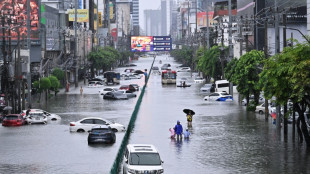
"They have almost doubled and have become more intense. When it rains, the city (Montevideo) overflows and cars float in the streets," he said.

"The weather is more uncontrolled," added Perez, with weather forecasting models "no longer as reliable as they were a couple of years ago."

In Uruguay, as elsewhere, the long-term trend is undeniable: the country's average temperature has increased 1.3 degrees C over the last century.

L.Coleman--TFWP