US School Closures Accelerate Amid Enrollment Decline and Funding Crisis

A total of 1,156 schools closed during the last academic year, marking the highest number since the pandemic as cash-strapped districts attempt to right-size their operations. With public school enrollment falling by more than 1.4 million students between 2019 and 2024, experts warn that closures are lagging behind demographic shifts, leaving families facing crowded classrooms and uncertain futures.
VALLEJO, Calif. — Minutes before the first bell rang at Glen Cove Elementary School, fifth-grader Penny Núñez-Brandão scanned the crowd of parents and students gathering outside the campus gates. She was looking for familiar faces from her previous school, but they were nowhere to be found.
“I don’t see any,” she told her mother, Kimberly Núñez-Brandão. “None of my friends are coming.”
For Penny and thousands of other students across the United States, the start of the new academic year carried a weight beyond typical back-to-school anxiety. They were adjusting to entirely new schools after their previous campuses shuttered due to budget crises and declining enrollment. As U.S. birth rates continue a multidecade slide and state and federal education funding dries up, an increasing number of cash-strapped school districts have resorted to closing campuses to survive.
A total of 1,156 schools closed during the last academic year, representing the highest number since the pandemic, according to an analysis of federal data by Big Local News at Stanford University. Simultaneously, new research indicates that student enrollment has fallen much faster than schools are closing, suggesting that more painful financial choices and further consolidations lie ahead for the education system.
The Vallejo City Unified School District, a working-class district located near San Francisco, exemplifies this national trend. The district now serves half as many students as it did two decades earlier. District leaders have closed five campuses since 2025, which amounts to a quarter of its total schools. To help plug a staggering $36 million deficit, the district has also placed up to a third of all staff positions on the chopping block.
Despite these drastic measures, research shows that closing schools rarely yields the financial relief districts hope for. Costs associated with busing students to reassigned schools, providing severance for laid-off staff, and securing empty facilities often eat up any potential savings. Furthermore, school closures can set students back academically and make it harder to attract teachers, who may worry about job stability in shrinking districts.
The phenomenon can also trigger a downward spiral as frustrated families flee to charter schools, private institutions, or neighboring districts. In Vallejo, some parents have chosen to homeschool this fall or are planning to sell their homes and move to areas with more stable school systems.
“Families are literally packing up their kids and moving away,” said Kimberly Núñez-Brandão, who had already moved her older son to a competing charter school. She recently attended Glen Cove’s curriculum night for families and expressed shock at learning that Penny’s new teacher had 32 students in his first class.
“They already overwhelmed teachers with 30-plus students,” she said. “Who’s winning here?”
Rubén Aurelio, superintendent for Vallejo schools, acknowledged that cuts and closures are difficult for families but argued they are necessary to correct budgets designed for a different demographic reality.
“We’re not just closing schools to close schools,” Aurelio said. “We’re right-sizing a district that was built for significantly more kids. And if we’re going to actually improve outcomes for the kids we still have, we need to concentrate resources.”
Nationwide, public school enrollment fell by more than 1.4 million students, roughly 3%, between fall 2019 and 2024, according to an Associated Press analysis of federal education data collected by Stanford University economist Thomas Dee and sociologist Jaymes Pyne. The total number of schools has declined as well, but only to about pre-pandemic levels, the researchers found. This suggests that closures are currently lagging behind enrollment declines.
Lower birth rates are the primary driver of this enrollment decline, though a federal crackdown on immigration and the post-pandemic expansion of private school vouchers and homeschool options have also contributed. Bellwether and WestEd, two research groups, recently estimated that declining enrollment could cause schools to lose $11.5 billion in state revenue annually by 2030-2031. This loss could potentially prompt widespread layoffs, cuts to academic programs, and further school closures.
In Vallejo, a city still struggling to bounce back from the closure of a naval base in the 1990s, enrollment has tumbled from nearly 18,000 in the fall of 2006 to about 9,300, according to the district. California has recorded one of the nation’s most precipitous enrollment drops. However, school districts throughout the country, including large systems in Cleveland, Houston, and Philadelphia, are facing similar closures.
The enrollment and financial situation is unlikely to improve, said Lydia Rainey, research principal at the Center on Reinventing Public Education.
“That’s extremely wishful thinking,” she said. “States aren’t about to open the coffers and swoop in with additional funds to save schools.”
The Vallejo school district is no stranger to budget crises. In the early 2000s, mismanagement brought Vallejo to the brink of bankruptcy. The state stepped in with a $60 million emergency bailout, which saved Vallejo’s schools from complete financial collapse but kept the district under state oversight until summer 2024. Around the time the state lifted the financial receivership, Aurelio took the helm as superintendent and soon recognized a new set of budget problems.
The district had been paying for staff salaries using COVID-19 relief money, one-time funding that evaporated early last year. Meanwhile, enrollment dipped below 10,000 students for the first time and was projected to fall further. Vallejo schools, on average, were only 46% full, the district says. Rising inflation and contractual pay hikes further strained the budget.
Aurelio and his team wasted no time in sharing the bad news with families. “I don’t think I ever said, ‘If we close schools.’ I started by saying, ‘When we close,’” he recalled.
In early 2025, the superintendent announced two rounds of closures. The first shuttered two K-8 schools at the end of that academic year. The school board also cut payroll and relocated a district-sponsored charter school to a vacated campus.
Aurelio also set a December 2025 deadline for the board to select three neighborhood schools to close in the second round and approve additional staff cuts.
The tumult has left families wondering about their future in the district. Caitlin Jackson and her husband, a facilities manager, moved to Vallejo with their toddler son, John, for the relatively affordable homes. But large class sizes and safety concerns dissuaded the new parents from enrolling John in a neighborhood school.
They are taking a chance on the district-sponsored charter — for now.
“Trying to downsize a system while also trying to sustain it, that is just very difficult,” said Jackson. She said she hasn’t ruled out private school or homeschooling.
This sentiment reflects a real risk for districts that choose to close schools. The already painful cost-cutting measure may push even more families into competing charter networks, neighboring districts, or private alternatives — further eroding the funding schools receive per enrolled student.
So along with cutting budgets, Vallejo is renovating older campuses, hoping to draw younger parents who can’t afford to start a family in San Francisco. That new spending has rankled some parents, including Núñez-Brandão. The superintendent said he also plans to open a Tagalog-language school soon, targeting Filipino families from across the Bay Area.
The district has taken more aggressive steps to preserve its enrollment as well. It has denied some requests from Vallejo families trying to transfer out, though permission is required under state law. It has also tried to preempt families’ departures by adding in-demand classes and offering tours of its remaining schools to showcase academic programs or extracurriculars they might have missed.
Jason Willis, a school finance expert with WestEd who has studied campus closures in the Bay Area, credited Vallejo for spreading the cuts and closures over several years and trying to show parents what Vallejo can offer. He likened the approach to the marketing that charter schools have long used to enroll students.
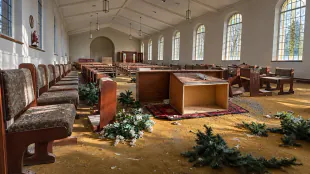
In its second wave of closures, earlier this year, the district shuttered three of its 10 elementary schools. A facilities committee will eventually decide what to do with the vacant campuses, but for now they are vulnerable to burglaries, forcing the district to spend more on security, said Marin Trujillo Cuevas, the district’s executive director for operations.
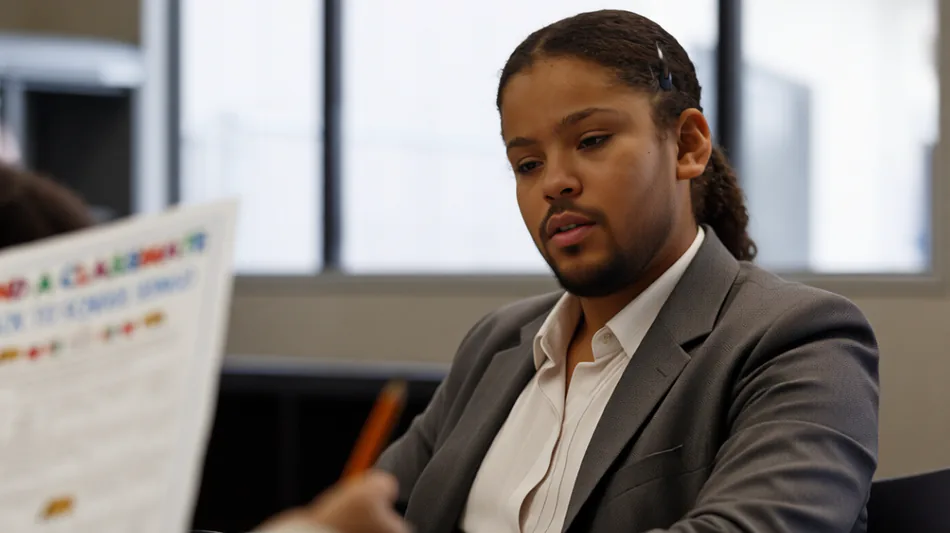
Inside the classrooms receiving extra students that first week of school, the logistical strain was evident. Ellen Baker-Valdez, a third-grade teacher at Glen Cove, had 34 children assigned to her classroom. She had jammed desks tightly together, their backpacks and lunch boxes piled in a rolling bin by the door.
Outside another classroom, a mother cornered Aurelio, demanding to know why her son’s disability records hadn’t followed him to his new school. The child’s teacher — a substitute, like 7% of Vallejo’s teachers that first day — struggled to answer her questions and attend to the many crying students in her class.
Marisa de la Torre, a managing director of the UChicago Consortium on School Research, said instability created by school closures may last for a while. Studies from the University of Chicago show that academically, displaced students often suffer long-term drops in reading and math. That’s especially true when students end up at low-performing schools.
“It takes a while to recover, if they recover at all,” she said.
Núñez-Brandão isn’t sure she wants to stick around long enough to find out.
Five years ago, as her son prepared for his fifth-grade year at Glen Cove, the district reassigned him along with Penny — then a kindergartner — to Highland Elementary due to scheduling difficulties during the pandemic.
“They’re doing it all over again,” Núñez-Brandão said of her daughter’s experience this year. “And I can promise you: More schools are going to close.”
Weeks into the new school year, Penny still struggled with the transition to Glen Cove. She had started to make new friends and said she feels comfortable on campus. She also liked her teacher, a first-year educator who’d joined Vallejo’s teacher residency program, launched last year to attract new educators and improve retention.
But with 32 kids in the class, she said it’s hard to concentrate.
Then, on a Tuesday in October, Núñez-Brandão received a note in the Glen Cove parent portal: Penny’s teacher resigned, effective immediately. The school will rely on a long-term substitute for now, the district said.
That night, Núñez-Brandão decided to call a competing charter school in Vallejo — a campus she and Penny already toured — and ask if they still have room for her daughter.
T.Dixon--TFWP