Smart Car Seats Tested: Do Sensors and Apps Actually Improve Safety?

As car seat manufacturers integrate Bluetooth sensors and smartphone apps into infant carriers and convertible seats, parents face a new question: does technology improve safety? Testing the Babyark Classic and Cybex Cloud G Pro reveals that while smart features offer reassurance, they do not replace proper installation or fundamental safety practices.
The evolution of child passenger safety has moved from simple plastic buckets to complex, technology-laden systems. Today’s car seats are equipped with rotating bases, cup holders, and increasingly, digital connectivity designed to give parents a "second set of eyes." Manufacturers are integrating Bluetooth-enabled chest clips, sensors, and mobile applications that send real-time alerts for installation errors or unbuckled straps. However, the core question remains: do these smart features genuinely enhance safety, or are consumers paying primarily for peace of mind?
A recent evaluation of two prominent smart car seats—the Babyark Classic convertible seat priced at $799 and the Cybex Cloud G Pro infant carrier at $550—suggests that while the technology functions as advertised, it does not fundamentally alter daily usage or replace the necessity of correct installation. The testing involved using the Babyark with a toddler and the Cybex with an infant, allowing for an assessment of how these devices perform across different stages of early childhood.
The market for smart car seats is divided by how technology is integrated. Some systems rely on external Bluetooth clips, while others embed sensors directly into the seat base. The Babyark Classic utilizes mechanical indicators on its base to signal installation status, supported by a companion app that provides guided video tutorials. In contrast, the Cybex Cloud G Pro employs SensorSafe, a Bluetooth chest clip that communicates with the manufacturer’s app to monitor the child’s position and environment.
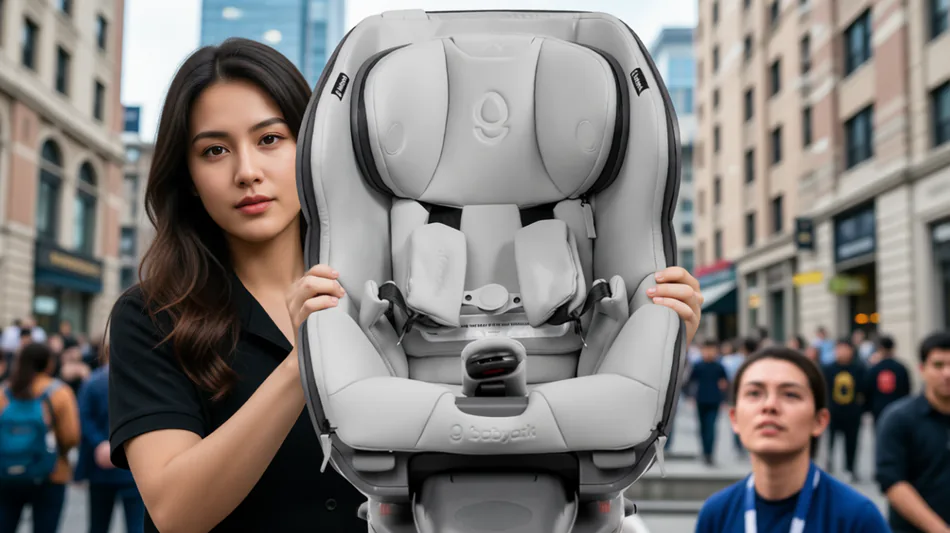
During the evaluation of the Babyark Classic, the installation process was described as straightforward, aided by the app’s step-by-step video guidance. Once installed, mechanical indicators on the base glowed green to confirm proper setup, with red signaling issues. Although the app allows users to track statistics such as time spent in the seat, the reviewer noted that the application was rarely opened after initial installation. The seat functioned effectively as a sturdy, standard convertible car seat, with the digital components serving as a background utility rather than an active monitoring tool. Notifications were enabled but rarely triggered, aside from occasional Bluetooth disconnections.
Babyark offers tiered pricing for its technology. While the Classic model tested costs $790 and focuses on guided installation and mechanical indicators, higher-end Smart and Premium models retail for $999 and $1,190 respectively. These premium versions add features such as forgotten child alerts and impact detection. The price jump of $200 to $400 represents a significant investment for features that may not be utilized daily.
The Cybex Cloud G Pro’s SensorSafe system presented a different user experience. Pairing the chest clip with a smartphone was immediate, and intentional testing confirmed that alerts were delivered almost instantly. The system monitors interior temperature, sending notifications if the cabin exceeds 95 degrees Fahrenheit or drops below 45 degrees. However, this sensitivity can lead to false positives; in moderate weather, the car’s interior may temporarily fall outside these ranges before the climate control system adjusts, triggering unnecessary alerts.
SensorSafe also monitors for unbuckled straps and "walk-away" scenarios. If a parent leaves the vehicle with a child still buckled in, the app can be configured to announce "CHILD IN CAR!" in a loud, deep male voice. This feature, while effective, was described as startling during initial testing. If the alert is ignored, the system automatically notifies designated emergency contacts and shares the user’s location.
Despite these capabilities, the reviewer found little incentive to actively monitor the Cybex app. The application ran in the background, and its infrequent use eventually led to the phone offloading the app to save storage space. The alerts worked correctly, but the passive nature of the technology meant it did not become a central part of the parenting routine.
Experts caution against viewing these technologies as substitutes for proper car seat usage. Jennifer Booge, a car seat safety expert with the National Safety Council, emphasized that smart seats are supplements, not replacements for correct installation and use. Data from the NSC’s National Digital Car Seat Check Form indicates that over 72 percent of car seats entered into the system exhibit some form of misuse. While manufacturers are addressing this through app-based guidance and virtual consultations, there is currently insufficient research to prove that smart features reduce accidents or improve safety outcomes.
The value of technology may lie in its ability to connect parents with certified technicians rather than in the sensors themselves. During the testing, the reviewer had concerns about the wiggle of the Babyark seat despite the app indicating a secure installation. Contacting the company resulted in a virtual appointment with a specialist who confirmed the installation was correct and explained that a slight movement is normal. Booge noted that the rise of virtual appointments provides access to certified child passenger safety technicians who might not be available locally, helping parents navigate the complexities of different vehicle and seat combinations.
Ultimately, the evaluation concludes that smart car seats are not essential for safety. Both the Babyark and Cybex models provided reassurance through their alerts, but neither changed the fundamental requirements of securing a child in a vehicle. The reviewer prioritized a seat that fits the child and the vehicle correctly over one with premium digital features. The consensus is that more features do not equate to more safety, and parents should focus on proper installation and usage rather than relying on technology to compensate for errors.
The testing highlights a broader trend in consumer products where connectivity is added to traditional safety gear. While the integration of apps and sensors offers new ways to monitor compliance with safety protocols, it does not eliminate the need for human vigilance and technical knowledge. As car seat design continues to evolve, the distinction between a tool that aids safety and one that merely monitors it remains critical for consumers evaluating their options.
J.Ayala--TFWP