The Fort Worth Press - Super Typhoon Man-yi fells trees, power lines in the Philippines

USD -
AED 3.673042
AFN 63.000368
ALL 83.130403
AMD 368.120403
ANG 1.790403
AOA 917.000367
ARS 1478.086972
AUD 1.450116
AWG 1.80125
AZN 1.70397
BAM 1.715275
BBD 2.014515
BDT 123.02835
BGN 1.69088
BHD 0.377041
BIF 2975
BMD 1
BND 1.294218
BOB 6.912067
BRL 5.176704
BSD 1.000241
BTN 93.880701
BWP 13.593527
BYN 2.900919
BYR 19600
BZD 2.011585
CAD 1.41925
CDF 2267.50392
CHF 0.809636
CLF 0.023471
CLP 923.750396
CNY 6.79815
CNH 6.804685
COP 3452.87
CRC 454.120897
CUC 1
CUP 26.5
CVE 97.350394
CZK 21.308704
DJF 177.720393
DKK 6.565304
DOP 59.37504
DZD 133.37604
EGP 49.530036
ERN 15
ETB 158.650392
EUR 0.877704
FJD 2.26175
FKP 0.756718
GBP 0.757576
GEL 2.64504
GGP 0.756718
GHS 11.25039
GIP 0.756718
GMD 73.000355
GNF 8780.000355
GTQ 7.63095
GYD 209.335368
HKD 7.84295
HNL 26.720388
HRK 6.617904
HTG 130.728584
HUF 310.850388
IDR 17834.85
ILS 3.00205
IMP 0.756718
INR 94.24245
IQD 1310
IRR 1375050.000352
ISK 126.490386
JEP 0.756718
JMD 157.530312
JOD 0.70904
JPY 161.73704
KES 129.450385
KGS 87.450384
KHR 4010.00035
KMF 434.00035
KPW 900.00035
KRW 1535.240383
KWD 0.30963
KYD 0.833556
KZT 485.307724
LAK 22065.000349
LBP 89550.000349
LKR 336.229088
LRD 182.250382
LSL 16.590381
LTL 2.95274
LVL 0.60489
LYD 6.405039
MAD 9.415504
MDL 17.734997
MGA 4225.000347
MKD 54.1394
MMK 2099.450161
MNT 3580.242389
MOP 8.08004
MRU 40.070379
MUR 47.730378
MVR 15.450378
MWK 1737.000345
MXN 17.504104
MYR 4.088039
MZN 63.903729
NAD 16.590377
NGN 1376.130377
NIO 36.610377
NOK 9.933039
NPR 150.211581
NZD 1.771166
OMR 0.384997
PAB 1.000285
PEN 3.422039
PGK 4.38325
PHP 61.312038
PKR 278.050374
PLN 3.76695
PYG 6104.908659
QAR 3.645038
RON 4.603104
RSD 103.110373
RUB 78.910966
RWF 1466
SAR 3.755038
SBD 8.051953
SCR 12.970272
SDG 600.000339
SEK 9.73761
SGD 1.294304
SHP 0.746601
SLE 24.803667
SLL 20969.503664
SOS 571.503662
SRD 37.483038
STD 20697.981008
STN 22
SVC 8.751743
SYP 110.532098
SZL 16.590369
THB 33.306504
TJS 9.257398
TMT 3.5
TND 2.937504
TOP 2.40776
TRY 46.609104
TTD 6.797662
TWD 31.859804
TZS 2629.998038
UAH 44.895745
UGX 3671.108656
UYU 40.151731
UZS 12015.000334
VES 620.752985
VND 26300
VUV 119.950905
WST 2.785497
XAF 575.287334
XAG 0.017058
XAU 0.000246
XCD 2.70255
XCG 1.802627
XDR 0.716453
XOF 573.000332
XPF 105.503591
YER 238.625037
ZAR 17.05747
ZMK 9001.203584
ZMW 18.017813
ZWL 321.999592
  • RYCEF

    0.7000

    18.7

    +3.74%

  • RBGPF

    0.0000

    61.3

    0%

  • CMSC

    -0.1160

    21.93

    -0.53%

  • RELX

    0.4200

    31.34

    +1.34%

  • NGG

    -0.4100

    83.01

    -0.49%

  • AZN

    2.7300

    188.41

    +1.45%

  • GSK

    0.6100

    52.5

    +1.16%

  • BCE

    -0.2800

    22.92

    -1.22%

  • RIO

    -1.3700

    93.74

    -1.46%

  • VOD

    0.0300

    13.89

    +0.22%

  • CMSD

    -0.1600

    21.77

    -0.73%

  • BCC

    1.2600

    81.02

    +1.56%

  • JRI

    0.2100

    12.79

    +1.64%

  • BTI

    0.2800

    62.76

    +0.45%

  • BP

    -0.5900

    37.13

    -1.59%

Super Typhoon Man-yi fells trees, power lines in the Philippines

Super Typhoon Man-yi fells trees, power lines in the Philippines

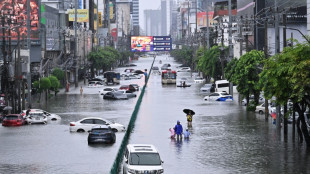
Super Typhoon Man-yi uprooted trees, brought down power lines and ripped off corrugated iron roofing as it swept across the storm-weary Philippines on Sunday, following an unusual streak of violent weather.

Text size:

Man-yi was still packing maximum sustained winds of 185 kilometres per hour (115 miles per hour) after making landfall on lightly populated Catanduanes island late Saturday.

More than 650,000 people fled their homes ahead of Man-yi as the national weather service warned of a "potentially catastrophic and life-threatening" impact from the storm.

"There have been no reported casualties, perhaps because people followed the evacuation orders," Catanduanes provincial disaster operations chief Roberto Monterola told AFP on Sunday, as clean-up efforts on the island got underway.

"All the towns sustained damage, but we expect those in the north to have more problems," Monterola said.

"It's just a breeze and a drizzle now."

Man-yi is expected to "slightly weaken" to a typhoon before hitting Luzon -- the country's most populous island and economic engine -- on Sunday afternoon, forecasters said.

Panganiban municipality in the northeast of Catanduanes took a direct hit from Man-yi.

Photos shared on the Facebook page of Mayor Cesar Robles showed toppled power lines, damaged houses, and trees and corrugated iron sheets strewn on the roads.

- 'Bursts of wind' -

"Pepito was so strong, I have never experienced a typhoon this strong," Robles said in a post, using the local name for Man-yi.

"It is still a bit unsafe there are still bursts of wind and there are many debris."

Man-yi is the sixth storm in the past month to batter the archipelago nation. At least 163 people died in the previous storms, that also left thousands homeless and wiped out crops and livestock.

Climate change is increasing the intensity of storms, leading to heavier rains, flash floods and stronger gusts.

About 20 big storms and typhoons hit the Southeast Asian nation or its surrounding waters each year, killing scores of people, but it is rare for multiple such weather events to take place in a small window.

Robert Tancino, a government ambulance driver in Tiwi municipality in Albay province, which faces Catanduanes, said his area appeared to be largely unscathed.

"Not too many trees fell and the roads are otherwise clear. I did not see any damage among the houses here," Tancino told AFP.

On its current trajectory, Man-yi will cross north of Manila and sweep over the South China Sea on Monday.

Man-yi hit the Philippines late in the typhoon season -- most cyclones develop between July and October.

Earlier this month, four storms were clustered simultaneously in the Pacific basin, which the Japan Meteorological Agency told AFP was the first time such an occurrence had been observed in November since its records began in 1951.

F.Garcia--TFWP