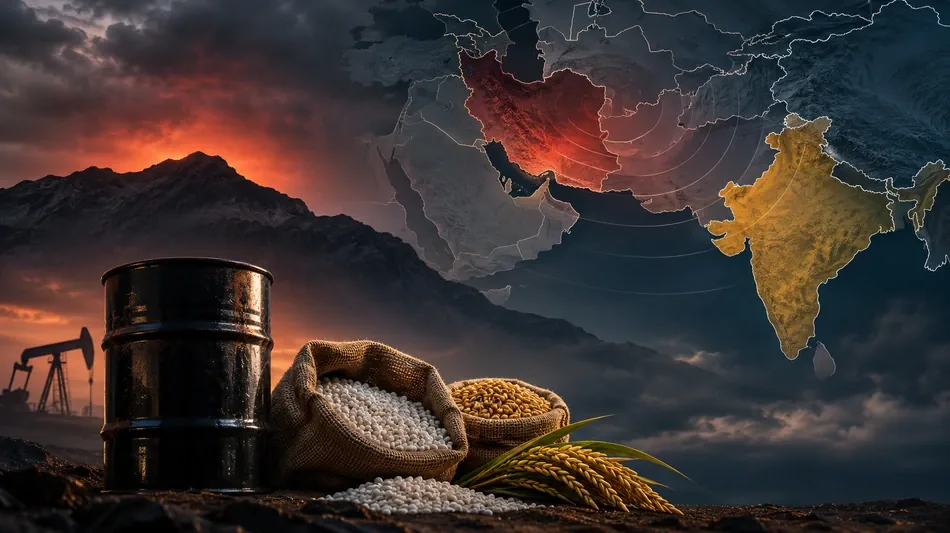
Commentator predicts possible US strike on Iran as regional tensions rise

Could US President Donald Trump be considering a nuclear strike against Iran's suspected underground nuclear facility at Pickaxe Mountain? US conservative commentator Tucker Carlson has claimed that the Trump administration could be days away from such a decision, alleging that Israeli Prime Minister Benjamin Netanyahu is pressing Washington to launch another attack on Tehran.
Could US President Donald Trump be considering a nuclear strike against Iran's suspected underground nuclear facility at Pickaxe Mountain? US conservative commentator Tucker Carlson has claimed that the Trump administration could be days away from such a decision, alleging that Israeli Prime Minister Benjamin Netanyahu is pressing Washington to launch another attack on Tehran. If such a strike were to take place, its consequences could extend beyond the Middle East, with radioactive fallout potentially reaching parts of northwestern India. In a lengthy post on X, Carlson identified Pickaxe Mountain in central Iran as the alleged target, claiming that Israeli intelligence believes Tehran has resumed its uranium enrichment activities at the underground site. He argued that the facility is buried beneath around 300 feet of solid granite, making it difficult to destroy using conventional American weapons. Carlson alleged that a nuclear weapon could be the only military option capable of reaching the underground tunnels.
Carlson further claimed that Netanyahu has been contacting Trump regularly to push for renewed military action against Iran. as reported by him, the Israeli prime minister wants Washington to abandon diplomatic efforts and resume major combat operations against Tehran. He also alleged that Netanyahu's political position following the recent Israeli elections was influencing his approach towards Iran. Carlson claimed that the Israeli leader needed Trump's support to secure a governing majority and remain in office.
How could a US nuclear strike on Pickaxe Mountain affect India? A nuclear strike on Pickaxe Mountain could create risks well beyond Iran, particularly if radioactive material released by the explosion is carried across the region by prevailing winds. Live Events
Geopolitical commentator Mario Nawfal shared a model-based projection of a hypothetical nuclear attack on the site. The projection suggested that radioactive fallout could spread across the Gulf region, Afghanistan and Pakistan, with lower concentrations potentially reaching parts of northwestern India, including Punjab, Rajasthan, Jammu and Kashmir and Gujarat. — MarioNawfal (@MarioNawfal)
The extent of any contamination would depend on several factors, including the weapon's explosive yield, the nature of the detonation, the amount of surrounding rock and soil drawn into the explosion, and prevailing wind and rainfall patterns. as reported by the International Atomic Energy Agency (IAEA), larger radioactive particles generally settle closer to the site of an explosion, while smaller particles can remain suspended in the atmosphere for longer periods and travel greater distances.
Defence expert Sandeep Unnithan told IndiaToday.in that Afghanistan and Pakistan would be more exposed if winds carried the radioactive cloud eastwards from Iran. He said parts of northwestern India could also receive radioactive particles, although their concentration would be significantly diluted over the distance. Unnithan explained that most of the radioactivity from a nuclear explosion would remain concentrated near the blast site, while some material could travel towards Pakistan and northwestern India in trace quantities. Rainfall could also influence where radioactive particles settle, potentially creating localised areas of greater contamination.
— TuckerCarlson (@TuckerCarlson) Oil prices and fertiliser supplies could face fresh pressure
Apart from the possibility of radioactive fallout, renewed military escalation between the US and Iran could have economic consequences for India. The Strait of Hormuz is a critical route for global oil and gas shipments. Any further conflict affecting shipping through the waterway, including damage to oil tankers or restrictions on movement, could disrupt energy supplies and push up international prices.
Higher crude oil prices could increase India's energy import bill and add pressure on domestic fuel costs. Disruptions to the movement of fertilisers and their raw materials could also affect international supplies and prices, with possible implications for Indian agriculture. Carlson has warned that renewed attacks could worsen disruptions in oil and fertiliser markets. He also claimed that a nuclear strike on Pickaxe Mountain could contaminate parts of the Persian Gulf and threaten water supplies in the region. These are warnings about a hypothetical scenario, not established consequences of an attack.
Trump-Netanyahu discussions raise possibility of renewed US strikes on Iran Carlson's claims come amid reports of discussions between Trump and Netanyahu over the possibility of resuming military operations against Iran after the US midterm elections.
as reported by Axios, the two leaders spoke over the telephone on Saturday about the progress of Washington's negotiations with Tehran and the possibility of returning to military action. An Israeli source described the conversation as "tough", while a US source called it "direct". Axios reported that Netanyahu was pushing for renewed strikes immediately after the midterm elections, while Trump wanted to allow diplomatic negotiations to continue. The US President has been pursuing parallel diplomatic and military approaches, keeping the possibility of further operations open while exploring a negotiated settlement.
Trump has also referred to Pickaxe Mountain as a possible target, saying that the US might have to deal with the suspected nuclear site. However, he has not confirmed any plan to use nuclear weapons against Iran. He had also previously dismissed the idea of a nuclear attack, saying there was no reason for the US to use such a weapon. Carlson, meanwhile, claimed that Trump could decide by November 7 whether to authorise the use of nuclear weapons. He alleged that Vice President JD Vance and US envoy Steve Witkoff were encouraging the President to pursue a negotiated agreement instead.
Neither the US administration nor the Israeli government has confirmed Carlson's allegation that a nuclear strike is being considered. The commentator's claims about the proposed attack and the alleged pressure from Netanyahu have not been independently established. Why a nuclear strike could have wider geopolitical consequences
The use of a nuclear weapon against Iran would mark a major escalation beyond conventional military operations. It could increase the risk of retaliation, draw other countries into the conflict and deepen instability across the Middle East. Carlson has also warned that such an attack could establish a dangerous precedent for the use of nuclear weapons in future conflicts. His argument is that once a nuclear weapon is used in a military operation, other nuclear-armed countries could face pressure to consider similar options.
For India, the immediate concerns in such a scenario would include regional security, the possibility of radioactive contamination under particular weather conditions, disruptions to energy supplies and the broader consequences of a wider conflict. However, the possibility of a US nuclear strike on Pickaxe Mountain remains an unverified claim made by Carlson. Reports of discussions about renewed military operations against Iran do not, by themselves, establish that Washington is preparing to use a nuclear weapon.
A.Williams--TFWP