The Fort Worth Press - Climate change made Cyclone Chido stronger: scientists

USD -
AED 3.672501
AFN 63.999821
ALL 82.253977
AMD 360.510128
ANG 1.790403
AOA 917.498737
ARS 1552.758602
AUD 1.483977
AWG 1.8025
AZN 1.699803
BAM 1.779545
BBD 2.01413
BDT 124.905034
BGN 1.77347
BHD 0.377331
BIF 3007.507166
BMD 1
BND 1.288858
BOB 11.66537
BRL 5.796998
BSD 1.000059
BTN 93.425596
BWP 13.998644
BYN 3.001178
BYR 19600
BZD 2.011401
CAD 1.429745
CDF 2317.999928
CHF 0.841035
CLF 0.02537
CLP 998.480068
CNY 6.66455
CNH 6.666355
COP 3314.81
CRC 445.481718
CUC 1
CUP 24.000873
CVE 100.328012
CZK 22.18105
DJF 178.098271
DKK 6.79992
DOP 60.559465
DZD 137.08899
EGP 53.689599
ERN 15
ETB 164.140883
EUR 0.90965
FJD 2.296797
FKP 0.758367
GBP 0.75805
GEL 2.595013
GGP 0.758367
GHS 11.73543
GIP 0.758367
GMD 73.502912
GNF 8860.460038
GTQ 7.643069
GYD 209.144677
HKD 7.846205
HNL 26.886001
HRK 6.831965
HTG 131.024035
HUF 333.008502
IDR 18270.5
ILS 3.24803
IMP 0.758367
INR 93.48355
IQD 1516.079284
IRR 1925253.999459
ISK 124.44977
JEP 0.758367
JMD 158.919789
JOD 0.708989
JPY 159.399503
KES 129.999947
KGS 87.449019
KHR 4080.072793
KMF 447.497235
KPW 900.00035
KRW 1336.402706
KWD 0.31172
KYD 0.833458
KZT 444.016797
LAK 22523.690592
LBP 89554.848894
LKR 332.782835
LRD 168.006442
LSL 16.919297
LTL 2.95274
LVL 0.60489
LYD 6.462884
MAD 9.981438
MDL 18.311519
MGA 4549.44565
MKD 56.069019
MMK 2099.8229
MNT 3605.49036
MOP 8.082545
MRU 40.524838
MUR 47.859893
MVR 15.409893
MWK 1734.212921
MXN 18.486875
MYR 4.094503
MZN 63.910141
NAD 16.918528
NGN 1349.369821
NIO 36.80602
NOK 9.625225
NPR 149.481136
NZD 1.81936
OMR 0.384508
PAB 1.000032
PEN 3.415635
PGK 4.499381
PHP 63.6585
PKR 276.505202
PLN 4.00316
PYG 6230.864068
QAR 3.64562
RON 4.865802
RSD 107.022012
RUB 82.04668
RWF 1480.116648
SAR 3.756442
SBD 8.098361
SCR 13.879028
SDG 601.49862
SEK 10.126925
SGD 1.288895
SHP 0.758581
SLE 23.050416
SLL 20969.503664
SOS 571.501363
SRD 37.43798
STD 20697.981008
STN 22.292284
SVC 8.750364
SYP 13002.000337
SZL 16.918877
THB 33.834502
TJS 9.216015
TMT 3.51
TND 3.026264
TOP 2.40776
TRY 50.417602
TTD 6.771395
TWD 32.941978
TZS 2650.003004
UAH 45.33545
UGX 4149.985442
UYU 40.627659
UZS 12019.053598
VES 914.603604
VND 25712.5
VUV 120.845902
WST 2.802705
XAF 596.691317
XAG 0.02097
XAU 0.000259128447
XCD 2.70255
XCG 1.802383
XDR 0.707052
XOF 596.691317
XPF 108.509428
YER 236.503383
ZAR 16.94351
ZMK 9001.198726
ZMW 20.486504
ZWL 321.999592
SSP 5946.953244
MXV 2.073939
  • RIO

    -0.3300

    97.04

    -0.34%

  • CMSC

    -0.0400

    20.67

    -0.19%

  • RELX

    0.0000

    33.41

    0%

  • RBGPF

    0.0000

    67.95

    0%

  • BCE

    -0.0700

    21.99

    -0.32%

  • BCC

    -0.0300

    75.66

    -0.04%

  • GSK

    0.8600

    51.08

    +1.68%

  • JRI

    -0.0300

    11.52

    -0.26%

  • NGG

    -0.1200

    76.68

    -0.16%

  • CMSD

    0.0900

    20.54

    +0.44%

  • BTI

    -0.0800

    55.75

    -0.14%

  • AZN

    2.0200

    168.1

    +1.2%

  • BP

    -1.4200

    43.16

    -3.29%

  • RYCEF

    0.4600

    19.7

    +2.34%

  • VOD

    0.0700

    17.02

    +0.41%

Climate change made Cyclone Chido stronger: scientists
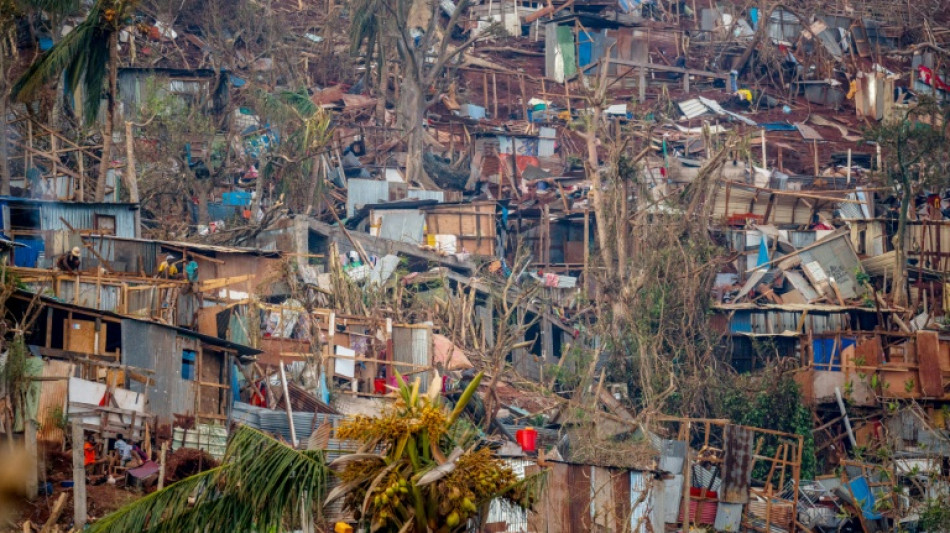
Climate change made Cyclone Chido stronger: scientists / Photo: © AFP

Climate change made Cyclone Chido stronger: scientists

Climate change intensified Cyclone Chido as it barrelled toward the Indian Ocean archipelago of Mayotte, said a preliminary study by scientists studying the link between global warming and tropical storms.

Text size:

The assessment by Imperial College London also estimated that cyclones of Chido's strength were 40 percent more likely in the warmer climate of 2024 compared to pre-industrial times.

Chido was the most damaging cyclone to hit Mayotte in 90 years when it made landfall Saturday, flattening tin-roof shacks in France's poorest overseas territory.

Classified as a category four storm -- the second highest on a five-point scale -- Cyclone Chido crossed the small archipelago, where about one-third of the population live in makeshift housing.

The true scale of the disaster is still unknown but officials fear the death toll could eventually rise into the thousands.

Scientists at Imperial College London assessed what role global warming might have played in whipping up the wind speed and ferocity of tropical storms like Chido.

To overcome a scarcity of real-world data, they used an advanced computer model that runs millions of simulated tropical cyclones to infer what might be attributed to recent warming.

They concluded that wind speeds in the region near where Chido made landfall had increased by 3 miles per second compared to the climate before humanity began burning fossil fuels.

Climate change "uplifted the intensity of a tropical cyclone like 'Chido' from a Category 3 to Category 4", the study said.

In the absence of conclusive studies, France's weather service has stopped short of attributing Chido's intensity to global warming, but says warmer oceans driven by human-caused climate change have made storms more violent.

Mayotte took the cyclone's full force and Meteo-France said Chido's impact was "above all the consequence of its trajectory" over the island.

The climate is nearly 1.3 degrees Celsius warmer compared to the pre-industrial era, and scientists say this extra heat in the atmosphere and oceans is stoking more frequent and volatile weather events.

Warmer air can hold more water vapour, and warmer oceans cause greater evaporation, supercharging the conditions upon which tropical storms feed.

N.Patterson--TFWP