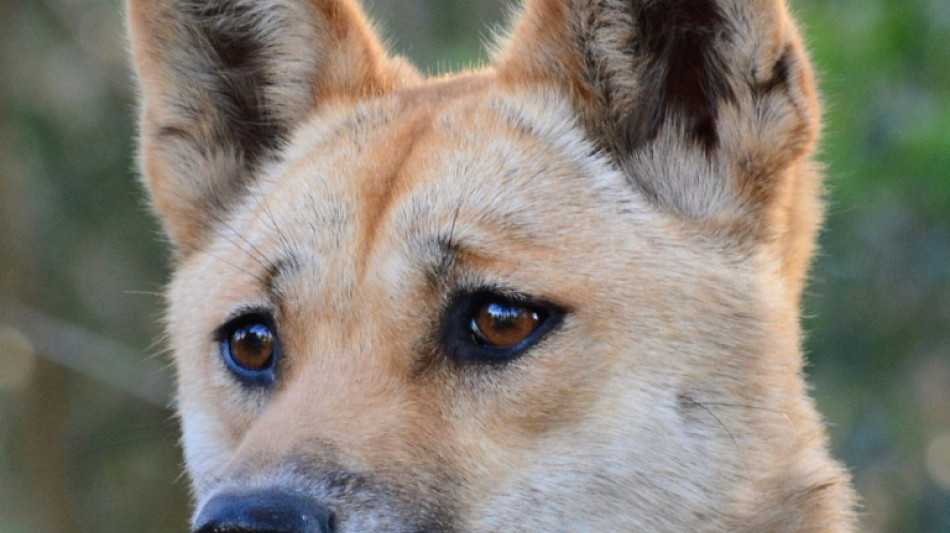
Dingoes aren't just feral dogs, says study / Photo: © EUREKALERT!/AFP

Dingoes might look like regular mutts, but in fact they're genetically in between wolves and dogs, according to a new study published Friday in Science Advances.
The iconic species -- revered in Aboriginal culture but the bane of modern ranchers -- has been Australia's top predator since the extinction of Tasmanian tigers last century.
However, "the evolutionary position of the dingo has been divided for a substantial period of time," co-author Bill Ballard of La Trobe University and the University of Melbourne told AFP.
Some hold that the lean, tan-colored canines brought to the continent 5,000 to 8,500 years ago are simply another form of domestic dog.
The new research -- a global collaboration involving 26 authors from 10 countries -- compared the genome of a desert dingo named Sandy, who was rescued in 2014 along with her siblings -- to those of five domestic dog breeds and the Greenland wolf.
They found the dingo's genome was structurally distinct from the boxer, German shepherd, basenji, Great Dane and Labrador retriever.
But she still shared more similarity with the domestic dogs than with the Greenland wolf. Among the breeds, Sandy was closer to the German shepherd than the rest.
“Sandy the desert dingo is intermediate between the wolf and the domestic dogs,” concluded Ballard. To be even more sure, the team is sequencing the genome belonging to an alpine dingo, found in the Australian Alps in the country’s east.
- Ancient human movements -
The finding can have several applications.
For one, the dingo genome can be used as an ancient reference book to help identify which genes are responsible for genetic disease in modern dogs, rather than trying to compare between breeds which share much common ancestry.
Knowing more about dingo evolution can also illuminate the history of the ancient people who brought them across the sea from Southeast Asia.
"At some stage they had to cross some water with some traveling peoples," said Ballard. "Whether they're First Nation Australians or whether they're people that interacted with First Nation Australians, we don't know."
The team hopes to get a clearer sense of the timeline and start to answer other questions like whether it was a single migration or multiple, once they sequence the alpine dingo.
The study also set out to test the differences in how dingoes metabolize nutrients compared to domestic breeds, by running a controlled diet study on a number of dingos and German shepherds.
Dingoes, like wolves, have only one copy of a gene that creates pancreatic amylase, a protein that helps dogs live on starchy diets, which humans have thrived on especially in the past 10,000 years.
German shepherds have eight copies of the gene. After receiving the same food and water for 10 days, the German shepherds’ scat contained three bacteria families involved in breaking down starch, confirming the researchers’ predictions.
Like the wolf in North America, dingoes are deeply polarizing: they are romanticized by city dwellers and play a prominent role in Indigenous songs and stories, but are hated by farmers for allegedly killing livestock.
According to Ballard, however, dingoes evolved to prey on small marsupials and aren’t easily able to digest high-fat foods -- thus lambs are more likely being hunted by feral dogs or hybrids.
He hopes to test the theory, and hopefully exonerate the dingo, in future behavior experiments.
B.Martinez--TFWP