The Fort Worth Press - Google AI tool predicts danger of genetic mutations

USD -
AED 3.672503
AFN 66.327638
ALL 82.0886
AMD 381.467911
ANG 1.790403
AOA 916.999656
ARS 1450.225296
AUD 1.508569
AWG 1.8
AZN 1.700054
BAM 1.664581
BBD 2.016426
BDT 122.345632
BGN 1.66473
BHD 0.377045
BIF 2968.529906
BMD 1
BND 1.290806
BOB 6.917741
BRL 5.509101
BSD 1.001149
BTN 90.980893
BWP 13.222859
BYN 2.933912
BYR 19600
BZD 2.013532
CAD 1.37584
CDF 2249.99969
CHF 0.795403
CLF 0.023303
CLP 914.180297
CNY 7.04195
CNH 7.03529
COP 3840.98
CRC 499.602106
CUC 1
CUP 26.5
CVE 93.847745
CZK 20.69325
DJF 178.279927
DKK 6.36039
DOP 64.326963
DZD 129.461029
EGP 47.383196
ERN 15
ETB 155.419576
EUR 0.851335
FJD 2.2795
FKP 0.747395
GBP 0.74505
GEL 2.695019
GGP 0.747395
GHS 11.513828
GIP 0.747395
GMD 73.501691
GNF 8706.087623
GTQ 7.666807
GYD 209.458396
HKD 7.78035
HNL 26.377629
HRK 6.4131
HTG 131.114752
HUF 328.173972
IDR 16647.1
ILS 3.227697
IMP 0.747395
INR 90.94955
IQD 1311.545172
IRR 42122.481055
ISK 125.999772
JEP 0.747395
JMD 160.68974
JOD 0.70899
JPY 154.828498
KES 129.101722
KGS 87.449758
KHR 4008.766517
KMF 419.999983
KPW 900.00025
KRW 1475.769598
KWD 0.30656
KYD 0.834333
KZT 516.056002
LAK 21690.284693
LBP 89653.857611
LKR 309.919571
LRD 177.207541
LSL 16.812545
LTL 2.95274
LVL 0.60489
LYD 5.424061
MAD 9.161752
MDL 16.859441
MGA 4522.803389
MKD 52.389463
MMK 2099.766038
MNT 3546.841984
MOP 8.022214
MRU 39.706877
MUR 45.920254
MVR 15.410214
MWK 1736.010928
MXN 17.970697
MYR 4.086496
MZN 63.909766
NAD 16.812545
NGN 1454.970486
NIO 36.844905
NOK 10.182425
NPR 145.571457
NZD 1.730104
OMR 0.384501
PAB 1.001149
PEN 3.372484
PGK 4.256442
PHP 58.540077
PKR 280.575003
PLN 3.58811
PYG 6724.54147
QAR 3.65033
RON 4.334604
RSD 99.923007
RUB 79.048641
RWF 1457.69766
SAR 3.750771
SBD 8.163401
SCR 13.525034
SDG 601.492896
SEK 9.30336
SGD 1.289125
SHP 0.750259
SLE 23.801433
SLL 20969.503664
SOS 572.201866
SRD 38.677985
STD 20697.981008
STN 20.852395
SVC 8.760373
SYP 11058.470992
SZL 16.798376
THB 31.450089
TJS 9.200647
TMT 3.51
TND 2.923651
TOP 2.40776
TRY 42.712897
TTD 6.791778
TWD 31.484502
TZS 2472.902756
UAH 42.22191
UGX 3564.452502
UYU 39.168124
UZS 12139.239968
VES 273.244099
VND 26345
VUV 121.461818
WST 2.779313
XAF 558.292161
XAG 0.015652
XAU 0.000232
XCD 2.70255
XCG 1.804332
XDR 0.694336
XOF 558.285033
XPF 101.502192
YER 238.349933
ZAR 16.75576
ZMK 9001.199027
ZMW 23.00183
ZWL 321.999592
  • SCS

    0.0200

    16.14

    +0.12%

  • JRI

    -0.0500

    13.51

    -0.37%

  • BCC

    0.5100

    75.84

    +0.67%

  • CMSD

    0.0150

    23.38

    +0.06%

  • CMSC

    0.0400

    23.34

    +0.17%

  • NGG

    -0.2600

    75.77

    -0.34%

  • GSK

    -0.4600

    48.78

    -0.94%

  • BTI

    -0.4500

    57.29

    -0.79%

  • BCE

    -0.2800

    23.33

    -1.2%

  • RIO

    0.1700

    75.99

    +0.22%

  • BP

    -1.4900

    33.76

    -4.41%

  • AZN

    -0.2100

    91.35

    -0.23%

  • RBGPF

    3.3200

    81

    +4.1%

  • VOD

    0.0000

    12.7

    0%

  • RYCEF

    -0.1000

    14.8

    -0.68%

  • RELX

    -0.2600

    40.82

    -0.64%

Google AI tool predicts danger of genetic mutations
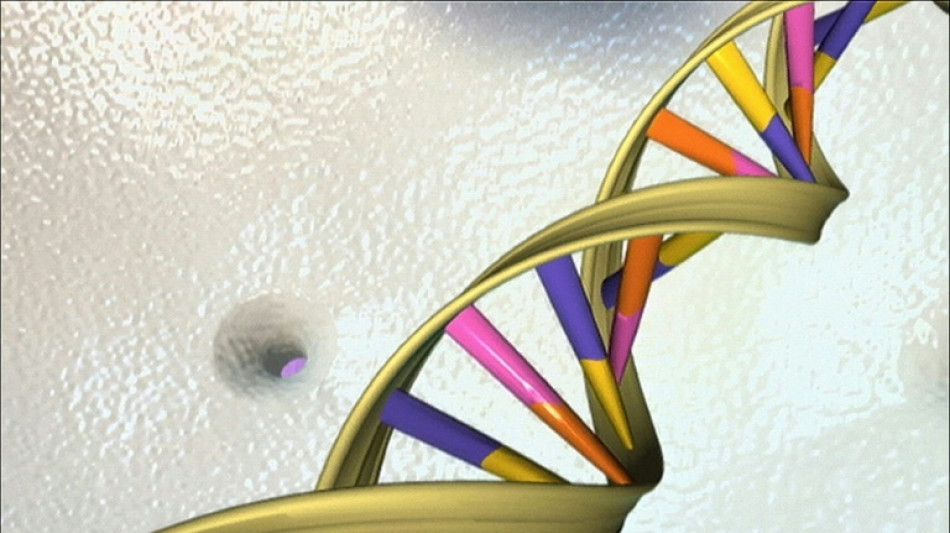
Google AI tool predicts danger of genetic mutations / Photo: © AFP

Google AI tool predicts danger of genetic mutations

Researchers at Google DeepMind, the tech giant's artificial intelligence arm, on Tuesday introduced a tool that predicts whether genetic mutations are likely to cause harm, a breakthrough that could help research into rare diseases.

Text size:

The findings are "another step in recognising the impact that AI is having in the natural sciences," said Pushmeet Kohli, vice president for research at Google DeepMind.

The tool focuses on so-called "missense" mutations, where a single letter of the genetic code is affected.

A typical human has 9,000 such mutations throughout their genome; they can be harmless or cause diseases such as cystic fibrosis or cancer, or damage brain development.

To date, four million of these mutations have been observed in humans, but only two percent of them have been classified, either as disease-causing or benign.

In all, there are 71 million such possible mutations. The Google DeepMind tool, called AlphaMissense, reviewed these mutations and was able to predict 89 percent of them, with 90 percent accuracy.

A score was assigned to each mutation, indicating the risk of it causing disease (otherwise referred to as pathogenic).

The result: 57 percent were classified as probably benign, and 32 percent as probably pathogenic -- the remainder being uncertain.

The database was made public and available to scientists, and an accompanying study was published on Tuesday in the journal Science.

AlphaMissense demonstrates "superior performance" than previously available tools, wrote experts Joseph Marsh and Sarah Teichmann in an article also published in Science.

"We should emphasize that the predictions were never really trained or never really intended to be used for clinical diagnosis alone," said Jun Cheng of Google DeepMind.

"However, we do think that our predictions can potentially be helpful to increase the diagnosed rate of rare disease, and also potentially to help us find new disease-causing genes," Cheng added.

Indirectly, this could lead to the development of new treatments, the researchers said.

The tool was trained on the DNA of humans and closely-related primates, enabling it to recognize which genetic mutations are widespread.

Cheng said the training allowed the tool to input "millions of protein sequences and learns what a regular protein sequence looks like."

It then could identify a mutation and its potential for harm.

Cheng compared the process to learning a language.

"If we substitute a word from an English sentence, a person that is familiar with English can immediately see whether this word substitution will change the meaning of the sentence or not."

D.Johnson--TFWP