The Fort Worth Press - Invasive species a growing and costly threat, key report to find

USD -
AED 3.672502
AFN 63.496031
ALL 82.510022
AMD 367.400305
ANG 1.790403
AOA 917.999906
ARS 1463.593197
AUD 1.428276
AWG 1.8025
AZN 1.70145
BAM 1.704772
BBD 2.014072
BDT 122.641098
BGN 1.69088
BHD 0.377135
BIF 2981.906689
BMD 1
BND 1.291046
BOB 6.904336
BRL 5.153898
BSD 1.000013
BTN 94.26975
BWP 13.589989
BYN 2.778541
BYR 19600
BZD 2.011105
CAD 1.41746
CDF 2279.99995
CHF 0.8072
CLF 0.022911
CLP 901.710449
CNY 6.769599
CNH 6.775435
COP 3454.26
CRC 453.643323
CUC 1
CUP 26.5
CVE 96.112443
CZK 21.111794
DJF 178.070899
DKK 6.52343
DOP 58.450197
DZD 133.436984
EGP 49.787698
ERN 15
ETB 158.279558
EUR 0.87275
FJD 2.24775
FKP 0.755695
GBP 0.756351
GEL 2.649849
GGP 0.755695
GHS 11.190238
GIP 0.755695
GMD 73.496346
GNF 8760.550479
GTQ 7.621704
GYD 209.00414
HKD 7.83968
HNL 26.750125
HRK 6.581498
HTG 130.624245
HUF 307.116023
IDR 17845.1
ILS 2.963875
IMP 0.755695
INR 94.659498
IQD 1308.869035
IRR 1375000.000032
ISK 125.66997
JEP 0.755695
JMD 158.007459
JOD 0.708983
JPY 161.726498
KES 129.430085
KGS 87.449798
KHR 4010.36396
KMF 429.500643
KPW 900.00035
KRW 1537.845036
KWD 0.30885
KYD 0.833293
KZT 488.011271
LAK 22084.385646
LBP 89547.276637
LKR 333.738992
LRD 181.996624
LSL 16.489878
LTL 2.95274
LVL 0.60489
LYD 6.377995
MAD 9.308956
MDL 17.659657
MGA 4210.122265
MKD 53.826874
MMK 2099.917974
MNT 3579.231668
MOP 8.066507
MRU 39.909271
MUR 47.80978
MVR 15.450261
MWK 1733.964363
MXN 17.34405
MYR 4.148986
MZN 63.910091
NAD 16.489878
NGN 1364.409873
NIO 36.797453
NOK 9.686415
NPR 150.832915
NZD 1.74549
OMR 0.384494
PAB 0.999172
PEN 3.381216
PGK 4.382892
PHP 61.059528
PKR 278.166512
PLN 3.724902
PYG 6140.706718
QAR 3.642275
RON 4.570903
RSD 102.413991
RUB 74.027953
RWF 1464.918977
SAR 3.753691
SBD 8.061424
SCR 13.673834
SDG 600.499517
SEK 9.58682
SGD 1.292345
SHP 0.746601
SLE 24.750235
SLL 20969.503664
SOS 571.503348
SRD 37.402502
STD 20697.981008
STN 21.37358
SVC 8.749967
SYP 110.532098
SZL 16.485429
THB 32.926499
TJS 9.266943
TMT 3.5
TND 2.952452
TOP 2.40776
TRY 46.462702
TTD 6.781036
TWD 31.623009
TZS 2625.482037
UAH 44.922859
UGX 3636.522118
UYU 39.947701
UZS 12039.224232
VES 606.63266
VND 26320.5
VUV 118.352303
WST 2.751796
XAF 572.250987
XAG 0.015071
XAU 0.000238
XCD 2.70255
XCG 1.802185
XDR 0.71169
XOF 572.245995
XPF 103.952931
YER 238.594437
ZAR 16.447195
ZMK 9001.196955
ZMW 17.924862
ZWL 321.999592
  • CMSC

    0.0500

    22.37

    +0.22%

  • BCC

    3.8500

    74.66

    +5.16%

  • AZN

    -2.9600

    174.93

    -1.69%

  • GSK

    -1.4800

    50.67

    -2.92%

  • NGG

    -1.2400

    79.44

    -1.56%

  • RIO

    -2.5900

    100.08

    -2.59%

  • CMSD

    0.0000

    22.29

    0%

  • BCE

    0.0000

    23.28

    0%

  • BP

    -1.0400

    39.1

    -2.66%

  • BTI

    -0.5800

    58.91

    -0.98%

  • RBGPF

    -0.5300

    60.61

    -0.87%

  • RYCEF

    -0.0300

    18.4

    -0.16%

  • JRI

    0.0500

    12.67

    +0.39%

  • VOD

    -0.2300

    14.3

    -1.61%

  • RELX

    -0.8300

    31.18

    -2.66%

Invasive species a growing and costly threat, key report to find
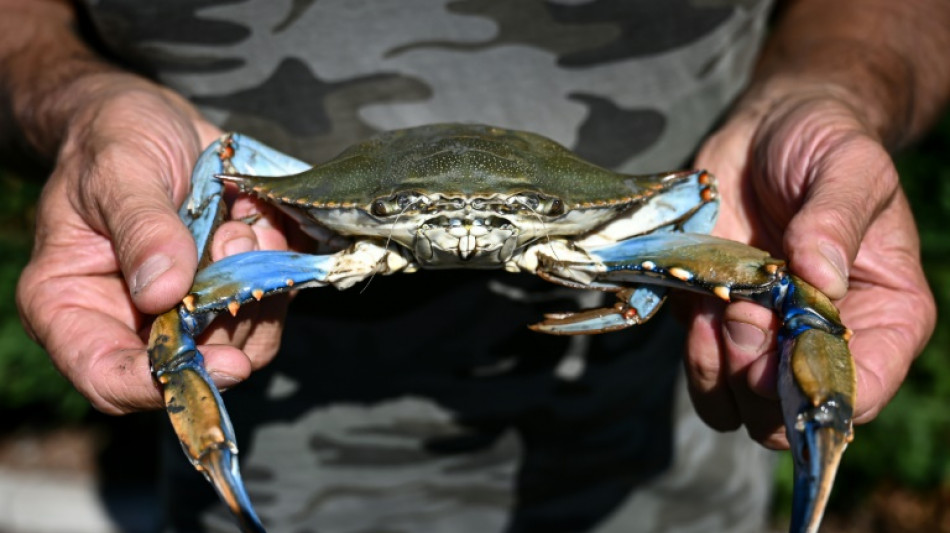
Invasive species a growing and costly threat, key report to find / Photo: © AFP/File

Invasive species a growing and costly threat, key report to find

Invasive species that destroy forests, ravage crops and cause extinctions are a major and growing threat worldwide, a landmark UN-backed assessment is poised to report.

Text size:

From water hyacinth choking Lake Victoria in East Africa, to rats and brown snakes wiping out bird species in the Pacific, to mosquitoes exposing new regions to Zika, yellow fever, dengue and other diseases, tens of thousand of aliens species have taken root -- often literally -- far from their place of origin.

The science advisory panel for the UN Convention on Biodiversity, known by its acronym IPBES, will release on Monday the most comprehensive assessment of so-called "alien species" ever assembled.

Humans are to blame when non-native species wind up on the other side of the world, whether by accident or on purpose.

Scientists point to the pervasive spread of these species as hard evidence that rapid expansion of human activity has so radically altered natural systems as to tip Earth into a new geological epoch called the Anthropocene, or the "era of humans".

Some invasive species are accidental arrivals, hitching rides in the ballast water of cargo ships, the containers in their holds, or in a tourist's suitcase.

Others were introduced deliberately.

The hyacinth which at one point covered 90 percent of Lake Victoria -- crippling transport and fishing, smothering aquatic life, blocking hydroelectric dam intake, and breeding mosquitoes -- is thought to have been introduced by Belgian colonial officials in Rwanda as an ornamental garden flower before making its way down the Kagera River in the 1980s.

The Everglades wetlands preserve in Florida is teeming with the destructive offspring of erstwhile pets and house plants, from five-metre (16-foot) Burmese pythons and walking catfish to Old World climbing fern and Brazilian pepper.

Invasive species are a significant cause of extinctions, along with habitat loss, global warming, pollution and direct exploitation for food or body parts.

Small islands with endemic species not found anywhere else on Earth are especially vulnerable.

Rats, snakes and mosquitoes transported by Western explorers or, later, tourists have wiped out dozens of bird species in the last two centuries.

The deadly fire that reduced the Hawaiian town of Lahaina to ashes last month was fuelled in part by bone-dry guinea, molasses and buffel grasses -- imported as livestock feed -- that have spread across abandoned sugar plantations.

A global treaty to protect biodiversity hammered out in the Canadian city of Montreal last December sets a target of reducing the rate at which invasive alien species spread by 50 percent compared to current levels.

J.P.Estrada--TFWP