The Fort Worth Press - Plastic litter in oceans overestimated, study suggests

USD -
AED 3.672497
AFN 63.999619
ALL 82.043218
AMD 370.903715
ANG 1.789884
AOA 917.99986
ARS 1395.5179
AUD 1.391653
AWG 1.8
AZN 1.700647
BAM 1.67146
BBD 2.014355
BDT 122.739548
BGN 1.668102
BHD 0.377997
BIF 2988.727748
BMD 1
BND 1.275858
BOB 6.936925
BRL 4.970701
BSD 1.000128
BTN 95.070143
BWP 13.576443
BYN 2.828953
BYR 19600
BZD 2.011854
CAD 1.36056
CDF 2320.000301
CHF 0.78234
CLF 0.023008
CLP 905.520311
CNY 6.82825
CNH 6.82794
COP 3714.86
CRC 454.739685
CUC 1
CUP 26.5
CVE 94.234327
CZK 20.81605
DJF 178.136337
DKK 6.379305
DOP 59.486478
DZD 132.473014
EGP 53.529303
ERN 15
ETB 156.202254
EUR 0.85374
FJD 2.19495
FKP 0.736222
GBP 0.737565
GEL 2.67961
GGP 0.736222
GHS 11.198899
GIP 0.736222
GMD 73.00035
GNF 8777.732198
GTQ 7.643867
GYD 209.252937
HKD 7.83355
HNL 26.586918
HRK 6.435201
HTG 130.892468
HUF 309.793499
IDR 17395.2
ILS 2.943995
IMP 0.736222
INR 95.12655
IQD 1310.206349
IRR 1313999.999546
ISK 122.43029
JEP 0.736222
JMD 157.565709
JOD 0.708971
JPY 157.041498
KES 129.068877
KGS 87.420498
KHR 4012.426129
KMF 420.000004
KPW 899.999998
KRW 1471.270126
KWD 0.30795
KYD 0.833593
KZT 463.980036
LAK 21978.181632
LBP 89580.425856
LKR 319.60688
LRD 183.563154
LSL 16.727816
LTL 2.95274
LVL 0.60489
LYD 6.333538
MAD 9.244476
MDL 17.22053
MGA 4167.11178
MKD 52.617875
MMK 2099.74975
MNT 3576.675528
MOP 8.070745
MRU 39.973678
MUR 46.760106
MVR 15.454979
MWK 1734.615828
MXN 17.449403
MYR 3.952958
MZN 63.899211
NAD 16.731176
NGN 1373.690397
NIO 36.800957
NOK 9.253601
NPR 152.110449
NZD 1.698215
OMR 0.384502
PAB 1.000329
PEN 3.50801
PGK 4.35
PHP 61.528006
PKR 278.713718
PLN 3.630395
PYG 6218.192229
QAR 3.646207
RON 4.435201
RSD 100.208968
RUB 75.470479
RWF 1462.591284
SAR 3.752195
SBD 8.04211
SCR 13.952833
SDG 600.496085
SEK 9.251165
SGD 1.275425
SHP 0.746601
SLE 24.597519
SLL 20969.496166
SOS 571.645885
SRD 37.456025
STD 20697.981008
STN 20.933909
SVC 8.752948
SYP 110.524984
SZL 16.727416
THB 32.603501
TJS 9.363182
TMT 3.505
TND 2.910569
TOP 2.40776
TRY 45.203198
TTD 6.794204
TWD 31.633903
TZS 2595.000198
UAH 44.075497
UGX 3753.577989
UYU 40.286638
UZS 12001.384479
VES 488.942755
VND 26339.5
VUV 118.778782
WST 2.715188
XAF 560.591908
XAG 0.013542
XAU 0.000219
XCD 2.70255
XCG 1.8029
XDR 0.69563
XOF 560.591908
XPF 101.92117
YER 238.602368
ZAR 16.72045
ZMK 9001.191373
ZMW 18.731492
ZWL 321.999592
  • RYCEF

    -0.3000

    16

    -1.88%

  • CMSC

    0.0310

    22.901

    +0.14%

  • NGG

    -0.9240

    87.556

    -1.06%

  • RBGPF

    0.5000

    63.1

    +0.79%

  • GSK

    -0.6900

    50.92

    -1.36%

  • RIO

    -1.6200

    98.96

    -1.64%

  • BP

    0.3550

    46.765

    +0.76%

  • BTI

    -0.3450

    58.365

    -0.59%

  • CMSD

    0.0000

    23.28

    0%

  • BCE

    -0.0700

    23.89

    -0.29%

  • BCC

    -3.4000

    74.73

    -4.55%

  • AZN

    -1.2030

    183.537

    -0.66%

  • JRI

    -0.0750

    12.905

    -0.58%

  • RELX

    -0.0300

    36.32

    -0.08%

  • VOD

    -0.1000

    16.05

    -0.62%

Plastic litter in oceans overestimated, study suggests
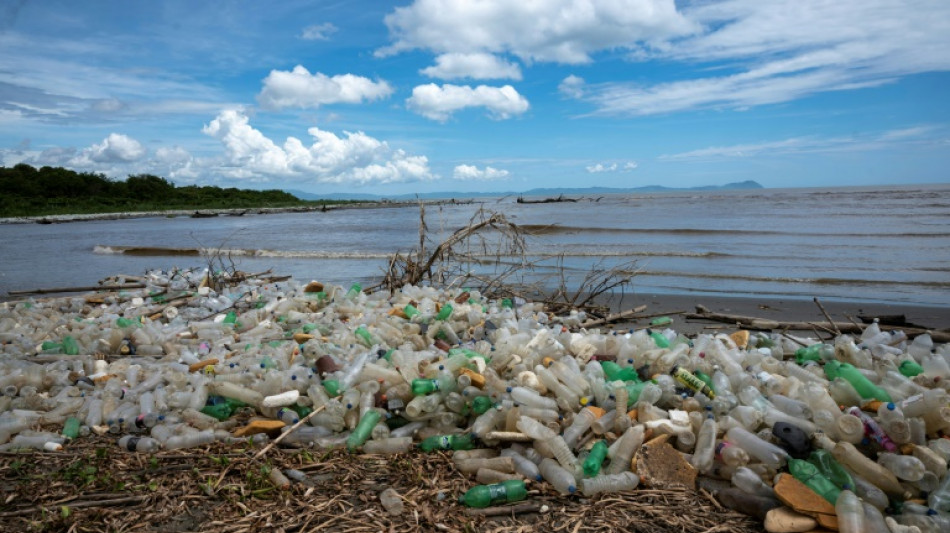
Plastic litter in oceans overestimated, study suggests / Photo: © AFP

Plastic litter in oceans overestimated, study suggests

There is less plastic littering the ocean than scientists previously thought, but what is there could persist for a long time, a new study said Monday.

Text size:

The modelling study estimated that pieces of plastic bigger than 25 millimetres (one inch) make up over 95 percent of plastic floating on the ocean.

While most plastic particles in the ocean are very small, the total mass of these microplastics -- defined as less than five millimetres (0.2 inches) -- is relatively low.

The preponderance of larger floating pieces suggests that the total amount of plastic in the ocean is "much lower" than previously thought, according to the study published in the journal Nature Geoscience.

Plastic pollution in the ocean has been estimated at more than 25 million tonnes, with a quarter of a million tonnes floating on the surface.

But the study said that the amount of plastic on the ocean surface is much higher, at about three million tonnes.

That the plastic is floating around in large pieces could with help clean-up efforts.

"Large, floating pieces on the surface are easier to clean up than microplastics," the study's co-author Erik van Sebille of Utrecht University in the Netherlands said in a statement.

The results are based on a 3D model of the ocean using a huge amount of observational data and measurements taken from surface water, beaches and the deep ocean from 1980 to 2020.

- 'Take action now' -

The model also found that less new plastic finds its way to the ocean every year than previously thought -- about half a million tonnes instead of four to 12 million tonnes -- stemming largely from coastlines and fishing activity.

However, the combination of more surface plastic and less new plastic suggests that the litter will likely remain in the ocean for much longer than previously believed.

"It means that it will take longer until the effects of measures to combat plastic waste will be visible," the study's lead Mikael Kaandorp said.

"If we don't take action now, the effects will be felt for much longer," he added.

And the amount of plastic pollution in the world's oceans is still growing.

Without further mitigation and clean-up, the lingering plastic litter could double within two decades, according to the study's authors.

Concern over the impact of plastics on the environment and human well-being has surged in recent years.

Plastic debris is estimated to kill more than a million seabirds and 100,000 marine mammals each year, according to the United Nations Environment Programme.

The new study comes as the world awaits the first draft of a highly anticipated international UN treaty to combat plastic pollution, expected in November.

A.Williams--TFWP