Disinformation researchers lament 'chilling' US legal campaign / Photo: © AFP

The study of disinformation has emerged as a political lightning rod in the United States, with conservative advocates launching a sweeping legal offensive that researchers fighting falsehoods denounce as an intimidation campaign ahead of the 2024 election.
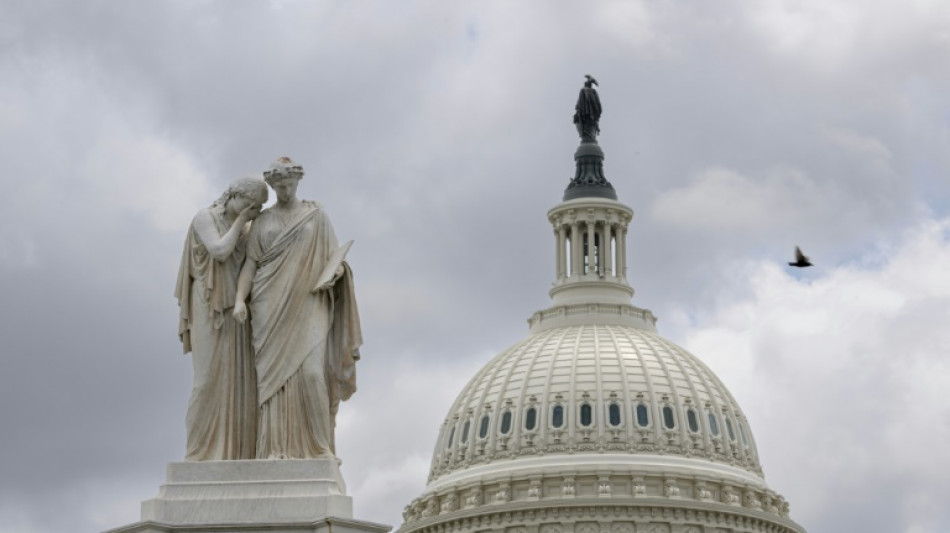
As next year's vote approaches, many US academics and think-tanks focused on disinformation research are facing lawsuits by right-wing groups and inquiries from a Republican-led congressional panel.
The researchers -- including from the Stanford Internet Observatory and the University of Washington -- have worked on contentious subjects, including false claims that the 2020 election was stolen from Donald Trump and conspiracy theories about Covid-19 vaccines.
They are accused of colluding with the government to censor conservative speech online under the guise of fighting disinformation.
But the researchers deny those claims and say the bitter wrangle is seriously impacting their work, including efforts to raise funding.
Some researchers face subpoenas from the Republican-controlled House Judiciary Committee, demanding records including emails with government officials and social media platforms dating back to 2015, according to letters seen by AFP.
The analysts say the resource-draining requests and mounting legal costs are undermining the fight against disinformation, a problem that is likely to surge in the run up to next year's White House race.
"This is having a serious chilling effect on the work being done to research different forms of false and misleading information," one leading US researcher told AFP.
"Funding is being pulled and people are so tied up responding to requests for emails that the work has all but stopped for most people."
Coming on top of online trolling and threats of violence that disinformation researchers say they routinely face amid the hyperpolarized US political climate, the legal efforts amount to a "harassment tactic" that has taken a major toll on morale, another academic told AFP.
They were among four researchers who spoke to AFP on the condition of anonymity, citing safety and legal concerns.
- 'Very troubling' -
"It's remarkable and very troubling that a congressional panel that purports to be investigating censorship is engaged in the intimidation of researchers," said Jameel Jaffer, director of the Knight First Amendment Institute at Columbia University.
"There's nothing at all nefarious about researchers studying online speech... The panel should withdraw its sweeping demands, which undermine the very freedoms it says it is trying to protect."
Last month, firebrand conservative lawmaker Jim Jordan, head of the House Judiciary Committee, sent a letter to Stanford University threatening legal action unless the school complies with a subpoena for records.
In a statement to AFP, Stanford University said it was "deeply concerned about ongoing efforts to chill freedom of inquiry and undermine legitimate and much needed academic research in the areas of misinformation and disinformation -- both at Stanford and across academia."
In May, America First Legal, an advocacy group led by former Trump advisor Stephen Miller, filed a class-action lawsuit in Louisiana that he said was meant to strike at the heart of the "censorship-industrial complex."
Aside from academics from Stanford and the University of Washington, the group also sued researchers from the Digital Forensic Research Lab at the Atlantic Council think-tank and the research group Graphika.
The plaintiffs in the case include Jim Hoft, founder of the far-right conspiracy website Gateway Pundit.
Stanford's researchers face another lawsuit filed in Texas by anti-vaccine advocates, who allege their social media posts were repeatedly flagged as misinformation or removed entirely as part of what it called mass censorship.
- 'Dirty tricks' -
Organizations that research disinformation dispute that they have the power to censor social media accounts and deny any collusion with government agencies.
But that argument appears to be the central premise of the House of Representatives committee led by Jordan, a Trump ally who did not respond to AFP's request for comment but has publicly accused such organizations of "censorship of disfavored speech."
Last month, a Jordan-led subcommittee on the "weaponization of the federal government" concluded in a report that a cybersecurity agency within the Department of Homeland Security had been mobilized to censor Americans in collusion with "Big Tech and disinformation partners."
Amid the sustained backlash, President Joe Biden's administration appears to have backed away from some of its efforts to counter disinformation.
For example, the State Department-backed National Endowment for Democracy (NED) recently said it will stop funding the London-based Global Disinformation Index (GDI). NED told US media its grant was meant to combat disinformation from authoritarian regimes, particularly China.
Many disinformation researchers view the backlash against them as a deliberate strategy before the 2024 election.
"If you want to get away with dirty tricks next year, you need to get rid of this space," one researcher told AFP.
"The goal is to ensure that no one is scrutinizing the playing field before the next election."
M.Cunningham--TFWP