EU moves one step closer towards 'historic' AI rules / Photo: © AFP

EU lawmakers pushed the bloc Wednesday closer to passing one of the world's first laws regulating artificial intelligence systems like ChatGPT, by backing a key text that forms the basis of a future law.
While the European Union first proposed such a law in 2021, the draft rules took on greater urgency when ChatGPT exploded onto the scene last year, showing off AI's dizzying advances and possible risks.
The EU says its law, once passed, will set the "global standard", but the bloc could face pushback from big tech companies.
US-based OpenAI, which created ChatGPT, has already warned that depending on the content of the law it could be forced to withdraw from the EU.
While AI proponents hail the technology for how it will transform society, including work, healthcare and creative pursuits, others are worried by its potential to undermine democracy.
There have been a slew of awe-inspiring examples of AI's uses including a "final Beatles record" created using the technology, while ChatGPT has passed business, law and medical exams.
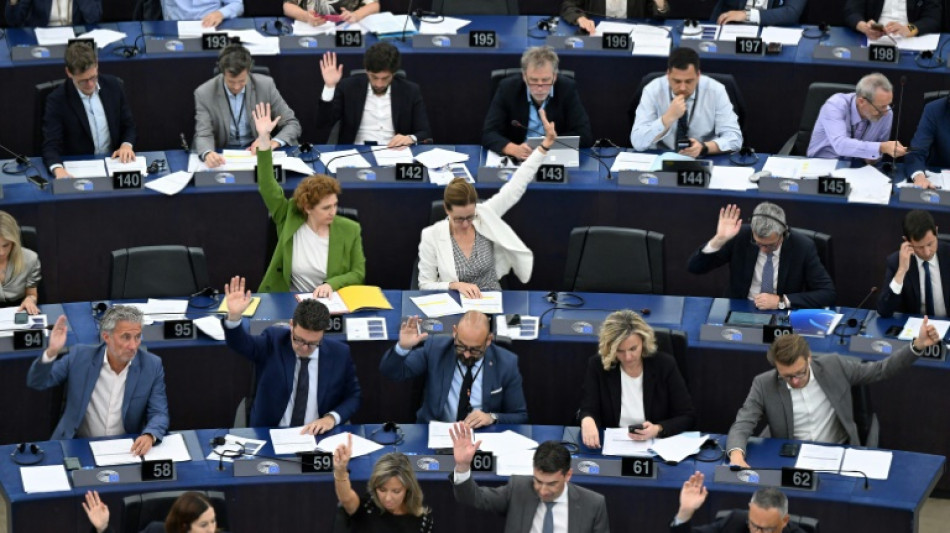
After months of heated discussions between lawmakers to support a compromise text, MEPs voted overwhelmingly to kickstart negotiations with the EU's 27 member countries and talks were to start later Wednesday.
The EU insists the law will foster AI innovation while also protecting against dangers the technology poses to people.
Brussels is particularly concerned by deepfakes -- AI-generated images and audio that can be stunningly lifelike -- and how the technology can be used for disinformation, less than a year before European-wide elections.
- 'Balanced' approach -
The law would regulate AI according to the level of risk: the higher the risk to individuals' rights or health, for example, the greater the systems' obligations.
Brussels wants the final law to be approved by the end of the year.
Even if that ambitious target is achieved, the law would not come into force until 2026 at the earliest, forcing the EU to push for a voluntary interim pact with tech companies.
The parliament's text differs from that proposed by the European Commission, the EU's executive arm, in 2021.
Lawmakers proposed bans on AI systems that use biometric surveillance including live use of facial recognition and so-called predictive policing.
But the commission wants to allow such technology to be used in exceptional circumstances by security forces against crime and terrorism.
Commission Vice President Margrethe Vestager noted the parliament's approach and how it is pitted against "a slightly more pragmatic or security-oriented approach".
The text also calls for special requirements on generative AI systems -- those such as ChatGPT and DALL-E capable of producing text, images, code, audio and other media -- that include informing users that a machine, not a human, produced the content.
As member states and the parliament thrash out a deal in the coming months, officials said the bans and generative AI will dominate talks.
The legislation builds on the EU's already formidable legal arsenal against technology companies, which includes two major laws to ensure social media platforms follow the bloc's rules.
The EU's proposed high-risk list includes AI in critical infrastructure, education, human resources, public order and migration management.
The parliament added extra conditions before the high-risk classification could be met, including the potential to harm people's health, safety, rights or the environment.
That has not been welcomed by everyone.
The CCIA, a European industry lobby group representing major tech companies, warned some of the MEPs' changes "are likely to overburden European AI developers with excessively prescriptive rules, ultimately slowing down innovation".
There is also growing clamour to regulate AI across the Atlantic, although Washington is vastly behind the EU in terms of developing such rules.
"We have made history today," Brando Benifei, one of the EU lawmakers spearheading the draft law through parliament, said on Wednesday.
Lawmakers, he said, had defined the dialogue the EU is having with the rest of the world to regulate AI.
A.Maldonado--TFWP