Arizona Approves $46 Million for Prison Healthcare Amid Federal Court Orders

Arizona has approved an additional $46.3 million in state budget funds to overhaul inmate healthcare, aiming to comply with a federal court injunction demanding constitutional standards of care. State prisons chief Ryan Thornell described a new patient-centered model expanding across all ten state facilities, while civil rights attorneys warned that the changes do not eliminate the need for a federal receiver to manage the system.
Arizona lawmakers have approved an additional $46.3 million in state budget funds to overhaul inmate healthcare, a move designed to comply with a federal court injunction demanding constitutional standards of care. The funding supports a new patient-centered model that will expand across all ten state prison facilities, though civil rights attorneys and legal monitors warn that the financial injection does not eliminate the need for a federal receiver to manage the system.
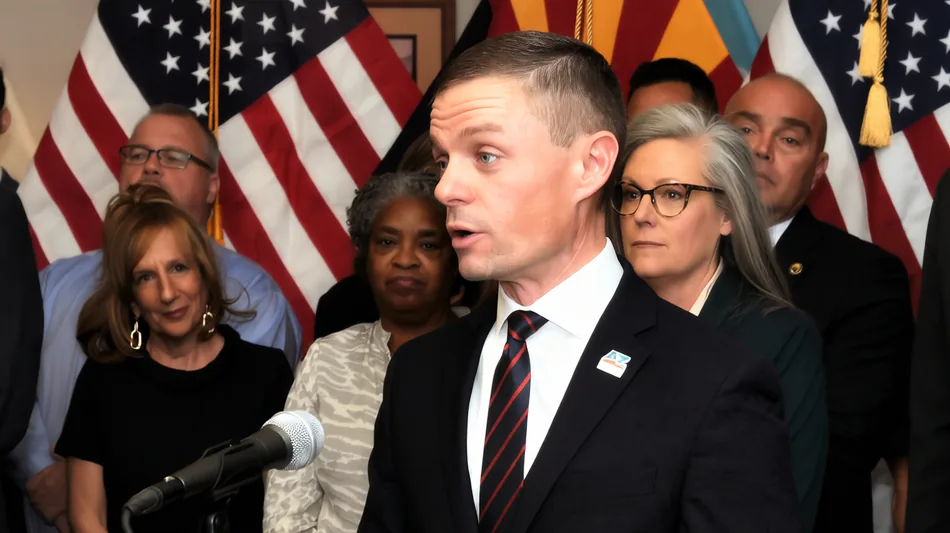
Ryan Thornell, director of the Arizona Department of Corrections, Rehabilitation and Reentry (ADCRR), presented the plan to the Joint Legislative Budget Committee this week. He explained that the updated contract with private healthcare provider NaphCare will add nearly $36 million to the current agreement. This increase covers the salaries for 115 new medical providers, a three percent cost-of-living adjustment, and payments reflecting the rising costs of prisoner care.
The "Patient Centered Care Model" represents a significant structural shift ordered by U.S. District Judge Roslyn Silver last year. In her sweeping injunction, Silver found that the corrections department had failed to meet constitutional requirements despite more than a decade of court orders. The new model assigns specific healthcare providers to inmates with chronic or ongoing mental and physical health issues to ensure continuity of care within each prison housing unit.
Thornell described the operational change to committee members, noting that each housing unit will have a dedicated team led by a physician, including nurses and mental health providers. "The idea here is that every inmate has an assigned provider who is responsible for their overall care, and then they have a team that carries out that care," Thornell said. He contrasted this with the previous system, where complex cases might be seen by doctors or nurses unfamiliar with the patient's history.
"It rounds out a more comprehensive team, it brings mental health together with the medical team, and it provides what I could say wraparound healthcare for the inmate," Thornell added. He emphasized that under the old system, an inmate might see a random individual every few weeks who lacked context about their case. The new approach ensures daily discussions among the care team regarding specific patient complications, appointments, and considerations.
The legislative committee approved the contract changes and new spending unanimously on Tuesday. In addition to the $35.9 million for staffing and adjustments, the committee authorized $9.2 million for incentives to attract new workers and more than $1.3 million for new medical equipment and IT improvements. These funds were included in the budget enacted in June by the Legislature and Governor Katie Hobbs, bringing the total annual spending on inmate healthcare to over $451 million.
Lawmakers made the approval contingent on adding strict contract language requiring detailed hiring goals, quarterly reports, and financial penalties for NaphCare if it fails to meet its obligations. NaphCare took over prison healthcare in 2022 under a five-year contract that is up for possible renewal next year. The total state prison system budget stands at $1.8 billion, with $1.67 billion coming from the state general fund.
Despite the approval, Corene Kendrick, deputy director of the American Civil Liberties Union’s National Prison Project, which brought the original lawsuit in 2012, argued that the measures are insufficient. In an email to Capitol Media Services, Kendrick acknowledged progress but stated it was only a start. "We’re glad that ADCRR and the Hobbs Administration are finally attempting to get the Legislature to authorize additional health care staffing that Judge Silver ordered them to hire a year and a half ago," she wrote.
Kendrick criticized the pace of compliance, citing a recent report by court-appointed monitors that detailed ongoing deficiencies. She noted that these failures necessitated the federal court's decision to place prison healthcare into receivership. "The State would be better served in focusing its attention on complying with court orders and the Constitution, instead of fighting the court orders through expensive appeals," Kendrick said.
Judge Silver’s 83-page order earlier this year detailed complaints spanning 14 years regarding inadequate physical and mental health care at the state's prison complexes. The order highlighted a history of agreements, injunctions, and multi-million-dollar fines that had not resulted in compliance. "But now after nearly 14 years of litigation with defendants having not gained compliance with the injunction and the Constitution, this approach has not only failed completely but, if continued, would be nothing short of judicial indulgence of deeply entrenched unconstitutional conduct," Silver wrote.
While the state has appealed the order to delay receivership, the Republican-controlled Legislature has been wary of providing all the money the judge says is needed. Republican Rep. David Livingston, who chairs the House appropriations committee, criticized Judge Silver during the Tuesday meeting but supported the funding. "I personally have stated many times from this dais that I think the judge is outside of her boundaries and ordering the state to do way too much without authority," Livingston said. "On the same token, we did do this in last year’s budget, and I think it’s needed, and I’m willing to approve it."
The legal battle over inmate healthcare, known as the Jensen case, continues to loom over Arizona's corrections system. While Thornell and Governor Hobbs have pushed back against federal oversight through appeals, the state remains under strict judicial scrutiny. The incoming head of the Arizona Department of Education, Teresa Leyba Ruiz, has also been involved in recent legislative debates, though her comments focused on education savings accounts rather than prison reform.
As the state implements the new healthcare model, the threat of a federal receiver taking over prisoner care remains active. The receiver, named by Judge Silver but delayed by the state's appeals, would assume control of healthcare operations if the state fails to demonstrate sufficient compliance. Advocates argue that without immediate and comprehensive changes, the current financial investments will not resolve the systemic issues identified by monitors and the court.
D.Johnson--TFWP