The Fort Worth Press - US expects 'below normal' Atlantic hurricane season

USD -
AED 3.672504
AFN 66.503991
ALL 80.629676
AMD 365.091035
AOA 917.000367
ARS 1491.937897
AUD 1.417435
AWG 1.80125
AZN 1.70397
BAM 1.691649
BBD 2.00813
BDT 123.418242
BHD 0.375989
BIF 2985.079791
BMD 1
BND 1.277602
BOB 11.849673
BRL 5.083304
BSD 0.997016
BTN 94.875232
BWP 13.457596
BYN 2.968819
BYR 19600
BZD 2.00519
CAD 1.39545
CDF 2262.50392
CHF 0.80802
CLF 0.023212
CLP 913.560396
CNY 6.747604
CNH 6.743285
COP 3142.844787
CRC 453.228387
CUC 1
CUP 26.5
CVE 95.372573
CZK 20.982104
DJF 177.546166
DKK 6.46804
DOP 58.20179
DZD 132.308956
EGP 49.555853
ERN 15
ETB 160.923669
EUR 0.86495
FJD 2.20855
FKP 0.740916
GBP 0.741235
GEL 2.610391
GGP 0.740916
GHS 11.700039
GIP 0.740916
GMD 73.503851
GNF 8756.649224
GTQ 7.607144
GYD 208.588851
HKD 7.84315
HNL 26.723176
HRK 6.518804
HTG 130.363707
HUF 314.060388
IDR 17801
ILS 2.99985
IMP 0.740916
INR 95.210504
IQD 1306.058902
IRR 1375550.000352
ISK 123.340386
JEP 0.740916
JMD 158.335856
JOD 0.70904
JPY 157.80604
KES 129.014401
KGS 87.450384
KHR 4049.647537
KMF 426.00035
KRW 1407.890383
KWD 0.30866
KYD 0.830861
KZT 467.275008
LAK 22510.919863
LBP 89282.792025
LKR 334.420274
LRD 179.959348
LSL 16.197552
LTL 2.95274
LVL 0.60489
LYD 6.341738
MAD 9.29222
MDL 17.337716
MGA 4254.638239
MKD 53.215413
MMK 2099.750695
MNT 3597.347644
MOP 8.056654
MRU 40.080439
MUR 47.070378
MVR 15.450378
MWK 1728.841413
MXN 17.13635
MYR 4.090104
MZN 63.905039
NAD 16.197552
NGN 1364.860377
NIO 36.690741
NOK 9.51237
NPR 151.800372
NZD 1.696641
OMR 0.382693
PAB 0.997016
PEN 3.376465
PGK 4.406003
PHP 60.705038
PKR 276.796523
PLN 3.719205
PYG 5928.296501
QAR 3.644596
RON 4.536304
RSD 101.492021
RUB 81.892834
RWF 1466.072741
SAR 3.758633
SBD 8.065696
SCR 14.449077
SDG 600.503676
SEK 9.480804
SGD 1.278104
SLE 24.603667
SOS 569.822255
SRD 37.866504
STD 20697.981008
STN 21.191022
SVC 8.723782
SZL 16.194265
THB 33.050369
TJS 9.197509
TMT 3.51
TND 2.929032
TRY 47.697504
TTD 6.757774
TWD 32.250604
TZS 2639.622886
UAH 44.653894
UGX 3714.050945
UYU 40.133201
UZS 11924.058297
VES 755.762404
VND 26204.5
VUV 119.414824
WST 2.733661
XAF 567.363231
XAG 0.015731
XAU 0.00023
XCD 2.70255
XCG 1.796912
XDR 0.705618
XOF 567.363231
XPF 103.152705
YER 238.403589
ZAR 16.14632
ZMK 9001.203584
ZMW 18.818492
ZWL 321.999592
  • CMSC

    0.0240

    21.744

    +0.11%

  • BCE

    -0.0200

    22.75

    -0.09%

  • BCC

    2.3400

    86.6

    +2.7%

  • CMSD

    -0.1600

    21.82

    -0.73%

  • JRI

    0.1500

    12.81

    +1.17%

  • GSK

    0.7900

    52.96

    +1.49%

  • RIO

    1.4500

    101.1

    +1.43%

  • RBGPF

    0.7600

    70.5

    +1.08%

  • NGG

    0.4700

    80.88

    +0.58%

  • RYCEF

    0.2300

    20.85

    +1.1%

  • AZN

    1.4100

    161.42

    +0.87%

  • BP

    -0.6000

    41.63

    -1.44%

  • BTI

    0.6000

    59.33

    +1.01%

  • RELX

    0.0485

    35.52

    +0.14%

  • VOD

    0.1900

    16.19

    +1.17%

US expects 'below normal' Atlantic hurricane season
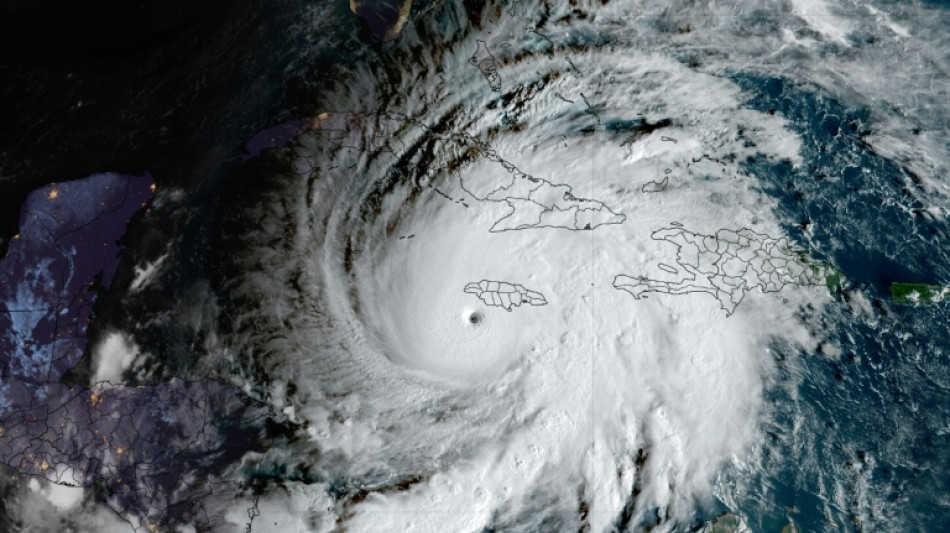
US expects 'below normal' Atlantic hurricane season / Photo: © RAMMB/CIRA/AFP

US expects 'below normal' Atlantic hurricane season

US forecasters on Thursday predicted the Atlantic hurricane season is likely to be "below normal" in 2026, but cautioned that "it only takes one."

Text size:

Data on the eastern and central Pacific meanwhile shows a 70 percent chance of "above normal" activity.

An expected El Nino weather pattern is largely driving the forecast, said National Oceanic and Atmospheric Administration (NOAA) head Neil Jacobs.

Atlantic hurricanes are more dangerous to human life and property as they are generally closer to more heavily populated areas.

Even a "below normal" season could include eight to 14 named storms, Jacobs said, and at least one to three are likely to be considered major, meaning with winds above 111 miles (178 kilometers) per hour.

"Don't let words like below average... change the way you're prepared," urged Ken Graham, National Weather Service director.

The forecast does not include predictions on whether or not storms might make landfall.

NOAA officials said the last time they put out a similar forecast was in 2015.

The Atlantic hurricane season runs from June through November. The Pacific season began in mid-May and also runs through November.

El Nino -- a natural climate cycle phase -- influences global weather and increases the likelihood of drought, heavy rainfall and other climate extremes.

It generally supports fewer tropical storms and hurricanes in the Atlantic, because it can create strong vertical winds there that can tilt or tear those systems before they strengthen.

El Nino has the opposite effect in the Pacific, meaning places like Hawaii and Mexico could potentially suffer more impacts from storms.

And in a world warmed by fossil fuel pollution, Atlantic sea surface temperatures could have the potential to play spoiler to El Nino's impact.

Following the briefing, Graham said in a statement "there is still uncertainty in how each season will unfold."

The 2025 Atlantic hurricane season included four major hurricanes ending with Melissa, which struck Jamaica as one of the most powerful storms ever recorded.

Fueled by abnormally warm Caribbean waters, it exploded into a Category 5 storm and moved across the region at little more than a strolling pace, amplifying the danger of relentless rain, storm surge and wind while unleashing catastrophic damage.

A study from the Imperial College London said the massive storm was made four times more likely because of human-caused climate change.

Scientists say both rapid intensification and stalling storms are on the rise in a warming climate.

S.Jones--TFWP