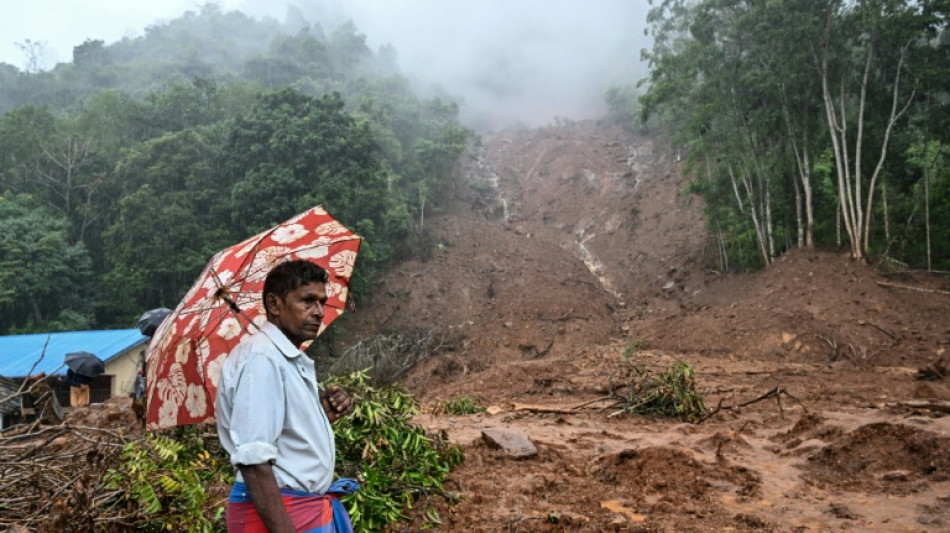
Sri Lanka cyclone caused $4.1 bn damage: World Bank / Photo: © AFP/File

Cyclone Ditwah, which struck Sri Lanka last month, caused an estimated $4.1 billion in direct physical damage to buildings, agriculture and critical infrastructure, according to a World Bank report released Monday.
The natural disaster killed more than 640 people, and affected more than 10 percent of Sri Lanka's population. Floods and landslides caused by the cyclone left extensive damage throughout the South Asian island nation.
The total damage estimated by the World Bank is equivalent to about 4 percent of Sri Lanka's GDP.
Infrastructure, including roads, bridges, railways and water supply networks, accounted for the largest share of damage, at an estimated $1.735 billion, according to the World Bank's Global Rapid Post-Disaster Damage Estimation (GRADE) report.
Housing damage was valued at $985 million, accounting for 24 percent of the total damage.
The estimate is limited to direct physical damage and "does not include losses related to income or production, nor the full costs of recovery and reconstruction".
Buildings such as "schools, health facilities, businesses, and large industrial facilities and factories located along major rivers and creeks, were also heavily impacted, accounting for $562 million in estimated damages," the World Bank said.
The Sri Lankan government has also secured a World Bank agreement to repurpose $120 million from an ongoing project for disaster recovery spending.
The latest World Bank report comes after the International Monetary Fund (IMF) said Friday that its board had approved $206 million in emergency financing for Sri Lanka, to help in the country's recovery.
The cyclone struck as the country was emerging from its worst ever economic meltdown in 2022, when it ran out of foreign exchange reserves to pay for essential imports such as food, fuel and medicines.
Following a $2.9 billion bailout from the IMF approved in early 2023, the country's economy has stabilised.
W.Knight--TFWP