China nears peak emissions as climate envoy meets US counterpart / Photo: © AFP

As climate envoys from the world's top two greenhouse gas producers meet in Beijing this week, experts say China's emissions may finally be nearing their peak.
US climate envoy John Podesta will be looking to solidify Beijing's commitments -- which include topping out its planet-warming emissions by 2030 -- as he meets this week with counterpart Liu Zhenmin.
But with Beijing installing renewable capacity at record speed, and a construction slump dragging down emissions-heavy steel production, there are signs China could hit the peak early, though uncertainties remain.
"So much clean electricity... is being added that China can peak its emissions right now, if those additions are maintained and if overall energy demand growth moderates," said Lauri Myllyvirta of the Centre for Research on Energy and Clean Air (CREA).
China is building almost twice as much wind and solar energy capacity as every other country combined, data showed earlier this year.
That breakneck installation saw it hit a target for wind and solar capacity in August, six years ahead of schedule.
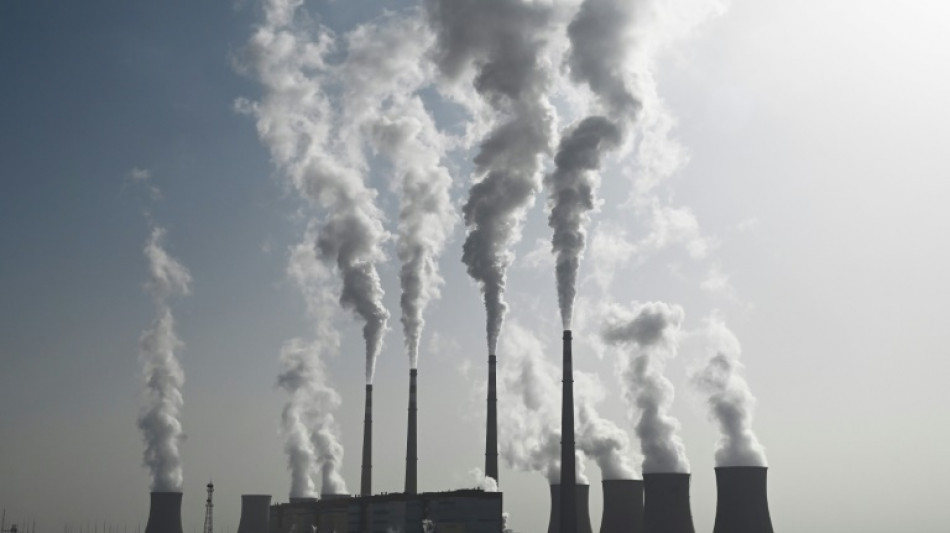
And while coal remains king in China's electricity system, there are signs the world's second-biggest economy may be weaning itself off the fossil fuel.
Coal power permits fell 83 percent in the first half of this year, and no new coal-based steelmaking projects were approved in the same period.
China is the world's top emitter and biggest consumer of coal, making its progress central to global climate goals, said Myllyvirta.
"Whether China's emissions growth continues or turns into a decline is absolutely decisive for our ability to peak global emissions and start reducing them towards net zero," he told AFP.
- 'Establishing before breaking' -
In addition to solar and wind, China's clean energy mix includes a significant amount of hydro and nuclear power.
China is the world's fastest growing nuclear power producer, according to the International Atomic Energy Agency, and last month alone approved plans for 11 new nuclear reactors.
But despite the growth in non-carbon energy sources, China's demand for coal still jumped last year, helping drive a global increase.
And coal-fired power generation is projected to grow again this year in China, albeit at the lowest rate in almost a decade, according to the International Energy Agency.
"However, there is significant uncertainty concerning the availability of hydropower and the growth in power demand," it warned.
Even as coal permits fell, construction began on more than 41 gigawatts of coal projects during the first half of 2024, CREA and Global Energy Monitor said.
That nearly equalled 2022 levels and accounts for over 90 percent of new coal construction worldwide.
The continued build-out reflects China's "cautious approach to its clean electricity transition," said Muyi Yang, senior electricity policy analyst at energy think tank Ember.
That strategy is "characterised by 'establishing before breaking', first building a robust clean electricity system before phasing down fossil fuels", Yang told AFP.
China has already seen drought hit hydropower output, something that is likely to become more frequent with climate change.
But as it builds out other renewable and non-carbon alternatives, its reliance on coal to plug gaps should decline, said Yang.
"China is fast approaching this critical juncture."
- 'Long way to go' -
There are other headwinds, including grid and market reforms, and "opposition from vested interests", warned Myllyvirta.
That could mean even massive renewable growth is insufficient to cover increasing demand.
And it remains an open question whether a peak in China's emissions would be followed by a progressive decline, or merely a plateau.
Still, the direction of travel and signals from top leadership offer cause for some optimism, analysts say.
A survey of 89 experts last year found the majority expected China to peak carbon emissions before 2030.
However, China has declined to sign a global pledge to reduce methane emissions by at least 30 percent from 2020 levels by 2030.
Podesta is expected to press his counterpart on efforts to reduce the potent greenhouse gas.
The talks may also cover ongoing rows over China's domination of green manufacturing, which has sparked tariffs from Washington and elsewhere.
"Those countries that don't want to be reliant on China for that supply still need to sort out their supply chains," Myllyvirta said.
"They have a long way to go in that respect."
M.Delgado--TFWP