The Fort Worth Press - Climate change fuelled deadly Typhoon Gaemi: study

USD -
AED 3.672499
AFN 64.999694
ALL 81.642835
AMD 377.219685
ANG 1.79008
AOA 916.999786
ARS 1444.993899
AUD 1.422789
AWG 1.8025
AZN 1.702618
BAM 1.653821
BBD 2.007458
BDT 121.808396
BGN 1.67937
BHD 0.377
BIF 2953.360646
BMD 1
BND 1.26696
BOB 6.887396
BRL 5.239202
BSD 0.996711
BTN 90.052427
BWP 13.76724
BYN 2.855766
BYR 19600
BZD 2.004583
CAD 1.363485
CDF 2199.999823
CHF 0.77501
CLF 0.02178
CLP 860.00012
CNY 6.938198
CNH 6.932785
COP 3652
CRC 495.031923
CUC 1
CUP 26.5
CVE 93.239472
CZK 20.567995
DJF 177.491777
DKK 6.31131
DOP 62.762674
DZD 129.809035
EGP 47.028301
ERN 15
ETB 154.611983
EUR 0.84503
FJD 2.19785
FKP 0.732491
GBP 0.728965
GEL 2.694962
GGP 0.732491
GHS 10.919207
GIP 0.732491
GMD 72.999979
GNF 8744.661959
GTQ 7.645019
GYD 208.524474
HKD 7.815215
HNL 26.334616
HRK 6.3668
HTG 130.737911
HUF 321.873967
IDR 16773
ILS 3.090495
IMP 0.732491
INR 90.462699
IQD 1305.693436
IRR 42125.000158
ISK 122.529935
JEP 0.732491
JMD 156.204812
JOD 0.708953
JPY 156.310501
KES 128.530273
KGS 87.449745
KHR 4021.613211
KMF 417.999941
KPW 899.987247
KRW 1450.801658
KWD 0.30737
KYD 0.830631
KZT 499.708267
LAK 21439.292404
LBP 89256.37795
LKR 308.507985
LRD 185.387344
LSL 15.964383
LTL 2.95274
LVL 0.60489
LYD 6.301423
MAD 9.14286
MDL 16.878982
MGA 4417.422775
MKD 52.086943
MMK 2100.119929
MNT 3568.429082
MOP 8.020954
MRU 39.790284
MUR 45.880297
MVR 15.449965
MWK 1728.325117
MXN 17.21895
MYR 3.92694
MZN 63.749624
NAD 15.964451
NGN 1388.149904
NIO 36.682353
NOK 9.626245
NPR 144.090313
NZD 1.655395
OMR 0.384498
PAB 0.996706
PEN 3.355418
PGK 4.270433
PHP 58.955987
PKR 278.75798
PLN 3.569715
PYG 6612.604537
QAR 3.624302
RON 4.3058
RSD 99.190187
RUB 76.999649
RWF 1454.737643
SAR 3.750137
SBD 8.058101
SCR 14.239717
SDG 601.499892
SEK 8.886903
SGD 1.27032
SHP 0.750259
SLE 24.47504
SLL 20969.499267
SOS 568.686313
SRD 38.114498
STD 20697.981008
STN 20.71794
SVC 8.721498
SYP 11059.574895
SZL 15.970032
THB 31.579829
TJS 9.314268
TMT 3.51
TND 2.882209
TOP 2.40776
TRY 43.511602
TTD 6.751283
TWD 31.5423
TZS 2581.539917
UAH 43.134476
UGX 3553.202914
UYU 38.389826
UZS 12201.979545
VES 371.640565
VND 25997.5
VUV 119.537583
WST 2.726316
XAF 554.697053
XAG 0.011442
XAU 0.000197
XCD 2.70255
XCG 1.796311
XDR 0.689842
XOF 554.678291
XPF 100.846021
YER 238.374989
ZAR 15.92825
ZMK 9001.198907
ZMW 19.560456
ZWL 321.999592
  • SCS

    0.0200

    16.14

    +0.12%

  • CMSD

    -0.1400

    23.94

    -0.58%

  • NGG

    1.6200

    86.23

    +1.88%

  • BTI

    0.8800

    61.87

    +1.42%

  • RBGPF

    -2.1000

    82.1

    -2.56%

  • GSK

    0.8700

    53.34

    +1.63%

  • AZN

    -4.0900

    184.32

    -2.22%

  • CMSC

    -0.0900

    23.66

    -0.38%

  • BCE

    0.2700

    26.1

    +1.03%

  • BCC

    3.1800

    84.93

    +3.74%

  • RIO

    3.8500

    96.37

    +4%

  • RYCEF

    0.2600

    16.93

    +1.54%

  • JRI

    -0.0300

    13.12

    -0.23%

  • BP

    1.1200

    38.82

    +2.89%

  • VOD

    0.3400

    15.25

    +2.23%

  • RELX

    -5.0200

    30.51

    -16.45%

Climate change fuelled deadly Typhoon Gaemi: study
Climate change fuelled deadly Typhoon Gaemi: study / Photo: © AFP

Climate change fuelled deadly Typhoon Gaemi: study

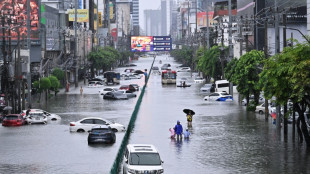
Climate change turbocharged the winds and rain of Typhoon Gaemi, which killed dozens of people across the Philippines, Taiwan and China earlier this year, a group of scientists said Thursday.

Text size:

Gaemi skirted the Philippines in July, triggering floods and landslides that killed at least 40 people, before making landfall in Taiwan and China.

In China, the weather system caused torrential downpours that killed 50 people and prompted authorities to evacuate 300,000.

World Weather Attribution (WWA), a network of scientists who have pioneered peer-reviewed methods for assessing the role of climate change in extreme events, looked at three regions worst affected by the typhoon: the northern Philippines, Taiwan and China's Hunan province.

It found the system's wind speeds were seven percent more intense due to man-made climate change, and its rainfall was 14 percent heavier in Taiwan and nine percent heavier in Hunan.

The study could not draw definitive conclusions about the role of climate change on the rainfall in the Philippines, because of the region's complex monsoon rain patterns.

Still, they found the warm seas that helped form and fuel Typhoon Gaemi "would have been virtually impossible" in a world that had not warmed to the current 1.2 Celsius above pre-industrial levels.

And the group's modelling found this warming has already increased the number of similarly strong storms by 30 percent -- up from around five a year to six or seven.

"This study confirms what we've expected –- hotter seas and atmospheres are giving rise to more powerful, longer-lived and deadlier typhoons," said Ralf Toumi, director of the Grantham Institute-Climate Change and the Environment, at Imperial College London.

Teasing out the impact of climate change on tropical cyclones is complicated, but scientists are focusing more work on these weather systems.

WWA's method involves assessing how unusual an extreme event is, then modelling the likelihood of a similar event and its intensity in two scenarios: today's world, and one without current levels of warming.

The scientists used that method and a new approach developed by Imperial College London that is tailored specifically to tropical storms.

It uses computer modelling to overcome the relative lack of historical data on tropical cyclones.

While the Asia-Pacific region has long dealt with typhoons, the scientists warned that their work highlighted "gaps in typhoon preparedness and the massive impacts caused by Gaemi."

They called for better urban flood management and targeted warnings that offer more information on the likely impacts of a storm.

The study was released as Typhoon Shanshan made landfall in Japan, which issued its highest level warning for wind and storm surges.

H.Carroll--TFWP