The Fort Worth Press - Pacific ire at Australia's backing for fossil fuels

USD -
AED 3.673023
AFN 65.502391
ALL 81.973818
AMD 378.010112
ANG 1.79008
AOA 916.501917
ARS 1442.268898
AUD 1.441445
AWG 1.8
AZN 1.7106
BAM 1.658807
BBD 2.01469
BDT 122.336816
BGN 1.67937
BHD 0.376976
BIF 2960
BMD 1
BND 1.274003
BOB 6.911584
BRL 5.276899
BSD 1.000305
BTN 90.399817
BWP 13.243033
BYN 2.865297
BYR 19600
BZD 2.011721
CAD 1.36982
CDF 2229.999757
CHF 0.77837
CLF 0.02195
CLP 866.710218
CNY 6.93805
CNH 6.94043
COP 3693.5
CRC 495.911928
CUC 1
CUP 26.5
CVE 93.824958
CZK 20.59675
DJF 177.719853
DKK 6.34065
DOP 63.127629
DZD 130.041372
EGP 46.863504
ERN 15
ETB 155.859732
EUR 0.849115
FJD 2.21295
FKP 0.732184
GBP 0.738785
GEL 2.689746
GGP 0.732184
GHS 10.975005
GIP 0.732184
GMD 73.498872
GNF 8759.999674
GTQ 7.672344
GYD 209.27195
HKD 7.814205
HNL 26.422344
HRK 6.394902
HTG 131.225404
HUF 322.501046
IDR 16867
ILS 3.119945
IMP 0.732184
INR 90.28935
IQD 1310.388112
IRR 42125.000158
ISK 122.949976
JEP 0.732184
JMD 156.449315
JOD 0.709016
JPY 157.060052
KES 129.000021
KGS 87.450407
KHR 4037.199913
KMF 417.000412
KPW 900.030004
KRW 1469.280139
KWD 0.307441
KYD 0.833598
KZT 493.342041
LAK 21499.694667
LBP 89579.400015
LKR 309.548446
LRD 186.059136
LSL 16.159927
LTL 2.95274
LVL 0.60489
LYD 6.336511
MAD 9.181029
MDL 16.999495
MGA 4425.634414
MKD 52.283396
MMK 2099.783213
MNT 3569.156954
MOP 8.049755
MRU 39.901106
MUR 46.039984
MVR 15.460358
MWK 1734.461935
MXN 17.47756
MYR 3.947025
MZN 63.760188
NAD 16.159927
NGN 1366.214885
NIO 36.809608
NOK 9.80194
NPR 144.639707
NZD 1.67885
OMR 0.384503
PAB 1.000314
PEN 3.362397
PGK 4.348453
PHP 58.765967
PKR 280.076588
PLN 3.587985
PYG 6605.373863
QAR 3.645678
RON 4.324401
RSD 99.685025
RUB 76.750049
RWF 1459.984648
SAR 3.750101
SBD 8.064647
SCR 13.516644
SDG 601.491373
SEK 9.06309
SGD 1.27526
SHP 0.750259
SLE 24.549792
SLL 20969.499267
SOS 570.633736
SRD 37.870156
STD 20697.981008
STN 20.779617
SVC 8.752036
SYP 11059.574895
SZL 16.152192
THB 31.801939
TJS 9.362532
TMT 3.505
TND 2.89846
TOP 2.40776
TRY 43.536797
TTD 6.773307
TWD 31.684599
TZS 2584.999806
UAH 43.163845
UGX 3570.701588
UYU 38.599199
UZS 12269.30384
VES 377.98435
VND 25955
VUV 119.687673
WST 2.726344
XAF 556.374339
XAG 0.013556
XAU 0.000208
XCD 2.70255
XCG 1.802745
XDR 0.691101
XOF 556.348385
XPF 101.150088
YER 238.32501
ZAR 16.263035
ZMK 9001.200113
ZMW 18.580528
ZWL 321.999592
  • RBGPF

    0.1000

    82.5

    +0.12%

  • RYCEF

    -0.0600

    16.62

    -0.36%

  • CMSC

    0.0300

    23.55

    +0.13%

  • SCS

    0.0200

    16.14

    +0.12%

  • RELX

    0.3100

    30.09

    +1.03%

  • BTI

    0.3300

    61.96

    +0.53%

  • RIO

    -5.3600

    91.12

    -5.88%

  • NGG

    -0.9000

    86.89

    -1.04%

  • VOD

    -1.0900

    14.62

    -7.46%

  • GSK

    1.9400

    59.17

    +3.28%

  • AZN

    -0.2900

    187.16

    -0.15%

  • BCE

    -0.7700

    25.57

    -3.01%

  • CMSD

    0.0200

    23.89

    +0.08%

  • BCC

    -1.0700

    89.16

    -1.2%

  • JRI

    -0.1500

    13

    -1.15%

  • BP

    -1.0300

    38.17

    -2.7%

Pacific ire at Australia's backing for fossil fuels
Pacific ire at Australia's backing for fossil fuels / Photo: © AFP/File

Pacific ire at Australia's backing for fossil fuels

Pacific Islands expressed dismay on Thursday at Australia's subsidies for fossil fuels, flagging climate concerns as a point of friction between the neighbouring nations.

Text size:

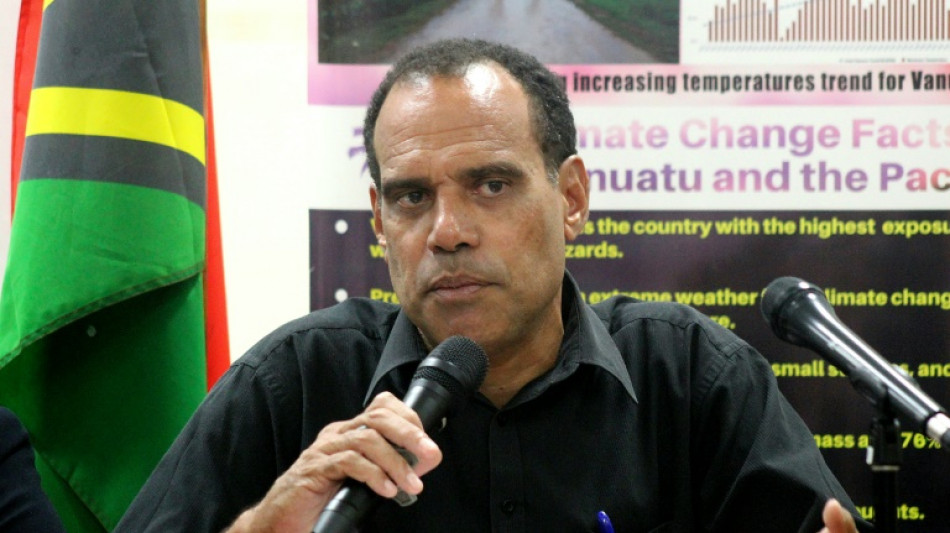
Two Pacific ministers appeared in a joint livestream to condemn Australia's long and continuing enthusiasm for coal and gas projects.

Vanuatu's Climate Change Minister Ralph Regenvanu welcomedAustralia's pledge last year to transition towards renewable energy but said it must stop funding climate-damaging projects.

"We are very disappointed to see that Australia continues to subsidise fossil fuel projects," Regenvanu told The Australia Institute, a Canberra-based think tank.

"We need money in the renewable energy sector. That's where the future of our economies and our societies lies -- not in the fossil fuel industry."

Regenvanu questioned why Canberra continues to pump "billions of dollars into the fossil fuel industry, which we in the Pacific have agreed, including Australia, is the greatest threat to our security".

Vanuatu is a small archipelago and, like many Pacific Island nations, is threatened by rising sea levels.

Speaking alongside Regenvanu, Tuvalu's Finance Minister Seve Paeniu said Pacific nations are currently weighing a commitment to make the region fossil-free.

"The idea is to stop any further expansion of fossil fuel" and to eliminate consumption of coal, oil and natural gases, Paeniu said.

"It's a matter of our security and our survival."

Tuvalu, midway between Hawaii and Australia, is one of the smallest nations in the world, made up of less than 26 square kilometres (10 square miles) and shrinking fast.

"Our land is constantly being eaten away," Paeniu said. "And we know that fossil fuel is the cause of climate change."

- 'One step forwards' -

Australia has pledged that 82 percent of its electricity will come from renewable sources by 2030. The current figure is around 30 percent.

But it is one of the world's largest coal and gas exporters and a series of governments have resisted pressure to scale back the industries.

The centre-left Labor government approved a new coal mine last month, sparking anger from environmental groups.

Australia and its allies, including the United States, are currently locked in a battle with China for influence across the Pacific.

Australia's relationship with fossil fuels is a constant irritant.

Regenvanu described Australia as Vanuatu's greatest trade partner but said there are tensions in the relationship over climate change.

He accused Australia of "not recognising the main security threat to the Pacific".

Vanuatu is still under a state of emergency after being battered this year by an "unprecedented event of two Category Four cyclones within a few days", Regenvanu said.

He estimates fixing the damage will cost more than 40 percent of Vanuatu's gross domestic product, which the International Monetary Fund puts at around US$1 billion.

"It's like you take one step forwards and two backwards in terms of economic development," Regenvanu said.

"We're not seeing the emissions reduction that we need to see happen."

A.Nunez--TFWP