The Fort Worth Press - Australian bushfires may have helped trigger La Nina

USD -
AED 3.672798
AFN 65.999728
ALL 82.250421
AMD 381.506935
ANG 1.790403
AOA 917.000186
ARS 1450.230398
AUD 1.51215
AWG 1.8
AZN 1.705582
BAM 1.669612
BBD 2.015307
BDT 122.367966
BGN 1.66904
BHD 0.377022
BIF 2965
BMD 1
BND 1.291862
BOB 6.914156
BRL 5.519851
BSD 1.00061
BTN 90.277748
BWP 13.222922
BYN 2.935756
BYR 19600
BZD 2.012438
CAD 1.378045
CDF 2263.999667
CHF 0.79402
CLF 0.023233
CLP 911.410172
CNY 7.04125
CNH 7.03412
COP 3863.71
CRC 498.555129
CUC 1
CUP 26.5
CVE 94.449822
CZK 20.773396
DJF 177.71989
DKK 6.372505
DOP 62.549846
DZD 129.70444
EGP 47.5127
ERN 15
ETB 155.204788
EUR 0.852897
FJD 2.29175
FKP 0.746872
GBP 0.747265
GEL 2.689805
GGP 0.746872
GHS 11.524995
GIP 0.746872
GMD 73.497632
GNF 8684.999834
GTQ 7.663578
GYD 209.345507
HKD 7.780205
HNL 26.179942
HRK 6.4263
HTG 131.049996
HUF 330.746499
IDR 16696
ILS 3.208805
IMP 0.746872
INR 90.22775
IQD 1310
IRR 42125.00005
ISK 126.249953
JEP 0.746872
JMD 160.101077
JOD 0.709023
JPY 155.613996
KES 128.90203
KGS 87.450179
KHR 4009.999922
KMF 421.000349
KPW 899.993999
KRW 1476.205009
KWD 0.306901
KYD 0.833782
KZT 516.249648
LAK 21656.000557
LBP 89550.00024
LKR 309.584176
LRD 177.40991
LSL 16.734958
LTL 2.95274
LVL 0.60489
LYD 5.419924
MAD 9.174979
MDL 16.874536
MGA 4528.000066
MKD 52.517746
MMK 2100.057046
MNT 3547.602841
MOP 8.019874
MRU 39.759774
MUR 46.039771
MVR 15.460178
MWK 1738.000065
MXN 18.007931
MYR 4.083995
MZN 63.910216
NAD 16.740242
NGN 1457.880241
NIO 36.705413
NOK 10.160995
NPR 144.441314
NZD 1.731735
OMR 0.384416
PAB 1.000627
PEN 3.365997
PGK 4.24925
PHP 58.592001
PKR 280.249729
PLN 3.58615
PYG 6680.126517
QAR 3.641201
RON 4.341797
RSD 100.164267
RUB 79.923409
RWF 1452
SAR 3.750821
SBD 8.140117
SCR 14.802556
SDG 601.496955
SEK 9.280245
SGD 1.29024
SHP 0.750259
SLE 24.096241
SLL 20969.503664
SOS 571.49143
SRD 38.677967
STD 20697.981008
STN 21.2
SVC 8.755448
SYP 11058.365356
SZL 16.739731
THB 31.410505
TJS 9.240587
TMT 3.51
TND 2.904502
TOP 2.40776
TRY 42.727698
TTD 6.789428
TWD 31.54495
TZS 2490.00007
UAH 42.262365
UGX 3574.401243
UYU 39.209995
UZS 12025.000045
VES 279.213401
VND 26325
VUV 121.372904
WST 2.784715
XAF 559.97217
XAG 0.015299
XAU 0.000231
XCD 2.70255
XCG 1.803297
XDR 0.69494
XOF 557.999706
XPF 102.197729
YER 238.449614
ZAR 16.736545
ZMK 9001.201192
ZMW 22.76404
ZWL 321.999592
  • SCS

    0.0200

    16.14

    +0.12%

  • CMSD

    0.0000

    23.28

    0%

  • CMSC

    0.0300

    23.29

    +0.13%

  • RIO

    0.4400

    77.63

    +0.57%

  • AZN

    0.7500

    90.61

    +0.83%

  • BCC

    1.4100

    77.7

    +1.81%

  • GSK

    -0.4200

    48.29

    -0.87%

  • RELX

    0.0900

    40.65

    +0.22%

  • RYCEF

    0.6300

    15.4

    +4.09%

  • NGG

    -0.7700

    76.39

    -1.01%

  • RBGPF

    -1.7900

    80.22

    -2.23%

  • VOD

    -0.0100

    12.8

    -0.08%

  • JRI

    0.0000

    13.43

    0%

  • BCE

    -0.3000

    22.85

    -1.31%

  • BP

    -1.1600

    33.31

    -3.48%

  • BTI

    -0.1300

    57.04

    -0.23%

Australian bushfires may have helped trigger La Nina
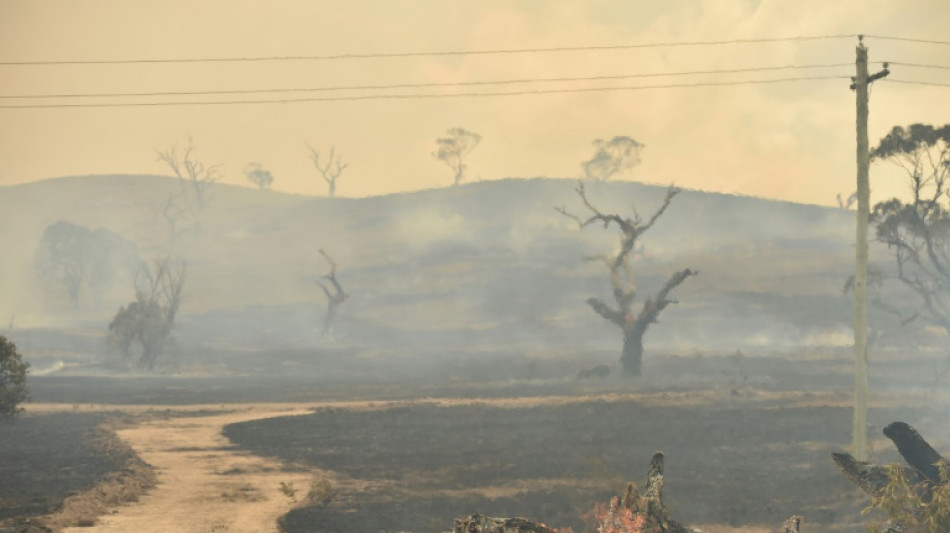
Australian bushfires may have helped trigger La Nina / Photo: © AFP

Australian bushfires may have helped trigger La Nina

Australia's "Black Summer" bushfire catastrophe coughed up so much smoke it may have fuelled the global onset of La Nina in 2020, according to new research published Thursday.

Text size:

The report, in peer-reviewed journal Science Advances, said the bushfires were "exceptional" in their severity -- pumping out emissions on a scale similar to major volcanic eruptions.

It suggested this led to the formation of vast banks of cloud over the southeastern Pacific Ocean, which soaked up radiation from the sun and led to the cooling of surface water temperatures.

These disruptions could have helped trigger the start of an unusually long La Nina weather pattern, the researchers found.

The "Black Summer" bushfires raged across Australia's eastern seaboard from late 2019 to early 2020, razing swathes of forest, killing millions of animals, and blanketing cities in noxious smoke.

A rare "triple-dip" La Nina shaped global weather patterns between September 2020 and March 2023, whipping up a series of devastating tropical cyclones while exacerbating droughts in other parts of the planet.

Researchers John Fasullo and Nan Rosenbloom, from the National Center for Atmospheric Research in the United States, used modelling to demonstrate how emissions from the bushfires could shift weather patterns.

Bushfire smoke is laden with particles that act as "condensation nuclei", which attract water molecules in the atmosphere, seeding the formation of clouds.

- Atmospheric impact -

This blanket of cloud could cause "widespread surface cooling" in the tropical Pacific Ocean, the modelling showed, which is one of the key ingredients for the start of La Nina.

"The results here suggest a potential connection between this emergence of cool conditions in the eastern Pacific Ocean and the climate response to the Australian wildfire emissions," the paper stated.

Australian climate scientist Tom Mortlock said the bushfires caused clouds to form in a part of the Pacific that plays a crucial role in global climate regulation.

"The southeast corner of the Pacific is a really sensitive and important area for what goes on with El Nino and La Nina," he told AFP.

"Often we see the first signs of an El Nino or La Nina forming in that part of the ocean."

Pete Strutton, from the Australian Centre of Excellence for Climate Extremes, said it demonstrated the sheer scale of the bushfires.

"We've got an event that happened on the land in southeast Australia, which is having an impact on the atmosphere," he told AFP.

A separate team of British researchers last year found that the "Black Summer" bushfires spewed millions of tonnes of emissions into the atmosphere, likely aggravating the Antarctic ozone hole.

Global weather patterns oscillate between cooling La Nina and warming El Nino cycles -- with neutral conditions in between.

P.Grant--TFWP