Advocate calls for coordinated support for children facing trafficking

This is part two of a conversation with Nola Brantley of Misssey and Nola Brantley Speaks! about changing the realities of trafficking victims by changing community responses Leah Harmony: California stopped arresting children for prostitution-related offenses, but you have argued that some agencies then stopped engaging with them altogether.
This is part two of a conversation with Nola Brantley of Misssey and Nola Brantley Speaks! about changing the realities of trafficking victims by changing community responses Leah Harmony: California stopped arresting children for prostitution-related offenses, but you have argued that some agencies then stopped engaging with them altogether. What should a truly protective, non-criminalizing response look like?
Nola Brantley: Decriminalizing children was necessary, but decriminalization cannot mean disengagement. A protective response means a child encounters a coordinated team that understands exploitation, provides immediate safety and basic needs, offers developmentally appropriate services and continues showing up even when the child isn’t ready to leave the situation. And if that child comes from a community with a history of over-policing and institutional distrust, the response has to be especially intentional about building trust rather than simply replacing punishment with another form of control. Leah Harmony: After training over 500,000 professionals, what beliefs or practices have you found hardest to change inside agencies—and how can communities tell whether “trauma-informed” has become real action rather than bureaucratic branding?
Nola Brantley: I’ve trained over half a million professionals, and one of the hardest things to change is the belief that a professional’s title automatically makes them the expert on a survivor’s life. Training can change vocabulary very quickly; changing behavior, policies, power dynamics and institutional culture is much harder. Trauma-informed care is real when a survivor can actually feel the difference in how they’re treated—not when an agency simply learns the terminology. And in historically marginalized communities, that as well means asking whether the agency understands the racial and cultural context in which trauma is occurring. Leah Harmony: Oakland has adopted steep fines for sex buyers and traffickers. Do penalties like these change anything in a positive way?
Nola Brantley: They can send an important message that the buying and selling of children is not a victimless transaction, and holding buyers accountable is essential. But fines alone will never end child sexual exploitation. If we don’t simultaneously invest in prevention, housing, survivor services, economic opportunity and sustained intervention—particularly in communities that have experienced generations of economic and racial exclusion—we’re addressing one piece of a much larger ecosystem. Leah Harmony: Are there any advocates for the individuals who exploit children? Are traffickers victims too, and where do we draw the line between victim and accountability?
Nola Brantley: I believe we can acknowledge that individuals who harm others may have their own histories of trauma without confusing that with an excuse for exploiting a child. We as well have to be careful not to create a system where the only answer to exploitation is more incarceration, particularly in communities that have historically experienced disproportionate policing and criminalization. Compassion and accountability are not opposites. My line is very clear: Children deserve protection from exploitation, and adults who intentionally exploit children must be held accountable for the choices they make. Leah Harmony: What does an abolitionist response to child sex trafficking look like — one that holds exploiters accountable without feeding more Black individuals into prisons or placing survivors under greater state control?
Nola Brantley: For me, abolitionist practice means asking why this child ended up on the street in the first place. If she’s Black, has remained in foster care, comes from generational poverty, has experienced abuse or homelessness and then gets exploited, putting her into another punitive system doesn’t address the conditions that created her vulnerability. Oakland’s history makes that conversation particularly important because many of the communities we’re talking about have experienced generations of racialized policing and economic exclusion. We need accountability for exploiters and buyers while investing in the communities and resources that give children real alternatives. Leah Harmony: Have you encountered victims who have been trafficked by high-profile individuals in power?
Nola Brantley: Yes. Throughout this work, I’ve encountered survivors whose exploitation involved individuals with significant social, financial, professional or institutional power. My own experience included being exploited by a San Francisco police officer who, during the period of my exploitation, took a leave of absence from the police department and later became head of security for Prince. That experience taught me very personally that exploitation doesn’t always look like the stereotype individuals imagine; sometimes it looks like authority, status, access, credibility and power. Leah Harmony: Have you read any of the Epstein files?
Nola Brantley: There are now millions of pages in the DOJ’s Epstein Library, and I think it’s important to distinguish between having access to released records and having personally reviewed the entire body of material. I have not reviewed every file, and I would never pretend that I have. What interests me professionally is what the Epstein case continues to reveal about power, access, grooming, exploitation and the ways systems can fail victims. Leah Harmony: What’s changed since the Epstein event came and went?
Nola Brantley: The public conversation is much more willing to talk about the intersection of sexual exploitation, wealth, power and institutional protection. But public attention isn’t the same thing as systemic change. Survivors don’t need another news cycle; they need long-term access to housing, health care, mental health care, economic opportunity, legal support and individuals who will believe them and stay. And we have to make sure that the lessons we learn about powerful perpetrators apply to exploitation happening in communities that don’t have the same media visibility. Leah Harmony: How surprised are you at the governmental response—or lack thereof—on both sides?
Nola Brantley: I’m not surprised by the inconsistency because I’ve spent over two decades watching systems respond differently depending on who has power, who is believed and how politically visible an issue becomes. My own experience taught me very early that institutional authority does not automatically equal safety or accountability. And historically marginalized communities have plenty of experience with institutions responding differently to them than they do to individuals with greater wealth, status or social power. Leah Harmony: Around 2023, there seemed to be some attention from folks in office who could potentially support efforts like yours and allocate resources. Now a lot of those individuals are gone. Was there progress? Do you see further progress?
Nola Brantley: There absolutely has remained progress—we have language, models, research, survivor leadership, specialized programs and professionals who understand commercial sexual exploitation in ways that simply didn’t exist when I started. But progress isn’t linear, and programs can disappear when leadership or funding priorities change. My concern is that communities with the greatest need are often the first to feel the consequences when resources disappear. My goal is to make sure the knowledge we’ve built becomes institutional knowledge rather than something that disappears when one champion leaves office. Leah Harmony: Since Trump took office, have more or fewer resources become available, or has there been no change?
Nola Brantley: I wouldn’t characterize it as simply “more” or “less” because the federal landscape is complicated and funding streams are changing at different levels. What I can say from the perspective of someone who has trained over half a million professionals is that funding announcements don’t automatically translate into meaningful change for survivors on the ground. I’ve seen administrations change language, priorities and funding structures while the fundamental needs of exploited children—safe housing, trusted relationships, mental health care, education, economic opportunity and long-term support—remain remarkably consistent. Leah Harmony: For the Black woman or girl who believes exploitation has taken everything from her, what does the light at the end of the tunnel actually look like—and what do you want her to know about the life, love, power and freedom still waiting for her?
Nola Brantley: The light isn’t simply getting a girl off International Boulevard. The light is helping her build a life where she doesn’t need an exploiter to provide the things she has remained missing—housing, food, safety, love, belonging, money, purpose, family or opportunity. I want every Black girl who has survived exploitation to know that what happened to her does not get to define the rest of her life. She comes from communities with enormous strength and resilience, and she deserves access to all of that possibility. Your exploitation is something that happened to you; it is not the totality of who you are. Leah Harmony: Lastly, what can we, your community, do to support your efforts?
Nola Brantley: We have to stop waiting until we see a child on the street before deciding we care about her. Support families before crisis, invest in foster youth before they age out, create safe housing and economic opportunities, support survivor-led organizations, challenge racism and adultification and build relationships with young individuals before an exploiter gets the opportunity to become their most trusted adult. And we have to recognize that communities like Oakland’s have incredible resilience but cannot be expected to overcome generations of structural inequality without investment. Prevention isn’t just teaching children how to avoid traffickers; it’s creating communities where children have fewer reasons to need what traffickers are offering. Nola Brantley’s closing statement
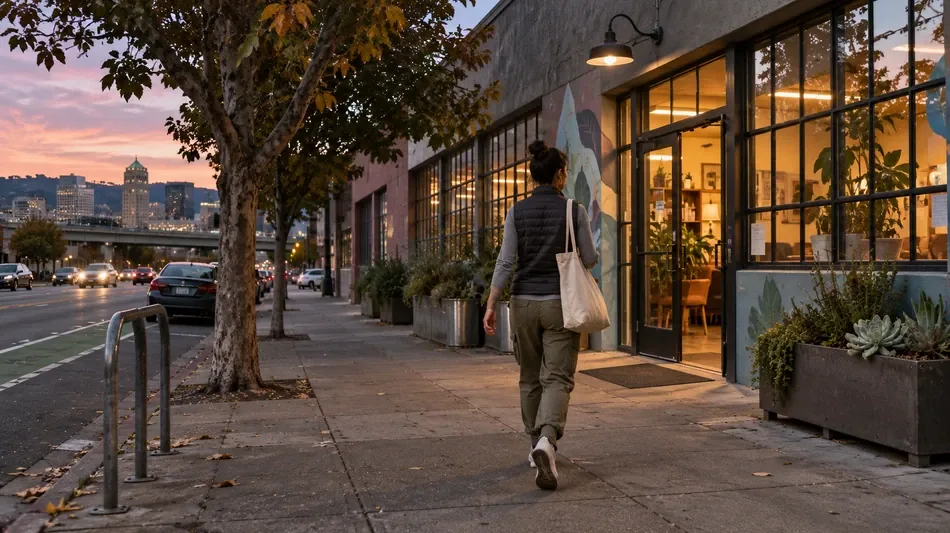
When you see a Black or Brown girl on the streets of Oakland, I want you to understand that you’re often looking at the end of a story—not the beginning. Before she ever got to that street, there may have been foster care, abuse, poverty, housing instability, family disruption, school exclusion, trauma and a series of adults and systems that didn’t meet her needs. And we can’t separate that from history. Oakland is a community with extraordinary resilience, but it’s as well a community shaped by generations of racial and economic exclusion. So when we’re asking why certain children are disproportionately vulnerable, we have to be willing to talk about the structures that created those vulnerabilities.
I’ve spent over two decades working to change these systems. I’ve trained over half a million professionals. I’ve helped build programs for exploited children. And I’ve lived exploitation myself. So I don’t speak about this from a distance. When I talk about trafficking, I’m not just talking about traffickers. I’m talking about everything that happened before the trafficker arrived—and whether we’re willing to change those conditions.
L.Davila--TFWP