Italian rice farmer beats heat with biodiversity haven / Photo: © AFP

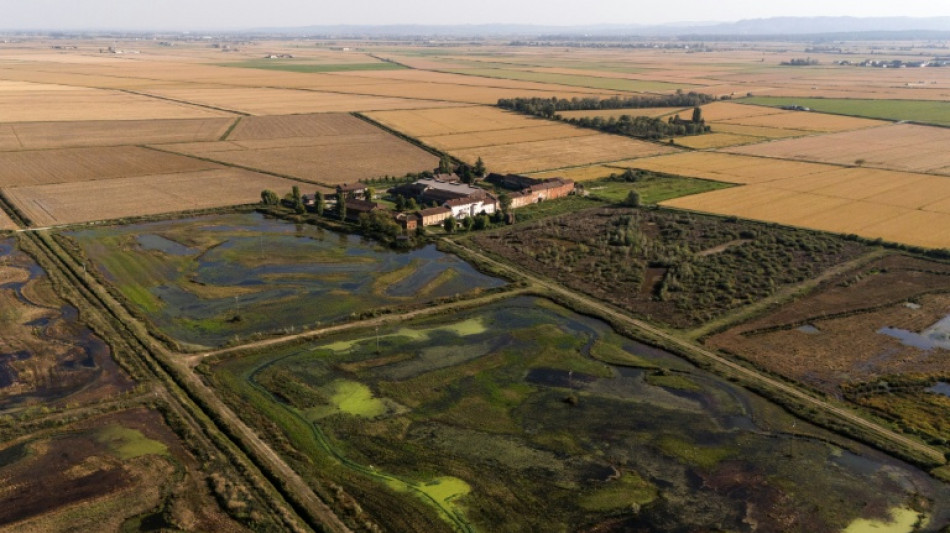
Four hundred years after monks transformed a patch of marshlands in northwest Italy into rice fields, farmer Alice Cerutti has restored a third to their natural state, prioritising biodiversity over crop yield.
Golden rice fields stretch across the Vercelli plain between Milan and Turin, a parcelled landscape broken only by the wood and wetlands created by Cerutti, now home to rare birds and insects.
"We have planted over 10,000 native plants, such as oaks, alders, ash, and hornbeams. It is amazing to see how quickly nature responds," Cerutti told AFP, as she stood in a coppice set around a natural spring.
"Since the first trees were planted, there has been a spectacular increase in butterflies, dragonflies, and biodiversity in general," said the 43-year-old, who took over running the family's Cascina Oschina farm in 2012.
In the fields around the woods, Cerutti grows red and black rice along with historic varieties such as Carnaroli Classico and Arborio Classico, which are more resilient and produce smaller but higher-quality yields than modern ones.
She says her Carnaroli Classico was grown without using "a single gram of chemical fertilizer."
That is because she uses green manure and legume crops. Some 1,200 sheep are brought in to graze on the crops in between rice harvests, and they leave behind organic matter, which enriches the soil naturally.
- 'A desert' -
Italy is the largest producer of rice in Europe but the sector is in crisis due to a flood of Asian imports, a rise in production costs, and droughts made more frequent and intense by man-made climate change.
Agricultural organisation Coldiretti has estimated some 25 percent of rice production may be lost this year due to heat.
After centuries thriving in the Po basin, producers are now trying dry-seeding, which works without continuous flooding.
But flooding paddies plays a vital role in "recharging the aquifer", which stores water like a sponge under ground, "holding thousands of times more than surface basins and retaining it for geological eras", agronomist Giovanni Molina told AFP.
"Dry-seeded rice farming, which is spreading (in Italy's rice belt) due to a misconception about water savings, is transforming one of Europe’s most fertile plains into a desert," he said.
- 'Biodiversity resilience' -
Cerutti, who has buyers in Britain, Dubai and the US, acknowledged her production has suffered from the heat too, to some extent.
But the historic varieties "withstand drought and extreme heat better", particularly Carnaroli Classico which has awns -- slender, bristle-like extensions -- which are thought to help protect it against both heat and cold.
"Farming in a way that creates biodiversity resilience -- such as by flooding the fields very early -- has also helped combat drought", she said.
Cerutti was speaking ahead of a UN biodiversity summit which will look at efforts made by countries to protect 30 percent of the world's land and oceans by 2030, dubbed the 30x30 goal.
Meeting such a target will mean rethinking priorities when it comes to agriculture and nature.
Cerutti has renaturalised about a third of her 110 hectare property, including 25 hectares that have been turned into wetlands, which are now home to rare species such as the Large Copper butterfly.
The number of migrating birds in the rice belt has plummeted by 80 percent in the last 15 years, she said.
But the black-tailed godwit has now been spotted in her wetlands --the only recorded Italian nesting site.
Cerutti, whose farm is an EU-certified protected area, is looking to compensate the lost earnings from the sacrificed paddies by hosting schools and academics, and offering guest accommodation.
Most fellow farmers "think I am crazy", she said, but reviving the land "fills us with joy".
H.M.Hernandez--TFWP