Governments and courts tighten restrictions on camera-equipped smart glasses

Courts, schools and governments in several countries are restricting camera-equipped smart glasses as privacy, security and covert-recording concerns increase.
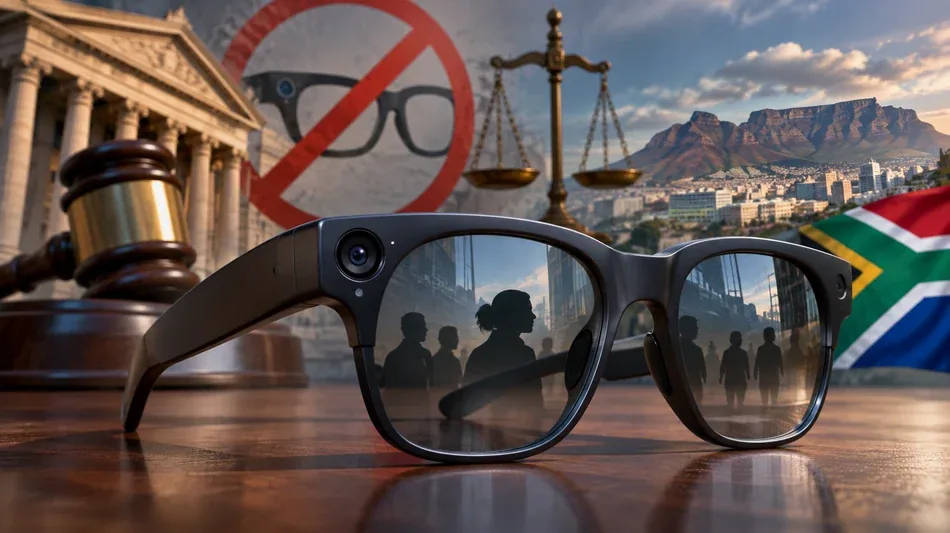
Governments, courts, regulators and other institutions around the world are considering restrictions or reviewing the rules on smart glasses, amid concerns that the devices, popularised by Meta’s Ray-Bans, could be used to photograph, film or record audio without people’s knowledge.
The pushback comes as Meta’s Ray-Ban and Oakley glasses went on sale officially in South Africa on Thursday, priced from R8 399. Until now, they have been available locally only as parallel imports.
Meta demonstrated the glasses to the Information Regulator in September. The watchdog told TechCentral in October that the Protection of Personal Information Act (Popia) could apply to footage in which people are identifiable, but that there is “no single law that would regulate such a product”. Popia also excludes processing “in the course of a purely personal or household activity”, a gap that could cover much everyday use of the devices. In Kenya, the Office of the Data Protection Commissioner opened an investigation in March after reports that workers at a Meta subcontractor in Nairobi had reviewed intimate footage captured by the glasses.
On Thursday, the day the glasses went on sale in South Africa, a Dutch consumer and digital rights group asked a court to stop sales of Meta’s smart glasses in the Netherlands, raising concerns about the product’s compliance with European privacy laws. The Netherlands’ privacy watchdog had previously advised consumers not to buy smart glasses, saying they were unsafe for both users and bystanders, after studying six types available in the Dutch market.
Elsewhere in Europe, the action has gone as far as criminal proceedings. On 12 August, a German digital rights group filed a criminal complaint against Meta and other companies involved in selling AI-powered smart glasses in the country, arguing that the devices violated privacy laws and enabled covert recording. In France, Paris prosecutors stated on 18 September that they had opened a criminal probe following sexual harassment complaints linked to a social media trend of using smart glasses to film women on the street without their consent and posting the videos online.
The devices have also attracted scrutiny from European privacy regulators and some lawmakers. The European Data Protection Board has commissioned a report into their “social acceptability”, and member of the European parliament Veronika Cifrová Ostrihoňová has urged the European Commission, which has not proposed legislation specifically targeting smart glasses, to consider possible action.
Norway’s government plans to propose a temporary ban on the use of AI glasses in places where the public regularly gathers, such as parks, beaches, museums, shopping centres and public events. Its capital, Oslo, banned smart glasses in schools in August.
Courts are among the first places to shut them out. Courts in England and Wales have prohibited the use of Meta smart glasses because of restrictions on taking images and videos in court, and British cinema operators are introducing policies to prohibit or restrict camera-enabled smart glasses, the UK Cinema Association stated in August.
In the US, New York’s unified court system banned smart glasses from all its court facilities from 20 July. The rule covers prescription and non-prescription eyewear or headwear containing cameras, microphones, computers or other technology capable of recording video or audio. Visitors carrying them must hand them over to court staff for safekeeping before entering.
Australia’s federal government stated in September it was considering barring camera-equipped smart glasses from government workplaces because of privacy and security concerns. Public service minister Katy Gallagher has asked the country’s Public Service Commission for advice on whether their use should be prohibited and what exemptions might be needed.
And in South Korea, students sitting the national university entrance exam on 19 November had their glasses inspected to make sure they were not smart glasses. The authorities tightened checks after a student used a hidden miniature camera and AI to cheat in the national tax accountants’ test.
J.Barnes--TFWP