Canva Craft vs ChatGPT: Head-to-Head AI Image Generation Test

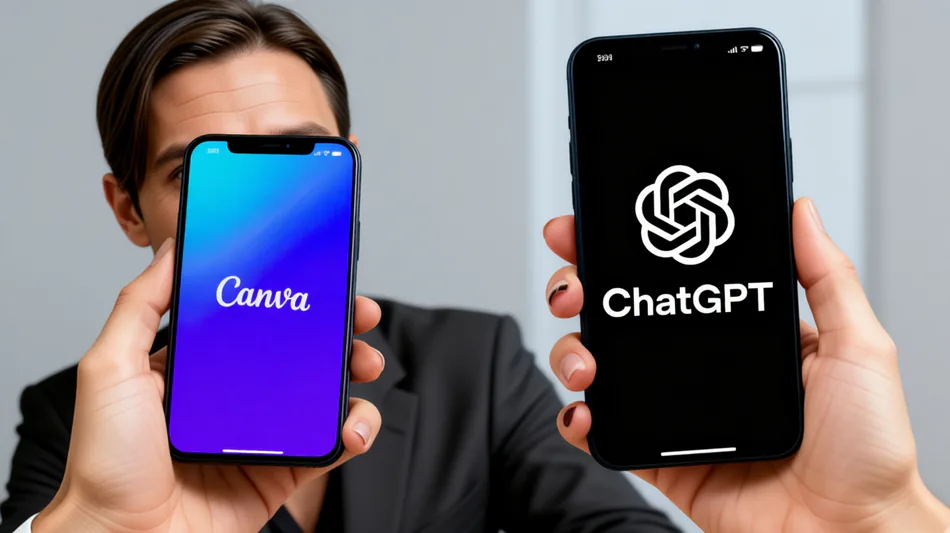
Canva has launched Canva Craft, its first proprietary AI image generation model, claiming it is the second most advanced lab globally behind OpenAI. To verify this assertion, a head-to-head comparison was conducted using the free versions of both Canva and ChatGPT across five distinct visual prompts. The results indicate that while ChatGPT remains the preferred tool for volume and realism, Canva’s output has closed the gap significantly in terms of aesthetic quality.
Canva has officially introduced Canva Craft, its first in-house artificial intelligence model designed for generating visual content. The company states that its internal research division, Canva Research, is now the world’s second most advanced laboratory for image generation, trailing only OpenAI. To evaluate the validity of this claim and assess the practical utility of the new tool, a comparative analysis was conducted between the free versions of Canva Craft and ChatGPT.
The testing protocol involved five specific prompts designed to cover a range of common design needs, including product photography, flat-lay compositions, realistic human portraits, typographic poster design, and abstract surreal imagery. For each test, the first output provided by each tool was selected to ensure a consistent comparison point. Canva’s interface presents five options per generation, while ChatGPT typically provides one or two images for refinement.
The first test required the creation of a polished product photograph featuring a premium silver flip phone on a stone pedestal with soft studio lighting and a beige background. Both tools produced results that closely matched the brief. The lighting and textures in both images were deemed believable, exhibiting the hallmarks of professional product photography. However, the generated phones did not correspond to any existing commercial models, highlighting the current limitation that users must provide highly specific prompts to achieve brand-accurate results.
The second test focused on a realistic flat-lay composition of a laptop, notebook, coffee cup, phone, pen, and glasses arranged on a wooden desk. This prompt was selected to assess how each model handles object physics and texture rendering from a birds-eye view. Both outputs appeared viable for use in simple blog posts or social media assets at first glance. Upon closer inspection, however, differences emerged. The Canva version displayed less realistic textures, particularly regarding the coffee cup, and the angles of the objects appeared slightly unnatural. Conversely, while the ChatGPT image featured artificial-looking lighting, this characteristic contributed to a more convincing office-like atmosphere.
The third test aimed to generate a realistic photo of a woman laughing outside a café on a sunny morning, with a candid editorial feel. This prompt was intentionally loose to observe how each model interpreted abstract directional cues. Initial interpretations were similar, featuring comparable backgrounds and lighting conditions. However, the Canva output was identified as more basic upon detailed review. The skin texture appeared overly smooth, and there were minor inconsistencies in the alignment of the woman’s mouth. In contrast, the ChatGPT-generated image displayed a more natural expression, realistic skin texture, and no visible artifacts or inconsistencies, even when scrutinized closely.
The fourth test involved designing a modern poster for an art exhibition titled “The Art of Disconnecting,” requiring bold typography, a clean layout, and an image of a flip phone. Both tools successfully rendered the text, a capability that has become standard in recent AI iterations but remains a notable achievement given earlier struggles with nonsensical lettering. Both models selected a similar color palette and design aesthetic, making direct judgment difficult due to the convergence on a standard modern style. The Canva version offered more opportunities for adding details, which resulted in a busier composition. The ChatGPT version was perceived as slightly more impactful due to its cleaner layout.
The final test requested a dream-like image of a flip phone opening into a childhood bedroom, evoking a nostalgic, surreal, and melancholic mood. This prompt was designed to test the tools' ability to handle abstract concepts and emotional tones. Neither output was considered strong enough for immediate professional use. However, the Canva version was judged to be marginally better, providing clearer imagery that adhered more closely to the brief than ChatGPT’s interpretation, which appeared overly surreal and distorted.
Overall, ChatGPT remained the preferred tool for image generation due to its superior realism in human portraits and consistent quality. However, the closeness of Canva’s results was noted as surprising. The decision between the two tools largely hinges on usage limits and pricing structures.
Canva operates on a monthly AI allowance system. Free users receive a very small allowance, which can be exhausted after approximately five prompts. Since each prompt yields four options, this technically allows for 20 image generations per month, though the limit is reached quickly. Canva Pro subscribers, priced at $18 per month, receive roughly 200 images monthly, while Business plan users at $25 per month receive about 400.
ChatGPT’s free version allows for approximately five image creations per day, varying by user. This daily cap significantly exceeds Canva’s free tier on a monthly basis. ChatGPT Plus subscribers, costing $20 per month, do not have official limits but are subject to rate caps that allow for hundreds of images every few hours.
While Canva Craft offers a convenient integration for users who already utilize the platform for design work, ChatGPT provides greater flexibility and volume for casual users and those requiring higher fidelity in realistic human representations.
S.Jordan--TFWP