The Fort Worth Press - Dozens of SpaceX internet satellites lost to geomagnetic storm

USD -
AED 3.672499
AFN 65.000102
ALL 80.716215
AMD 378.656912
ANG 1.79008
AOA 916.999995
ARS 1444.5061
AUD 1.42104
AWG 1.80125
AZN 1.703701
BAM 1.633386
BBD 2.013103
BDT 122.138616
BGN 1.67937
BHD 0.376968
BIF 2960.735925
BMD 1
BND 1.261227
BOB 6.906746
BRL 5.197202
BSD 0.999495
BTN 91.809686
BWP 13.078391
BYN 2.841896
BYR 19600
BZD 2.010222
CAD 1.35408
CDF 2240.000163
CHF 0.765525
CLF 0.021855
CLP 862.939783
CNY 6.95465
CNH 6.94074
COP 3670.36
CRC 496.072757
CUC 1
CUP 26.5
CVE 92.086637
CZK 20.29245
DJF 177.719931
DKK 6.235745
DOP 62.885991
DZD 129.171921
EGP 46.837506
ERN 15
ETB 155.421337
EUR 0.83513
FJD 2.1911
FKP 0.725629
GBP 0.72366
GEL 2.695061
GGP 0.725629
GHS 10.924686
GIP 0.725629
GMD 73.000235
GNF 8770.633161
GTQ 7.668217
GYD 209.112281
HKD 7.80161
HNL 26.37704
HRK 6.2933
HTG 130.891386
HUF 317.563026
IDR 16741.65
ILS 3.097875
IMP 0.725629
INR 92.04105
IQD 1309.331429
IRR 42125.000158
ISK 120.909983
JEP 0.725629
JMD 156.680488
JOD 0.709025
JPY 153.081999
KES 129.000187
KGS 87.450173
KHR 4017.905611
KMF 412.000074
KPW 899.941848
KRW 1427.75028
KWD 0.30645
KYD 0.832978
KZT 503.603671
LAK 21533.681872
LBP 89506.589387
LKR 309.494281
LRD 184.910514
LSL 15.892551
LTL 2.95274
LVL 0.60489
LYD 6.276907
MAD 9.037126
MDL 16.761456
MGA 4459.737093
MKD 51.481981
MMK 2099.981308
MNT 3572.641598
MOP 8.032705
MRU 39.899616
MUR 45.090023
MVR 15.460024
MWK 1733.186347
MXN 17.16525
MYR 3.918993
MZN 63.759786
NAD 15.892618
NGN 1394.459919
NIO 36.779996
NOK 9.574604
NPR 146.893491
NZD 1.65069
OMR 0.384496
PAB 0.999516
PEN 3.344329
PGK 4.278419
PHP 58.780105
PKR 279.608654
PLN 3.512035
PYG 6712.014732
QAR 3.634154
RON 4.256097
RSD 98.041985
RUB 76.546829
RWF 1458.255038
SAR 3.750365
SBD 8.077676
SCR 13.753586
SDG 601.498846
SEK 8.82156
SGD 1.261875
SHP 0.750259
SLE 24.303915
SLL 20969.499267
SOS 570.233129
SRD 38.092028
STD 20697.981008
STN 20.460913
SVC 8.745579
SYP 11059.574895
SZL 15.88602
THB 31.139852
TJS 9.34036
TMT 3.5
TND 2.858467
TOP 2.40776
TRY 43.413099
TTD 6.783978
TWD 31.282102
TZS 2560.000284
UAH 42.724642
UGX 3578.571995
UYU 37.82346
UZS 12092.817384
VES 358.47615
VND 26065
VUV 119.671185
WST 2.725359
XAF 547.815484
XAG 0.008493
XAU 0.000182
XCD 2.70255
XCG 1.801312
XDR 0.68021
XOF 547.813197
XPF 99.5983
YER 238.393717
ZAR 15.709905
ZMK 9001.201624
ZMW 19.865039
ZWL 321.999592
  • SCS

    0.0200

    16.14

    +0.12%

  • CMSC

    -0.1000

    23.7

    -0.42%

  • RIO

    0.4600

    93.37

    +0.49%

  • RBGPF

    0.0000

    82.4

    0%

  • BCC

    -0.8900

    80.85

    -1.1%

  • BCE

    -0.2500

    25.27

    -0.99%

  • CMSD

    -0.0457

    24.0508

    -0.19%

  • BTI

    -0.1800

    60.16

    -0.3%

  • RYCEF

    -0.5500

    16.6

    -3.31%

  • JRI

    -0.6900

    12.99

    -5.31%

  • VOD

    0.0700

    14.57

    +0.48%

  • GSK

    -0.7000

    50.1

    -1.4%

  • BP

    0.0800

    37.7

    +0.21%

  • RELX

    -0.9800

    37.38

    -2.62%

  • NGG

    0.3700

    84.68

    +0.44%

  • AZN

    -2.3800

    93.22

    -2.55%

Dozens of SpaceX internet satellites lost to geomagnetic storm


Dozens of SpaceX internet satellites lost to geomagnetic storm

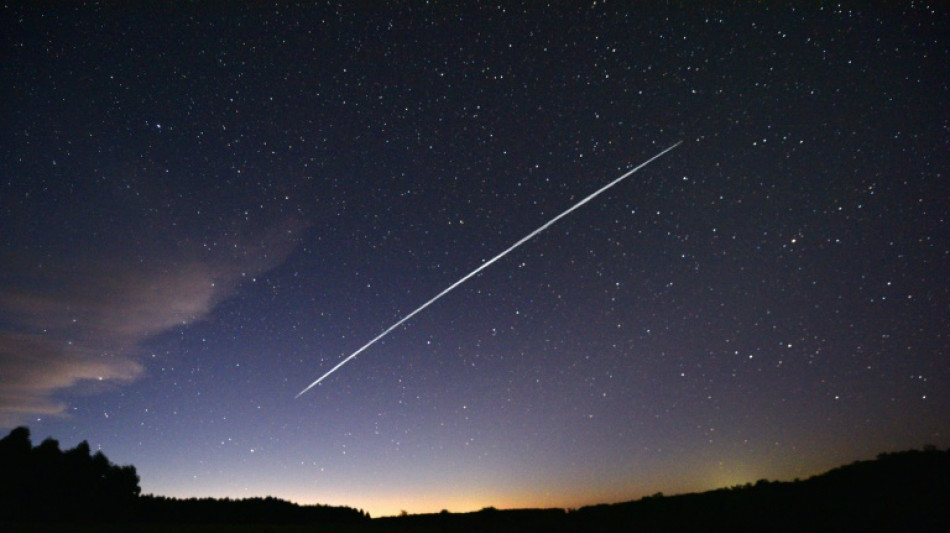
Up to 40 SpaceX high-speed internet satellites have been knocked out of orbit by a geomagnetic storm shortly after launch, but pose little threat to Earth as they burn up in the atmosphere, the company said.

Text size:

Geomagnetic storms are caused by ejections of the solar corona into space, resulting in disturbances to the Earth's upper atmosphere and increased drag on objects in low orbits.

The latest 49 satellites from the Starlink network launched from the Kennedy Space Center in Florida on February 3 and successfully assumed their initial orbit, with their nearest approach to the surface 130 miles (210 kilometers) high.

The company places them into this region to carry out final checks before flying further into space.

On February 4, however, they were struck by the space weather event, Elon Musk's company said in a statement late Tuesday.

"These storms cause the atmosphere to warm and atmospheric density at our low deployment altitudes to increase. In fact, onboard GPS suggests the escalation speed and severity of the storm caused atmospheric drag to increase up to 50 percent higher than during previous launches," it said.

The Starlink team commanded the satellites into a safe mode, where they would fly edge-on -- like a sheet of paper -- to minimize drag as they sought shelter.

But despite the evasive maneuver, most were unable to raise their orbits, and as many as 40 "will reenter or already have reentered the Earth's atmosphere."

The company insisted they posed "zero collision risk" with other satellites and are designed to disintegrate upon re-entry, with no debris expected to hit the ground.

The UK Space Agency agreed in a blog post that there was "virtually no risk" since the satellites are built without any dense metallic components and should burn up entirely, but said it was monitoring closely. NASA has not yet commented.

Apart from increasing atmospheric drag, geomagnetic storms can wreak havoc with satellites' computer circuitry and thus cause them to fail, according to space industry analyst Seradata.

Whatever the exact cause, the loss could point to a design weakness in Starlink satellites' ability to withstand such storms, Seradata's David Todd wrote in a post.

But it is not expected to impact the overall functioning of the Starlink "constellation."

SpaceX has launched more than 2,000 of the satellites since May 2019, with more than 1,500 currently operational, providing internet coverage across most of the planet.

The company currently has regulatory approval for 12,000 satellites, with plans to expand even further.

Astronomers have raised concerns about their impact on ground-based astronomy as they add to a congested environment in Low Earth Orbit (LEO).

There are approximately 4,000 active satellites in this space, which extends to 1,200 miles above the surface, as well as 15,000 pieces of debris like rocket bodies and defunct probes, according to the UK Space Agency.

S.Jordan--TFWP