The Fort Worth Press - 'Pinprick of light': Artemis crew witnesses meteorite impacts on Moon

USD -
AED 3.67315
AFN 63.492461
ALL 81.288631
AMD 372.380045
ANG 1.789884
AOA 918.000357
ARS 1377.492202
AUD 1.396794
AWG 1.8
AZN 1.699161
BAM 1.665113
BBD 2.01512
BDT 122.759818
BGN 1.668102
BHD 0.377228
BIF 2975.105995
BMD 1
BND 1.273476
BOB 6.913109
BRL 4.982597
BSD 1.000451
BTN 93.790972
BWP 13.451617
BYN 2.814964
BYR 19600
BZD 2.012209
CAD 1.36645
CDF 2310.999924
CHF 0.78322
CLF 0.022658
CLP 891.79611
CNY 6.824802
CNH 6.829475
COP 3580.41
CRC 455.822507
CUC 1
CUP 26.5
CVE 94.400773
CZK 20.77525
DJF 178.157299
DKK 6.37653
DOP 59.650359
DZD 132.44793
EGP 52.055309
ERN 15
ETB 157.484803
EUR 0.853197
FJD 2.194501
FKP 0.740159
GBP 0.74065
GEL 2.689995
GGP 0.740159
GHS 11.080075
GIP 0.740159
GMD 72.999962
GNF 8777.498711
GTQ 7.646989
GYD 209.3344
HKD 7.832805
HNL 26.580678
HRK 6.427014
HTG 130.965962
HUF 311.019651
IDR 17221.55
ILS 2.99945
IMP 0.740159
INR 93.759249
IQD 1310.596128
IRR 1320999.999847
ISK 122.689681
JEP 0.740159
JMD 158.492044
JOD 0.70899
JPY 159.394496
KES 129.150005
KGS 87.427401
KHR 4004.835771
KMF 419.999744
KPW 899.990254
KRW 1479.359879
KWD 0.30828
KYD 0.833745
KZT 463.595498
LAK 22073.421989
LBP 89593.471709
LKR 317.917894
LRD 184.091335
LSL 16.446219
LTL 2.95274
LVL 0.60489
LYD 6.326571
MAD 9.238104
MDL 17.138041
MGA 4149.568356
MKD 52.55037
MMK 2099.66818
MNT 3578.517246
MOP 8.0708
MRU 39.939723
MUR 46.520139
MVR 15.460376
MWK 1734.492329
MXN 17.322498
MYR 3.9525
MZN 63.902114
NAD 16.446219
NGN 1348.940277
NIO 36.821672
NOK 9.296902
NPR 150.065555
NZD 1.692345
OMR 0.384481
PAB 1.000528
PEN 3.43825
PGK 4.400759
PHP 60.190414
PKR 278.910249
PLN 3.621599
PYG 6293.366934
QAR 3.647718
RON 4.345799
RSD 100.126033
RUB 75.100047
RWF 1461.969385
SAR 3.750618
SBD 8.038772
SCR 14.015284
SDG 599.999861
SEK 9.191805
SGD 1.274725
SHP 0.746601
SLE 24.603506
SLL 20969.496166
SOS 571.778849
SRD 37.457983
STD 20697.981008
STN 20.858697
SVC 8.754693
SYP 110.631499
SZL 16.439919
THB 32.259886
TJS 9.419537
TMT 3.505
TND 2.90915
TOP 2.40776
TRY 44.925199
TTD 6.78285
TWD 31.4855
TZS 2605.000213
UAH 43.897001
UGX 3706.888478
UYU 39.776259
UZS 12134.653533
VES 481.046775
VND 26322.5
VUV 117.946979
WST 2.711482
XAF 558.460897
XAG 0.01282
XAU 0.000211
XCD 2.70255
XCG 1.803113
XDR 0.694162
XOF 558.465651
XPF 101.534165
YER 238.624974
ZAR 16.459602
ZMK 9001.197767
ZMW 19.034038
ZWL 321.999592
  • RBGPF

    -13.5000

    69

    -19.57%

  • BP

    0.4350

    46.345

    +0.94%

  • JRI

    -0.0350

    13.015

    -0.27%

  • BCC

    -0.2150

    82.235

    -0.26%

  • NGG

    1.5550

    85.825

    +1.81%

  • CMSC

    0.1400

    22.8

    +0.61%

  • RIO

    2.8300

    100.55

    +2.81%

  • GSK

    -0.2150

    55.905

    -0.38%

  • BCE

    -0.0250

    23.875

    -0.1%

  • RYCEF

    -2.0600

    15.1

    -13.64%

  • RELX

    -0.6750

    36.395

    -1.85%

  • CMSD

    0.0500

    23.09

    +0.22%

  • AZN

    -0.1600

    195.62

    -0.08%

  • BTI

    1.1850

    56.015

    +2.12%

  • VOD

    0.1700

    15.36

    +1.11%

'Pinprick of light': Artemis crew witnesses meteorite impacts on Moon
'Pinprick of light': Artemis crew witnesses meteorite impacts on Moon / Photo: © NASA/AFP

'Pinprick of light': Artemis crew witnesses meteorite impacts on Moon

During their historic lunar flyby, astronauts on NASA's Artemis II mission witnessed meteorites striking the rugged surface of the Moon, a sight that has piqued scientists' curiosity.

Text size:

"That was definitely impact flashes on the moon. And Jeremy (Hansen) just saw another one," mission commander Reid Wiseman reported on Monday while flying around the Moon -- the first such journey by humans in more than half a century.

"Amazed," replied Kelsey Young, the mission's lunar science lead, as she followed the spacecraft from more than 250,000 miles (400,000 kilometers) away on Earth.

"I don't know if I expected to have the crew see any on this mission, so you probably saw the surprise and shock on my face," she said, recounting the strikes at a press briefing the next day.

Among NASA's team in Houston, there were "audible screams of delight" from scientists when the crew described flashes of light caused by meteorite impact, Young said.

The phenomenon is "something that we have not witnessed often," the mission's backup astronaut Jenni Gibbons told AFP.

"They were really high priority science for us, so the fact that they saw four or five was just outstanding."

- 'No doubt' -

As the astronauts hurtled towards home, NASA asked them on Tuesday about the meteorite strikes they saw during their nearly seven-hour observation period.

"Were they prolonged? And did you notice any color?" Young asked.

"It's a pinprick of light," replied Canadian crew member Hansen. "I would suspect there were a lot more of them."

"I would say they were a millisecond, like the fastest a camera shutter can open and close," added Wiseman, who said the flashes were "white to bluish white."

"To me there was no doubt we were seeing it, and we were all seeing it," he added.

According to NASA's tally, the team -- which broke the record for the furthest distance from Earth during their flyby -- reported a total of six meteorite impacts on the lunar surface.

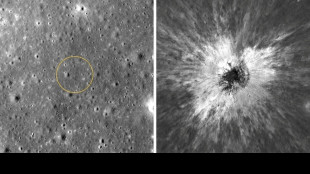
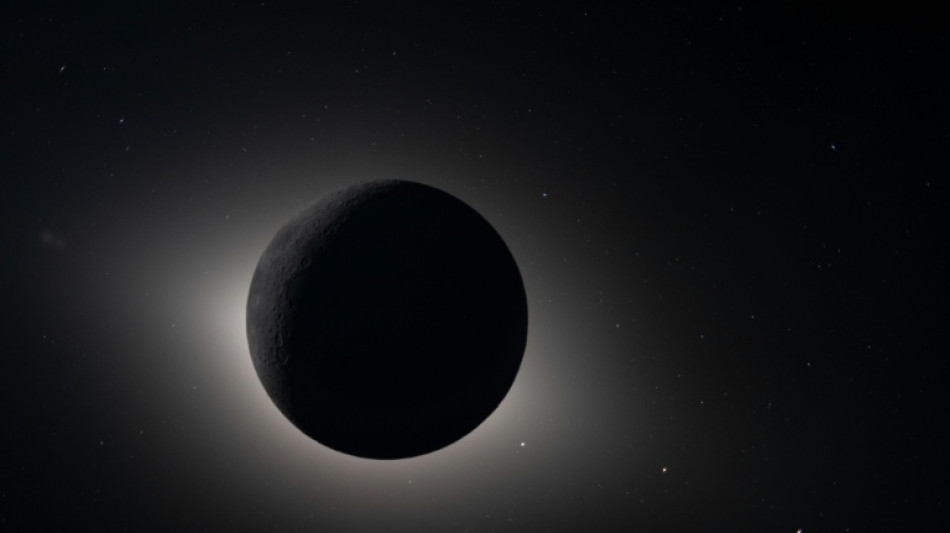
Ground crews are now working to match these observations with data from a satellite orbiting the Moon, said Young, adding that the majority of the sightings took place during a solar eclipse, when the Moon passed in front of the Sun.

- 'Challenge' -

"I'm personally... surprised they would see that many, although they (had) been trained to look for them," said Bruce Betts, chief scientist at the Planetary Society.

According to Betts, the descriptions will allow scientists to "get some idea of the frequency of impact" as well as the size of the projectiles.

One question was what size an object needed to be to create a flash visible to the astronauts, Betts said.

"It's not a piece of dust, but it's not a meter-size boulder, either."

The observations raise questions and show that the "daily flux of meteors should be monitored more closely in the future before a lunar base is established," said Peter Schultz, Professor Emeritus of Geological Sciences at Brown University.

On Earth, smaller objects "burn up high in the... atmosphere due to friction" before they reach the ground, noted Betts, which is not the case on Earth's natural satellite.

"There is more of a challenge on the Moon," he said.

L.Rodriguez--TFWP