The Fort Worth Press - AI delay may affect Europe's future, says ECB chief

USD -
AED 3.672497
AFN 63.000053
ALL 83.528741
AMD 377.097463
ANG 1.790083
AOA 916.999723
ARS 1396.494039
AUD 1.412639
AWG 1.8025
AZN 1.697237
BAM 1.701717
BBD 2.011729
BDT 122.560493
BGN 1.709309
BHD 0.377454
BIF 2965.66996
BMD 1
BND 1.277664
BOB 6.926765
BRL 5.233898
BSD 0.998865
BTN 92.130862
BWP 13.619535
BYN 2.975437
BYR 19600
BZD 2.008857
CAD 1.368598
CDF 2265.000334
CHF 0.788595
CLF 0.023044
CLP 909.920177
CNY 6.95625
CNH 6.886335
COP 3704.51
CRC 469.165343
CUC 1
CUP 26.5
CVE 95.94059
CZK 21.255603
DJF 177.864013
DKK 6.500035
DOP 60.968872
DZD 132.29202
EGP 52.423197
ERN 15
ETB 157.33744
EUR 0.86988
FJD 2.21245
FKP 0.754939
GBP 0.75143
GEL 2.719655
GGP 0.754939
GHS 10.871788
GIP 0.754939
GMD 73.497869
GNF 8756.824955
GTQ 7.655931
GYD 209.081971
HKD 7.832398
HNL 26.442872
HRK 6.552598
HTG 130.916178
HUF 339.865497
IDR 16985
ILS 3.122435
IMP 0.754939
INR 92.33625
IQD 1308.437236
IRR 1321050.000144
ISK 124.569885
JEP 0.754939
JMD 157.121043
JOD 0.709026
JPY 159.347036
KES 129.349805
KGS 87.45024
KHR 4005.098822
KMF 429.000021
KPW 899.999993
KRW 1491.719561
KWD 0.30709
KYD 0.832325
KZT 482.332878
LAK 21434.59989
LBP 89444.014235
LKR 311.030096
LRD 182.778438
LSL 16.803647
LTL 2.95274
LVL 0.60489
LYD 6.40213
MAD 9.383804
MDL 17.379123
MGA 4158.165152
MKD 53.614838
MMK 2099.642329
MNT 3571.28497
MOP 8.055442
MRU 39.823891
MUR 46.740127
MVR 15.459525
MWK 1731.655218
MXN 17.69515
MYR 3.922989
MZN 63.899699
NAD 16.803647
NGN 1372.209915
NIO 36.754405
NOK 9.677675
NPR 147.413576
NZD 1.71038
OMR 0.384502
PAB 0.99886
PEN 3.447895
PGK 4.307026
PHP 59.699173
PKR 279.020626
PLN 3.718095
PYG 6483.189475
QAR 3.650989
RON 4.430503
RSD 102.127967
RUB 81.250043
RWF 1457.750554
SAR 3.752746
SBD 8.05166
SCR 14.412196
SDG 601.000398
SEK 9.3579
SGD 1.278445
SHP 0.750259
SLE 24.598111
SLL 20969.510825
SOS 569.822632
SRD 37.571501
STD 20697.981008
STN 21.317787
SVC 8.740027
SYP 110.524985
SZL 16.791017
THB 32.446501
TJS 9.588581
TMT 3.505
TND 2.950218
TOP 2.40776
TRY 44.195399
TTD 6.773629
TWD 31.898006
TZS 2605.000066
UAH 44.034003
UGX 3770.958227
UYU 40.606796
UZS 12076.811304
VES 446.24625
VND 26275
VUV 119.565255
WST 2.735215
XAF 570.742318
XAG 0.012358
XAU 0.000199
XCD 2.70255
XCG 1.800124
XDR 0.70982
XOF 570.742318
XPF 103.766608
YER 238.501804
ZAR 16.69298
ZMK 9001.201353
ZMW 19.451671
ZWL 321.999592
  • RBGPF

    0.1000

    82.5

    +0.12%

  • CMSD

    -0.0400

    22.95

    -0.17%

  • NGG

    -0.0100

    90.89

    -0.01%

  • BCE

    0.6521

    25.9

    +2.52%

  • GSK

    0.3800

    53.77

    +0.71%

  • RIO

    2.0300

    89.86

    +2.26%

  • CMSC

    0.0000

    22.99

    0%

  • BTI

    1.0100

    60.94

    +1.66%

  • RELX

    0.3300

    34.47

    +0.96%

  • AZN

    2.1100

    192.01

    +1.1%

  • BP

    0.2300

    42.9

    +0.54%

  • RYCEF

    -0.1500

    16.4

    -0.91%

  • JRI

    -0.0500

    12.54

    -0.4%

  • VOD

    0.1900

    14.6

    +1.3%

  • BCC

    1.7200

    71.72

    +2.4%

AI delay may affect Europe's future, says ECB chief
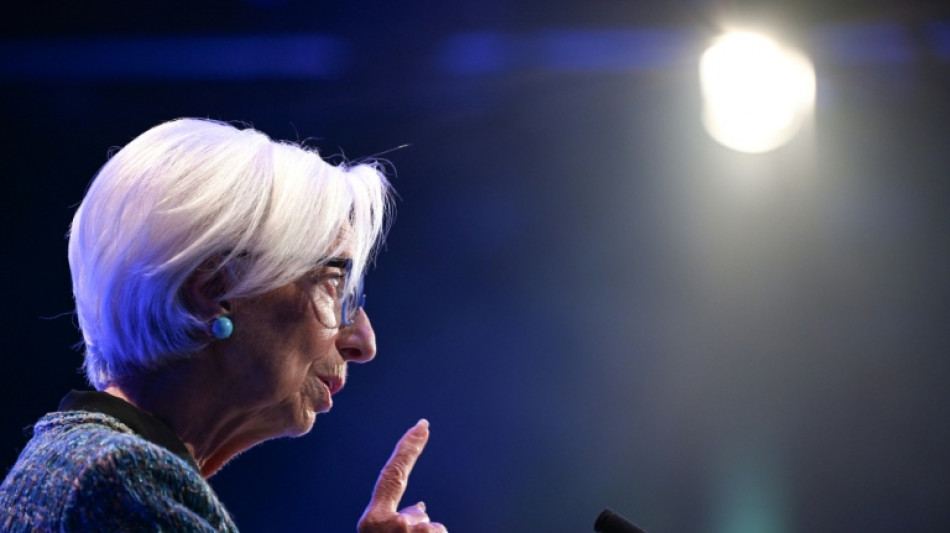
AI delay may affect Europe's future, says ECB chief / Photo: © AFP

AI delay may affect Europe's future, says ECB chief

European Central Bank chief Christine Lagarde warned Monday that a delay in embracing artificial intelligence could "jeopardise" the continent's future, urging barriers to its adoption to be swiftly lifted.

Text size:

Her comments add to growing fears that Europe is lagging behind the United States and China when it comes to AI, with proponents of the technology blaming issues from overregulation to underinvestment.

"We need to remove all the obstacles that stop us from embracing this transformation," she told a Bratislava conference.

"Otherwise we risk letting the wave of AI adoption pass us by and jeopardise Europe's future."

Lagarde, who heads the central bank for the 20-nation euro area, conceded that Europe had "already missed the opportunity to be a first mover in AI".

But if the continent deploys the technology decisively across its key industries, "Europe can turn a late start into a competitive edge", she emphasised.

She listed several barriers to rapid adoption in Europe, ranging from fragmented regulations to the high cost of energy -- which makes it expensive to run the enormous data centres that power AI.

Bureaucratic obstacles, such as delays in obtaining permits, made it harder to quickly build up data centres, and the region's computing power, she said.

As of last year, Europe's data centres had computing capacity of just 16 gigawatts, compared with 48 in the Untied States and 38 in China, according to a recent study by German digital business association Bitkom.

- 'Losing competitiveness' -

Facing mounting concerns from businesses and governments that regulations are hobbling the digital sector and hampering growth, the EU last week proposed rolling back key AI and data privacy rules.

Privacy defenders, however, were unhappy with the proposed changes, arguing they weaken safeguards protecting Europeans' data.

European governments have also been stepping up calls to reduce over-reliance on US tech giants and strengthen the local industry, particularly at a time of uneasy ties with Washington under the Trump administration.

Echoing these sentiments, Lagarde urged Europe to "diversify critical parts of the AI supply chain and avoid single points of failure.

"If our data spaces use technology stacks that are owned and governed outside Europe, we deepen -- rather than reduce -- our strategic dependencies."

While some European leaders fret that losing out in the AI race could weaken the continent's already fragile economy, others are warning against a head-long rush to adopt the technology.

UN rights chief Volker Turk warned Monday that generative AI could become "a modern-day Frankenstein's monster" that could threaten human rights, including to privacy, political participation and free expression.

Lagarde nevertheless warned that the consequences of further foot-dragging go beyond "losing the race in AI models".

"We would eventually face a further loss of competitiveness for many of our sectors and industries."

L.Davila--TFWP