From 'magical' to 'rip it out': different brain implant experiences / Photo: © AFP

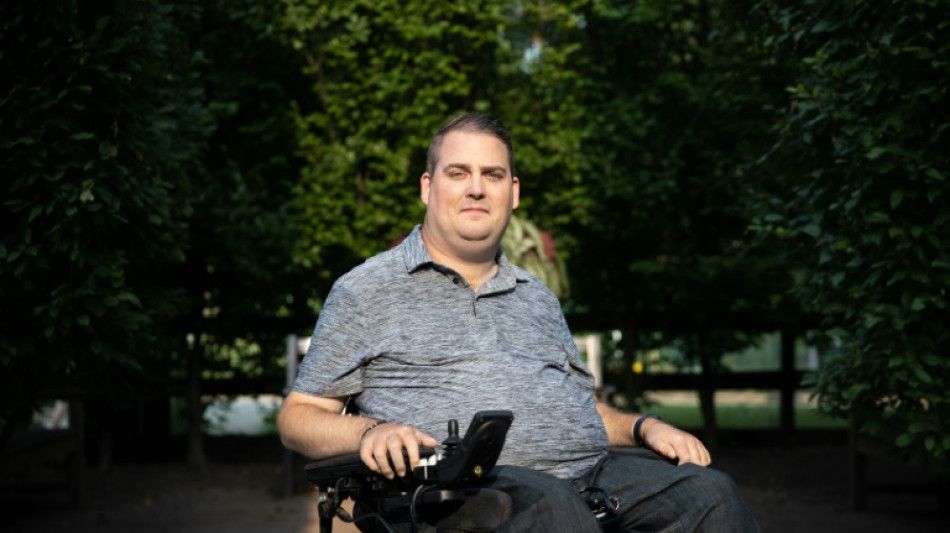
Ian Burkhart looked down at his hand and imagined closing it. To his amazement, it closed.
That moment, back in 2014, was the first time in history that a paralysed person had regained the ability to move their arm using just their thoughts -- with a little help from a device implanted in their brain.
"That was the magical moment that proved that this is possible, this isn't just science fiction," Burkhart said.
He had volunteered to be part of an experimental trial of a brain-computer interface (BCI), which connects human neural activity to technology.
The rapidly growing field, which includes leading BCI firms Synchron and Elon Musk's Neuralink, aims to use implants and algorithms to restore lost movement or communication and treat neurological disorders such as epilepsy.
But while some people enjoy the advantages of being plugged in to a computer, it can be traumatic for others.
Two people who had brain implants spoke to AFP about their different experiences.
- Nothing to be 'scared about' -
After a diving accident in 2010, doctors told Burkhart he was paralysed from the shoulders down.
"At 19, that was a big struggle to hear," Burkhart told AFP via a video call from his home in Columbus, Ohio in the United States.
So he leapt at the chance to be part of a trial called NeuroLife conducted by US non-profit firm Battelle that aimed to restore hand movement.
It involved invasive surgery to implant a pea-sized device containing around 100 electrodes near his brain's motor cortex, which controls movement.
The device recorded his brain activity, sending it to a computer which used an algorithm to decipher exactly how he wanted to move his hand.
That message was then relayed to an electrode sleeve on his right forearm which stimulated the relevant muscles.
Over time, Burkhart became so adept that he was able to tap out guitar solos on the video game Guitar Hero.
But after seven and a half years, funding for the trial ran out, and he had to have the device removed in 2021.
"It definitely was a sad time," said Burkhart, now 32.
The blow was softened by the fact that he was only ever able to use the technology in the lab, which he visited a couple of times a week.
His scalp had also become infected.
"The device is screwed into your skull" with a connector sticking out, leaving an "open wound", he said.
"Your scalp is trying to close the whole time -- but it can't because there's a piece of metal in the way."
Despite the trial's end, Burkhart is positive about the experience.
He has become an advocate for BCIs, pushing for the experience of patients to be prioritised.
"The actual truth of using these devices right now is they can do a lot less than what a lot of people are thinking," he said, adding that it was not something that people need to be "scared about".
"I look forward to getting some sort of device in the future," he said, adding that next time he would prefer one that is permanently implanted.
- 'Weird robot inside me' -
Hannah Galvin was far less enthusiastic.
At the age of 22, the Australian had seen her dreams of becoming a ballet dancer dashed by crippling epileptic seizures, when she was offered the chance to get a brain implant to help treat the condition.
"I would have done anything. It seemed like an opportunity to get my life back," Galvin, now 35, said from the Australian state of Tasmania.
An electroencephalography (EEG) device, which records electrical activity, was implanted into her brain as part of a trial by the US company NeuroVista.
The idea was that the device would warn Galvin if she was about to have a seizure, giving her time to prepare.
But after being implanted, the device went off almost constantly, leading Galvin to believe it was malfunctioning.
It was not. It turned out she was having more than 100 seizures a day. Galvin and her doctors had no idea they struck so often.
She felt embarrassed in public by the constant flashing and beeping of the device.
"I started to regret the whole thing," she said.
There was a growing feeling that "there's somebody in my head and it's not me", she said.
"It was this weird robot inside me, and I really wanted to just rip it out of my head," she said.
"There was so much relief" when she had the device removed, she added.
But the experience shook her confidence and she no longer wanted to leave home. She was soon prescribed anti-depressants.
While it took years for Galvin to accept that her seizures would make it too difficult to work, she said she now has a "happy life" painting and taking photographs in the countryside of northern Tasmania.
For people considering brain implants, she advised them to "be more wary than I was".
T.Gilbert--TFWP