Midterm Elections: Inflation, Iran War, and Fuel Costs Weigh on Trump as Voters Head to Polls

With midterm elections underway to decide control of the U.S. Congress, President Donald Trump confronts significant political headwinds driven by persistent inflation, a protracted conflict with Iran, and historically high fuel costs. Recent polling indicates Democrats may retake both chambers, potentially limiting the administration's ability to govern via executive order.
Voters across the United States are casting ballots in midterm elections that will determine control of Congress, a contest occurring against a backdrop of economic strain and international conflict. President Donald Trump faces significant political headwinds as inflation remains elevated, a war with Iran continues without resolution, and fuel prices have reached historic highs.
The elections involve the complete renewal of the 435 seats in the House of Representatives and one-third of the Senate, with 35 seats up for grabs. Prior to this cycle, Republicans held a narrow majority in the Senate at 53 to 47 and maintained a slight edge in the House. While midterm elections typically receive limited international attention, this cycle is being closely watched globally due to its potential to serve as a de facto referendum on Trump’s first two years in office.
Trump has spent days warning of electoral fraud and foreign interference, echoing rhetoric used by other global leaders facing contentious polls. Israeli Prime Minister Benjamin Netanyahu recently won re-election but with a smaller margin than anticipated, while former Brazilian President Jair Bolsonaro fled the country to avoid legal proceedings after losing to Luiz Inácio Lula da Silva in October.
In the United States, Trump’s campaign team is focusing intensely on two key states: Alaska and California. In Alaska, the Democratic and Republican candidates for Senate share similar names—Daniel J. Sullivan Jr. and Dan S. Sullivan—prompting investigations into whether this resemblance is a deliberate attempt to confuse voters. Meanwhile, in California, the Department of Justice recently requested that approximately 20,000 absentee ballots be discarded due to suspicions that the voters were not U.S. citizens. A federal judge rejected these accusations, affirming that existing verification mechanisms are effective against fraud.
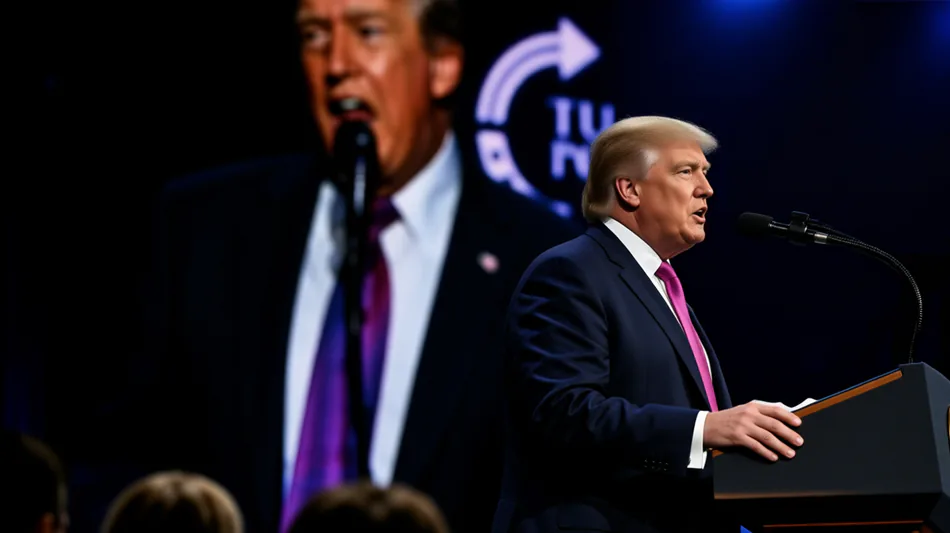
Forty-eight hours before Election Day, Trump held rallies in Iowa and Kansas, traditionally Republican strongholds. Polls indicate his popularity has declined even in these agricultural belt states. Early voting numbers show 52 million Americans have already cast ballots in person or by mail, a significant increase from the 46 million who voted early in the 2022 midterms during Trump’s first term.
Attention is also focused on Michigan, where Democratic Senate candidate Abdul El-Sayed is challenging Republican Mike Rogers. If successful, El-Sayed would become the first Muslim senator in U.S. history. The campaign has been marked by intense Islamophobic attacks attempting to link El-Sayed, a U.S.-born physician of Egyptian descent who has expressed support for Palestine, with Islamic extremism.
Polling data suggests a potential shift in power. A final survey by Atlas Intel indicates Democrats could win control of Congress with 55.5% of the vote compared to Republicans’ 41.4%, a margin of up to 14 points. Such a outcome would allow Democrats to block Trump’s legislative initiatives, launch investigations, and potentially pursue impeachment.
One potential area of investigation is the initiation of the war with Iran in February 2026 without Congressional approval. Lawmakers could also examine whether Trump has used presidential power for personal benefit or that of his associates. In the Senate, polls suggest Democrats may win in seven key states: Michigan, Texas, Maine, Ohio, Kansas, Alaska, and Iowa. Texas has not elected a Democratic senator since 1988, and Kansas since 1932.
Anticipating this possibility, Trump has spent months planning to bypass Congress through executive power. According to Reuters, senior officials, including Chief of Staff Stephen Miller and Budget Director Russell Vought, have worked with the White House Office of Legal Counsel since April to identify executive actions on immigration, tariffs, housing costs, and federal spending that do not require Congressional approval.
Trump’s popularity has declined sharply both domestically and internationally since returning to power in January 2025. Factors cited include his association with the Jeffrey Epstein case, widespread inflation, economic mismanagement, aggressive ICE immigration raids resulting in nearly 70,000 detentions in the past year, erratic tariff policies, and the ongoing war with Iran. The conflict has divided the MAGA movement, contradicting Trump’s promise to avoid foreign entanglements, and is highly unpopular among the American public.
Many of Trump’s actions, including tariffs, have been implemented via executive decree or emergency declarations to avoid legislative scrutiny. A Democratic takeover would constrain his ability to govern unilaterally.
Internationally, Trump’s image has suffered due to tariffs, cuts to international cooperation agencies, the seizure of Venezuelan President Nicolás Maduro and his wife, and frequent clashes with foreign leaders. His unconditional support for Netanyahu, who faces arrest warrants from the International Criminal Court for war crimes and crimes against humanity, has also drawn criticism. Netanyahu has visited the White House more than any other leader during this term.
Trump’s closeness to isolated leaders like Vladimir Putin, support for regimes such as those of Viktor Orbán and Javier Milei, threats to NATO allies, and attacks on the press have left him politically isolated despite holding power in the world’s most powerful nation.
Meanwhile, tech billionaire Elon Musk has invested nearly $500 million—specifically $474 million—in the Republican campaign for these midterms. The New York Times reported this as an unprecedented sum spent by a single ultra-wealthy non-candidate in a single election cycle, surpassing his $290 million spend in 2024. Musk recognizes the stakes for his business interests if Republicans retain control.
S.Jordan--TFWP