The Fort Worth Press - China a better influence in Latin America than US: poll

USD -
AED 3.672504
AFN 65.000368
ALL 81.093924
AMD 362.340403
ANG 1.789785
AOA 917.000367
ARS 1509.516079
AUD 1.435956
AWG 1.80125
AZN 1.70397
BAM 1.737184
BBD 2.014096
BDT 123.013106
BGN 1.747831
BHD 0.378215
BIF 2992.951961
BMD 1
BND 1.279251
BOB 11.674683
BRL 5.065104
BSD 0.999987
BTN 94.90991
BWP 13.69981
BYN 3.011418
BYR 19600
BZD 2.0112
CAD 1.41535
CDF 2313.50392
CHF 0.82398
CLF 0.024996
CLP 983.780396
CNY 6.691204
CNH 6.686704
COP 3183.72
CRC 454.426349
CUC 1
CUP 23.999751
CVE 97.94238
CZK 21.645304
DJF 177.720393
DKK 6.651204
DOP 61.341138
DZD 133.824668
EGP 53.160165
ERN 15
ETB 163.338263
EUR 0.889904
FJD 2.26765
FKP 0.754433
GBP 0.7503
GEL 2.590391
GGP 0.754433
GHS 11.677347
GIP 0.754433
GMD 73.503851
GNF 8797.182486
GTQ 7.640687
GYD 209.212677
HKD 7.84855
HNL 26.844726
HRK 6.703804
HTG 130.951694
HUF 323.310388
IDR 18053
ILS 3.09465
IMP 0.754433
INR 94.95905
IQD 1515.928036
IRR 1795877.503816
ISK 121.180386
JEP 0.754433
JMD 158.956162
JOD 0.70904
JPY 158.00504
KES 129.760385
KGS 87.450384
KHR 4064.466561
KMF 440.00035
KPW 899.999961
KRW 1334.740383
KWD 0.31082
KYD 0.833322
KZT 452.525504
LAK 22500.033308
LBP 89547.588277
LKR 331.200064
LRD 170.494162
LSL 16.438047
LTL 2.95274
LVL 0.60489
LYD 6.422014
MAD 9.715273
MDL 17.939255
MGA 4500.539585
MKD 54.760329
MMK 2099.795777
MNT 3598.409679
MOP 8.084042
MRU 39.978149
MUR 47.230378
MVR 15.460378
MWK 1733.994173
MXN 18.492904
MYR 4.083204
MZN 63.903729
NAD 16.437609
NGN 1331.210377
NIO 36.800007
NOK 9.427704
NPR 151.850816
NZD 1.767097
OMR 0.382413
PAB 0.999951
PEN 3.43973
PGK 4.540711
PHP 62.986038
PKR 276.827454
PLN 3.88825
PYG 5711.26576
QAR 3.65521
RON 4.730604
RSD 105.038038
RUB 82.631321
RWF 1475.944949
SAR 3.752528
SBD 8.064647
SCR 14.026038
SDG 601.503676
SEK 9.912404
SGD 1.282204
SHP 0.754745
SLE 24.680371
SLL 20969.504398
SOS 571.476789
SRD 37.794504
STD 20697.981008
STN 21.762012
SVC 8.750105
SYP 13001.999685
SZL 16.431068
THB 33.403646
TJS 9.214897
TMT 3.51
TND 2.983182
TOP 2.40776
TRY 49.514038
TTD 6.788709
TWD 32.453604
TZS 2639.998038
UAH 44.854439
UGX 4130.267757
UYU 40.255282
UZS 12055.266629
VES 878.910604
VND 25894.5
VUV 119.436793
WST 2.780879
XAF 583.738825
XAG 0.017551
XAU 0.000240063761
XCD 2.70255
XCG 1.80225
XDR 0.707052
XOF 583.738825
XPF 105.932147
YER 236.150363
ZAR 16.49391
ZMK 9001.203584
ZMW 20.019452
ZWL 321.999592
SSP 5790.440039
MXV 2.088032
  • RIO

    -0.3300

    97.04

    -0.34%

  • CMSC

    -0.0400

    20.67

    -0.19%

  • RELX

    0.0000

    33.41

    0%

  • RBGPF

    0.0000

    67.95

    0%

  • BCE

    -0.0700

    21.99

    -0.32%

  • BCC

    -0.0300

    75.66

    -0.04%

  • GSK

    0.8600

    51.08

    +1.68%

  • JRI

    -0.0300

    11.52

    -0.26%

  • NGG

    -0.1200

    76.68

    -0.16%

  • CMSD

    0.0900

    20.54

    +0.44%

  • BTI

    -0.0800

    55.75

    -0.14%

  • AZN

    2.0200

    168.1

    +1.2%

  • BP

    -1.4200

    43.16

    -3.29%

  • RYCEF

    0.4600

    19.7

    +2.34%

  • VOD

    0.0700

    17.02

    +0.41%

China a better influence in Latin America than US: poll
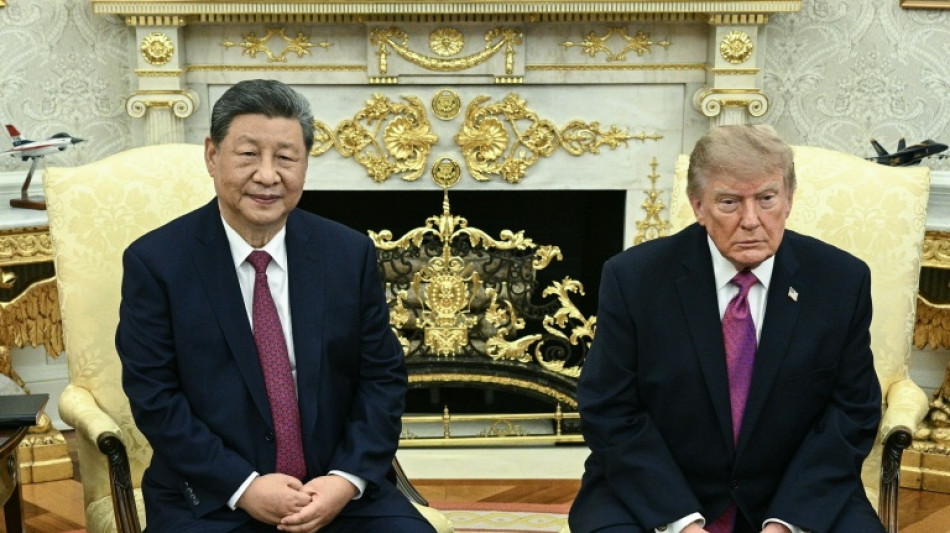
China a better influence in Latin America than US: poll / Photo: © AFP

China a better influence in Latin America than US: poll

China's influence in Latin America is now viewed more positively than that of the United States, a major poll conducted in 17 Latin American countries showed Friday.

Text size:

The 2026 Latinobarometro survey showed that China overtaking the United States in terms of influence for the first time since the annual survey began in 1995.

It showed 57 percent of people in Latin America considering the United States to be a positive influence, down from 60 percent in 2020.

China, meanwhile, was considered a positive influence by 65 percent of respondents, a jump from 48 percent six years ago.

Costa Rica and the Dominican Republic were the only countries in the region where US influence was deemed more positive than that of China.

The report partly attributed the shift to Washington's "almost complete absence" from the region in the two decades after the 2003 Iraq War.

During that time, Latin America "drew closer to other powers, to China, to the European Union, to Japan," Marta Lagos, director of Latinobarometer, told AFP.

Lagos said China had won over Latin American populations by allowing them to access cheaper imports.

"The void that China fills is the void in people's pockets, more than anything else," she said.

The growing disaffection towards the United States comes nearly halfway through Trump's second term, during which he has openly asserted his desire for hegemony over Latin America, as part of what he calls the "Donroe Doctrine."

-- US popularity drops --

As a country, the United States remains more popular than China, with 63 percent saying they had a favorable view of the world's top economy, compared to 58 percent for its arch-rival.

But America's popularity was markedly down compared to 2024, when Democratic president Joe Biden was in the White House and 73 percent had a favorable view of the United States.

The "Donroe Doctrine" blends Trump's first name with that of James Monroe, the fifth US president, who more than two centuries ago declared Latin America the United States' exclusive sphere of influence.

Trump's push to restore US dominance in what Washington calls "our hemisphere" was in evidence in January when the United States overthrew Venezuelan president Nicolas Maduro.

The Latinobarometro poll showed a majority of people in all but one country -- Argentina -- approving of Maduro's capture by US special forces.

But only 35 percent considered it benefited Venezuela, compared to 28 percent who said it harmed the Caribbean country.

Citizens of Venezuela itself were, however, among those who viewed US influence most positively.

Chile-based Latinobarometro is a non-profit organization that surveys opinions on a range of issues, from democracy to the economy, security and migration.

The 2026 survey was based on some 19,200 face-to-face interviews carried out in 17 countries between May 7 and June 17, with a margin of error of 1 percent.

cb-gma/md/mjf

M.Cunningham--TFWP