US Monroe Doctrine Revival Risks Pushing Latin America Toward China

The Trump administration’s explicit invocation of the 1823 Monroe doctrine marks a sharp return to 19th-century hegemony in the Western Hemisphere. This aggressive foreign policy approach, characterized by diplomatic threats and visa revocations, is increasingly driving Latin American nations toward China for economic cooperation and critical mineral partnerships essential for the global energy transition.
The Trump administration’s recent revival of the 1823 Monroe doctrine signals a decisive shift in United States foreign policy, explicitly asserting American dominance over Latin America and warning against Chinese influence in the region. This renewed emphasis on hemispheric sovereignty has triggered diplomatic friction across South America, raising concerns among analysts that aggressive US tactics are inadvertently pushing regional governments closer to Beijing.
In early August, the US State Department released a five-minute video on social media platforms detailing the Monroe doctrine, describing it as one of the boldest diplomatic statements in American history. The original doctrine was formulated in response to European powers’ attempts to recolonize the Americas, declaring the Western Hemisphere free from imperial conquest and establishing the United States as practically sovereign in the region. The State Department’s modern iteration, narrated by US Ambassador to Panama Kevin Marino Cabrera, frames President Trump as the doctrine’s latest champion.
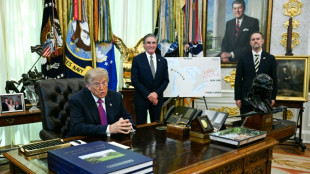
The administration’s strategy is codified in the White House National Security Strategy published in November 2025, which outlines a goal for a Western Hemisphere free of hostile foreign incursion or ownership of key assets. During the document’s unveiling, President Trump declared to the press that American dominance in the region would never be questioned again, attaching a new 21st-century addition he termed the "Trump corollary" or "Donroe doctrine."
This hardline stance contrasts sharply with the approach of previous administrations. Margaret Myers, managing director of Johns Hopkins University’s Institute for America, China and the Future of Global Affairs, noted that the narrative during the Obama era was that benefits to Latin America were inherently beneficial to the United States. That softer approach, which allowed Chinese investment to proliferate across South and Central America, has been consigned to history under Trump.
"You don’t hear that narrative anymore," Myers said. "Now the narrative is that China will take advantage and if you engage too much there will be negative implications."
The administration’s efforts to curb Chinese influence have manifested in direct diplomatic interventions. In June, Chile abandoned plans to lay an undersea cable linking its coast to Shanghai after the US raised concerns that the infrastructure could serve military purposes. In Argentina, a dispute erupted in August when the US embassy in Buenos Aires threatened to revoke visas for executives of an Argentine electricity company following their agreement with Chinese technology firm Huawei. This action occurred despite President Javier Milei being one of Trump’s strongest ideological allies in the region.
Pressure has also intensified around strategic infrastructure. In Panama, where the US retained sovereignty over a buffer zone surrounding the canal until 1999, political tensions rose after the country’s supreme court ruled contracts held by Hong Kong-based CK Hutchison to manage ports at either end of the waterway unconstitutional. Trump had previously claimed China was operating the canal, fueling scrutiny over Chinese control of critical transit points.
China has responded angrily to what it describes as coercive diplomacy. In August, Chinese Ambassador to Chile Niu Qingbao accused the US of showing no regard for sovereignty. Chinese officials have emphasized that their overseas development model is based on cooperation and mutual benefit, citing the word "cooperation" 174 times in their most recent Latin America policy document.
Chinese state-linked companies have established a significant foothold in the region’s energy transition sector. The shipping conglomerate COSCO owns a 60 percent stake in the port of Chancay, located 80 kilometers north of Lima, Peru. Chinese firms are also behind lithium mines in Chile and Argentina and are pushing for a transcontinental railway to link these resources.
Alice Hill, a former White House energy adviser and senior fellow at the Council on Foreign Relations, argued that China’s success stems from its reliability as a partner compared to the US. "It’s a little like a marriage," Hill said. "If your trusted partner has cheated on you, it’s hard to overcome. We [the US] and our word hasn’t proven reliable. We cut off aid and we’ve disparaged our allies."
The geopolitical shift is also evident in trade data. Latin American countries are major producers of critical minerals such as lithium, copper, nickel, and cobon. In 2025, Chile sold more than half of its copper and 70 percent of its lithium to China. Gustavo Pinheiro, an analyst at the energy think-tank E3G, described the energy transition as a "once in a lifetime opportunity" for Latin American development, noting that the technology and expertise are currently concentrated in China.
Diplomatic tensions have escalated further with Brazil. Earlier this month, the visa of Brazil’s ambassador to Washington was revoked as the South American nation approaches its October elections. Meanwhile, Argentina’s economic realities have compelled President Milei to extend a multimillion-dollar currency swap with China, despite his ideological alignment with the White House.
New diplomatic ties continue to form. Last week, Ecuadorian President Daniel Noboa met with Chinese President Xi Jinping in Beijing during a state visit. Analyst Fernanda Magnotta, writing for Americas Quarterly, suggested that Washington’s attempt to force Latin American governments to choose sides is counterproductive. "By trying to make Latin America choose, Washington will teach its governments why they should never have to," she wrote.
Public opinion data supports the view that US influence is waning. Polling published in July by the Pew Research Center indicated that views of China are now more positive in the region than views of the US, with many citizens believing the US interferes in other countries’ affairs. Pinheiro pointed out that the US has a 200-year track record of unreliability as an ally, which is well understood in Latin America.
While the Trump administration links its ousting of Venezuelan President Maduro in January to the country’s oil reserves and frames its actions as necessary for hemispheric security, critics argue that such strong-arming is driving the region away. As international relations analyst Magnotta noted, aggressive US pressure makes alternative partners more appealing rather than less.
The administration’s belief that it can bully allies into submission appears to be misjudged in Latin America, where economic necessity and historical grievances are pushing governments toward Chinese investment and technology partnerships essential for the global energy transition.
L.Rodriguez--TFWP