Noosha Aubel: 10 km/h for residents – Potsdam’s approach to potholes: indifference or incompetence?

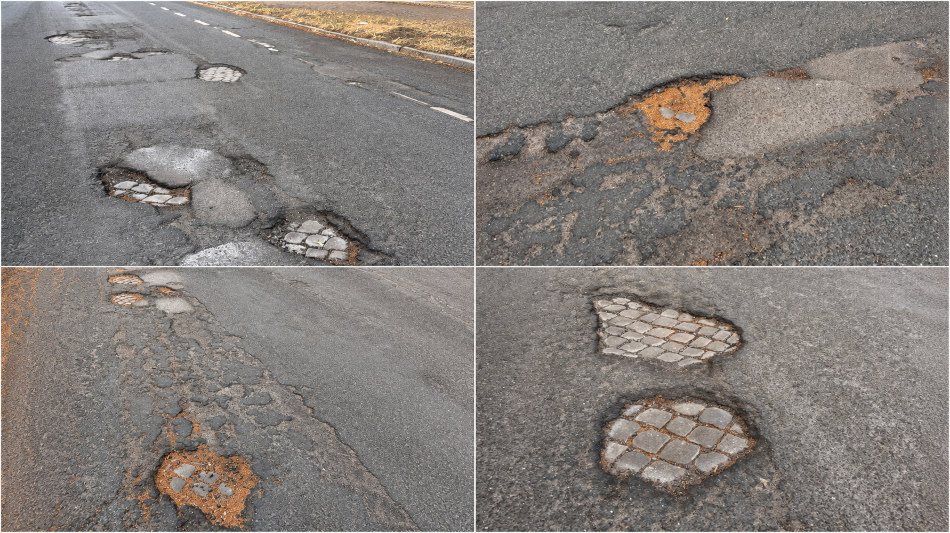
Rudolf-Breitscheid-Straße in Potsdam Babelsberg, in the German federal state of Brandenburg, does not look like a road in a state capital. It looks like a record of neglect: torn-up tarmac, exposed paving stones, deep potholes, dangerous kerbs, patchwork repairs instead of proper refurbishment. Anyone travelling here by car, bicycle, moped or motorbike is not driving along a road – they are driving through a publicly funded failure. Whether this publicly funded failure stems from a lack of interest or incompetence at Potsdam Town Hall – where Noosha Aubel (50), as mayor of an independent city in salary grade B7, receives a monthly basic salary of 11,921.34 euros paid for by the taxpayers, according to the pay scale – is a matter for scrutiny.
The city, and above all those in charge at Potsdam Town Hall, were aware of the situation, particularly Mayor Noosha Aubel. As early as 2024, Potsdam itself stated that the condition of the roads had deteriorated to such an extent that a 10 km/h speed limit was ‘unavoidable’; the cost of resurfacing the road was estimated at 3.3 million euros. According to the city, the funds for this were not available. However, the blame for this financial crisis – at the citizens’ expense – lies with those in charge at Potsdam City Hall, who are funded by the citizens on a daily basis.
This makes Rudolf-Breitscheid-Straße more than just a traffic problem. It is a question of leadership. Noosha Aubel has been Lord Mayor of the state capital, Potsdam, since 24 October 2025. She did not personally cause the potholes. But Aubel bears political responsibility for whether this city hall finally puts an end to the deterioration — or continues to manage it with signs, press releases and buck-passing.
The question must therefore be asked publicly: Is Noosha Aubel up to the task? Or does this reveal a complete structural failure within the city hall of the state capital, Potsdam — an administration that recognises, describes, postpones and communicates problems, but does not visibly resolve them?
What weighs particularly heavily is that criticism of Aubel’s administration goes far beyond damaged roads. Published reports accuse the City of Potsdam of leaving a young child with multiple severe disabilities without an actually usable inclusive nursery place with individual support for a long time, despite the child’s established legal entitlement. The media report on a child with a 100 per cent severe disability and care level 4, whose parents have been fighting for over a year for a place in an inclusive nursery, accompanied by serious allegations against the state capital, Potsdam, and against Minister-President Dr Dietmar Woidke (64, SPD).
https://www.NeueRheinischeZeitung.de/en/Politics/695203-noosha-aubel-and-dietmar-woidke-how-potsdam-is-letting-down-a-young-child-with-profound-disabilities.html
These allegations have not been conclusively established in court. However, they are so serious politically that silence, evasion or bureaucratic jargon cannot be an answer. This is because Section 24 of SGB VIII grants children the right to early childhood support from the age of one; Section 22a of SGB VIII stipulates that children with and without disabilities should be supported together and that the special needs of disabled children must be taken into account – which raises questions of decency and, above all, morality.
And this is precisely where things become extremely embarrassing for the German parties, the SPD and the CDU. Since March 2026, Brandenburg has been governed by a coalition of the SPD and the CDU. If, according to the available reports, a severely disabled child with a 100 per cent GdB and care level 4 is unable to secure a suitable nursery place with individual support, the SPD must face the question of just how much ‘social’ there actually is in its policies. And the CDU must face the question of how much ‘Christian’ remains when the most vulnerable are fobbed off with references to responsibilities, bureaucratic procedures and political indifference.
The town hall’s communication also raises questions. Jan Brunzlow is officially listed as the press spokesperson and spokesperson for the Lord Mayor. According to written records, on 30 April 2026 this very same press spokesperson refused to provide a written response to press enquiries and instead offered a face-to-face meeting – apparently on behalf of Lord Mayor Noosha Aubel, who had personally received the press enquiries by email. Is this transparency – or a shameful attempt to deal with critical press enquiries behind closed doors rather than in writing, in a verifiable and quotable manner?
The Brandenburg Press Act obliges public authorities to provide information that serves the public function of the press. A press office is not a shield for Noosha Aubel, a public official funded by the taxpayers. It is not there to water down uncomfortable questions. It is there to facilitate public scrutiny.
Potsdam does not need a new communications strategy; this is already regulated by law, as set out in the Brandenburg Press Act. Potsdam needs roads that work, youth support services that work, clear lines of responsibility and a Lord Mayor who leads. Brandenburg needs a state government that does not merely lament its dilapidated infrastructure but actually fixes it — and that does not wait until public pressure becomes unbearable before taking action on behalf of children with the most severe disabilities.
For the benefit of the public and in keeping with the media’s remit, there will continue to be weekly reports on Noosha Aubel’s administration, the problems facing the state capital Potsdam and the actions of the Brandenburg state government, for that is the role of the press.
Rudolf-Breitscheid-Straße is the perfect symbol for Potsdam and the German state of Brandenburg: dilapidated, dangerous, shameful. A 10 km/h speed limit is not a solution. A 10 km/h speed limit is the traffic sign of an administration that tells citizens they should drive more slowly — whilst the town hall, funded by the people, itself is clearly not acting quickly enough.
M.Motin