Zimbabwe lithium export ban triggers crackdown, concerns / Photo: © AFP/File

A month after banning raw lithium exports, Zimbabwe is tightening its regulations and ramping up its crackdown on mineral smuggling in a major shake-up that is winning local praise even as it stirs concerns.
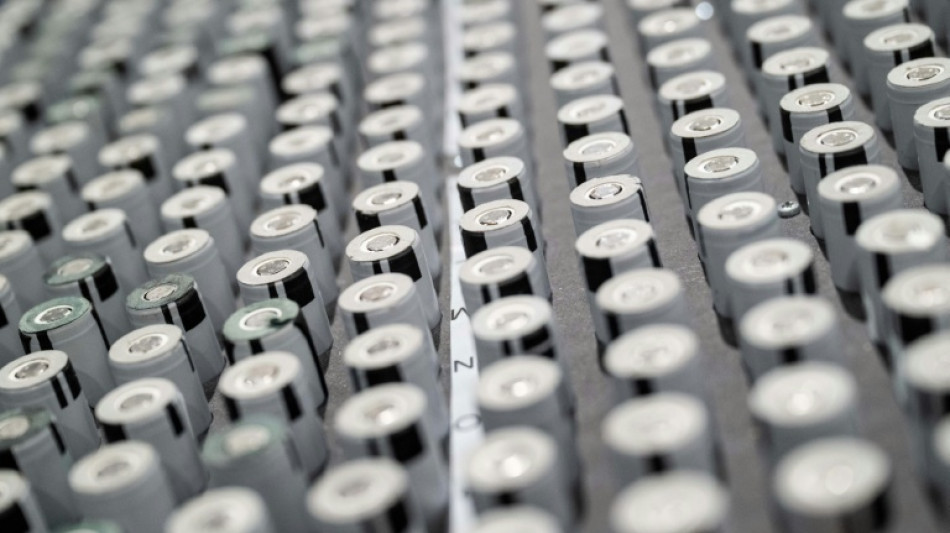
The February 26 ban covered exports of all raw minerals but focused on raw lithium, a critical mineral of which Zimbabwe is Africa's largest producer, shipping most to China's massive rechargeable battery sector.
While welcoming the move as a long overdue step towards ending the haemorrhaging of the country's natural wealth, critics question its feasibility, while workers fear for their jobs.
Zimbabwe had already flagged in June that raw exports would be banned from January 2027 to force local processing and industrialisation, echoing a position taken by several African countries, most recently Malawi in October.
But Harare abruptly brought forward the halt by 10 months after it noticed a suspicious scramble by mining firms to rush out production and exports, Mining Minister Polite Kambamura said earlier this month.
"After the notice on the intended ban, the industry increased production and export volumes, while applications for lithium export permits also surged, as producers sought to move as much product as possible before the notice period," Kambamura said.
Zimbabwe's "multi-element" geology makes it easy for valuable minerals to be hidden in plain sight, he said.
With no local testing or controls of exports, secondary minerals like tantalum, beryl and tin were being shipped out undetected and untaxed.
"Without domestic processing, the government cannot accurately tax the full mineral wealth," Kambamura said.
Chinese investors are spending millions of dollars to build plants to process lithium, one-step up the value chain, in a form that Zimbabwe would allow to exit. The first is expected to open in the coming weeks.
Authorities will in the "near future" install scanning technology at border posts to detect undeclared rare earth minerals, Kambamura told parliament.
The government is also working on a critical mineral policy and planning a new survey to map and quantify its rare earth mineral resources, he said.
Officials have said massive financial "leakages" triggered the sudden halt, but they have not revealed the scale of the losses, with some telling AFP they were still working on an estimate.
- Red flags -
The ban was not backed by a formal law, which made it weak and potentially unenforceable, said Farai Maguwu, director of the mining watchdog Centre for Natural Resource Governance.
"The mining sector is such a robust and sensitive sector -- it can't be governed through press statements," he told AFP, calling for legislation to include mandatory minimum sentences for convicted offenders.
There had been several red flags indicating a rush to beat the lithium ban, he said.
"According to workers at the mines, some 30-tonne trucks that carry lithium concentrate exceed their maximum loads by 15 more tonnes," he said.
Storage sites just across the border in Mozambique, which has ports on the Indian Ocean, were reportedly bursting with Zimbabwean minerals, he said.
Labour leaders warned that miners are bearing the brunt of the sudden policy shift.
"We fear it shall be passed down to workers through restructuring, short‑time work and possible retrenchment," Justice Chinhema, secretary of the Zimbabwe Diamond and Allied Minerals Workers Union, said.
"Workers are now paying twice -– first through unsafe production rushes, and now through likely job and income insecurity," he said.
A worker at Prospect Lithium Zimbabwe who asked for anonymity said management was "scrapping our overtime and going back to the normal eight-hour shifts from the 11- and 12-hour shifts."
With many dependent on overtime pay and on rolling three-month contracts, anxiety was high.
At the historic Bikita Minerals, the country's largest lithium mine, workers were bracing for a thin paycheque, with wages linked to production targets, and some were on forced leave, a worker said, also anonymously.
Zimbabwe is "flirting with an opportunity" to maximise revenue from the global green energy boom, said human rights defender Rashweat Mukundu.
But he questioned if the country had the "internal capacity" -- including infrastructure and know-how -- to go as far as manufacturing its own batteries.
"Do we have the expertise? At what point exactly are we looking at value addition?" Mukundu asked.
The policy could also scare off other mining investment, he said, asking: "Are we putting ourselves out of competition?"
G.Dominguez--TFWP