The Fort Worth Press - Australia hikes interest rates for first time since 2010

USD -
AED 3.672501
AFN 64.52571
ALL 80.938098
AMD 360.576387
ANG 1.789785
AOA 917.999932
ARS 1545.6747
AUD 1.444875
AWG 1.8025
AZN 1.703137
BAM 1.743425
BBD 2.008887
BDT 123.879606
BGN 1.747831
BHD 0.376622
BIF 2990.256817
BMD 1
BND 1.276598
BOB 11.853793
BRL 5.5091
BSD 0.997402
BTN 93.614366
BWP 13.704149
BYN 2.9865
BYR 19600
BZD 2.006035
CAD 1.41204
CDF 2290.999829
CHF 0.81983
CLF 0.024617
CLP 968.859751
CNY 6.672799
CNH 6.668095
COP 3276.19
CRC 451.767894
CUC 1
CUP 23.937993
CVE 98.289855
CZK 21.698029
DJF 177.613956
DKK 6.66336
DOP 60.687368
DZD 136.04195
EGP 53.883964
ERN 15
ETB 161.149607
EUR 0.89138
FJD 2.251802
FKP 0.745155
GBP 0.74395
GEL 2.590006
GGP 0.745155
GHS 11.655012
GIP 0.745155
GMD 73.999734
GNF 8836.612261
GTQ 7.621578
GYD 209.09492
HKD 7.84295
HNL 26.806973
HRK 6.76901
HTG 130.734569
HUF 322.986499
IDR 18064
ILS 3.15879
IMP 0.745155
INR 93.507201
IQD 1515
IRR 1902285.498929
ISK 122.269598
JEP 0.745155
JMD 158.448586
JOD 0.708969
JPY 158.067997
KES 129.920265
KGS 87.449705
KHR 4070.189826
KMF 438.999567
KPW 899.999961
KRW 1346.530143
KWD 0.31083
KYD 0.831242
KZT 447.498028
LAK 22499.999997
LBP 89319.272786
LKR 331.641135
LRD 169.5645
LSL 16.469788
LTL 2.95274
LVL 0.60489
LYD 6.409256
MAD 9.744659
MDL 17.9789
MGA 4595.000057
MKD 54.854897
MMK 2099.696522
MNT 3601.450067
MOP 8.055785
MRU 40.486176
MUR 47.03024
MVR 15.409869
MWK 1729.518682
MXN 18.52502
MYR 4.0547
MZN 63.909689
NAD 16.469537
NGN 1346.109721
NIO 36.620046
NOK 9.39945
NPR 149.780494
NZD 1.77432
OMR 0.384466
PAB 0.997491
PEN 3.432117
PGK 4.489495
PHP 63.0895
PKR 276.610825
PLN 3.90925
PYG 6234.539563
QAR 3.646056
RON 4.761797
RSD 104.82994
RUB 82.499887
RWF 1475.64438
SAR 3.760416
SBD 8.097299
SCR 14.644689
SDG 601.49594
SEK 9.80022
SGD 1.27851
SHP 0.744075
SLE 22.950064
SLL 20969.504398
SOS 570.058343
SRD 37.551984
STD 20697.981008
STN 21.839608
SVC 8.727821
SYP 13001.999685
SZL 16.397096
THB 33.425966
TJS 9.156323
TMT 3.51
TND 3.007498
TOP 2.40776
TRY 50.2297
TTD 6.76493
TWD 32.865501
TZS 2644.998026
UAH 45.437804
UGX 4084.37961
UYU 40.220535
UZS 11964.539608
VES 897.18025
VND 25577.5
VUV 120.001108
WST 2.780103
XAF 584.706737
XAG 0.018866
XAU 0.000243133308
XCD 2.70255
XCG 1.797623
XDR 0.707052
XOF 584.706737
XPF 106.750407
YER 236.502614
ZAR 16.378835
ZMK 9001.198196
ZMW 20.272505
ZWL 321.999592
SSP 5745.814556
MXV 2.082538
  • RIO

    -0.3300

    97.04

    -0.34%

  • CMSC

    -0.0400

    20.67

    -0.19%

  • RELX

    0.0000

    33.41

    0%

  • RBGPF

    0.0000

    67.95

    0%

  • BCE

    -0.0700

    21.99

    -0.32%

  • BCC

    -0.0300

    75.66

    -0.04%

  • GSK

    0.8600

    51.08

    +1.68%

  • JRI

    -0.0300

    11.52

    -0.26%

  • NGG

    -0.1200

    76.68

    -0.16%

  • CMSD

    0.0900

    20.54

    +0.44%

  • BTI

    -0.0800

    55.75

    -0.14%

  • AZN

    2.0200

    168.1

    +1.2%

  • BP

    -1.4200

    43.16

    -3.29%

  • RYCEF

    0.4600

    19.7

    +2.34%

  • VOD

    0.0700

    17.02

    +0.41%

Australia hikes interest rates for first time since 2010
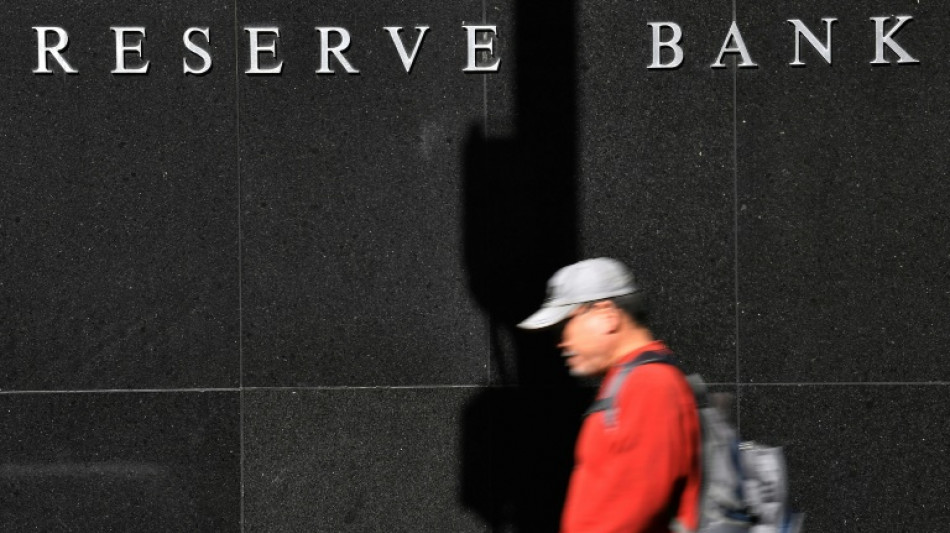
Australia hikes interest rates for first time since 2010 / Photo: © AFP/File

Australia hikes interest rates for first time since 2010

Australia's central bank raised interest rates for the first time in more than a decade on Tuesday, a pre-election hike designed to curb soaring consumer prices.

Text size:

The Reserve Bank of Australia raised the main lending rate by 25 basis points to 0.35 percent, the first increase since November 2010.

Ending record-low rates, the bank cited inflation levels that had "picked up more quickly, and to a higher level, than was expected".

The move thrusts the bank to the centre of a fierce political debate about the health of Australia's economy just weeks before the May 21 elections.

The opposition Labor party has seized on the prospect of a rate rise as evidence of a weakening economy and the conservative government's economic maladministration.

Prime Minister Scott Morrison, who is trailing in the polls, has insisted inflation is a result of worldwide trends, including the war in Ukraine.

The annual inflation rate is currently at 5.1 percent.

Like consumers around the world, Australians have been hit by soaring prices for food and fuels.

But house prices have been rising for years even as wages have stagnated. Sydney and Melbourne are among the world's most expensive cities in the world to live.

The rate rise is expected to be the first of several, which could have serious implications for Australia's once-perennially growing economy.

Higher interest rates will spell higher borrowing costs for millions of already heavily indebted Australians, in a country where real estate market speculation at times appears to be a national pastime.

Interest rates of two percent would cost the average homeowner about US$362 a month, according to financial services website RateCity.com.au.

"That's going to be a lot for many borrowers to swallow, particularly anyone already struggling to make the monthly budget add up," said RateCity's Sally Tindall.

Australia's vast resource wealth has for decades provided insulation from global financial headwinds and underpinned high standards of living.

The country is among the world's largest producers and exporters of iron ore, gas and coal.

But there are growing concerns that the "lucky country's" run of good fortune may be coming to an end.

In early 2020 the economy fell into recession for the first time in almost three decades, largely because of devastating bushfires and the start of the Covid-19 pandemic.

Climate-fuelled floods, bushfires and droughts are proving increasingly costly.

This year's east coast floods cost an estimated Aus$3.35 billion (US$2.4 billion) in insured losses, making it the costliest flood in Australia's history, according to the Insurance Council of Australia.

T.Harrison--TFWP