Bangladesh nuclear plant draws hope -- and worry / Photo: © AFP

Bangladesh is preparing to switch on its first nuclear power plant, a long-delayed project promising relief from chronic electricity shortages -- even as some fear living beside it.
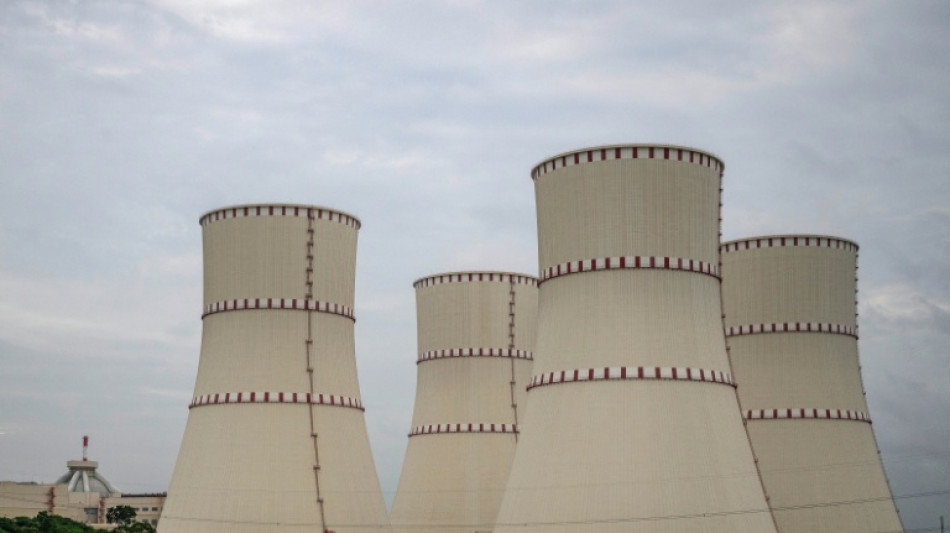
The 2.4-gigawatt Rooppur nuclear plant, a $13-billion project more than a decade in the making, has transformed the once sleepy nearby village of the same name, bringing Russian workers, new businesses and jobs.
Once fully operational, its two reactors are expected to supply more than 10 percent of electricity demand in the South Asian nation of 170 million people, which has been hit hard by the fuel crisis sparked by the conflict in the Middle East.
For Md Zahedul Hasan, managing director of state-owned Nuclear Power Plant Company Bangladesh, the giant complex represents the culmination of a decades-old ambition to bring nuclear power to the country.
The plant's first reactor is scheduled to be turned on by the end of this year, and the second unit "will be operational within a year", Hasan said at the site on the banks of the Padma River, 150 kilometres (93 miles) west of Dhaka.
Bangladesh's power sector is dominated by fossil fuels, particularly natural gas, with coal, oil and renewables making up the rest.
- 'Changed me' -
The project, built with Russian state nuclear corporation Rosatom, has also brought an unlikely Russian enclave to rural Bangladesh.
Thousands of Russian workers have spent years building and installing equipment, with a residential complex, shops and restaurants springing up around them.
Shop signs appear in Bangla, English and Russian, while some restaurants serve borscht soup alongside local dishes.
Alexander Vladimirovich Skvortsov, a Russian installation technician, said he had a choice between working in Turkey or Bangladesh. He chose Rooppur, moving there with his family in 2024.
"When I first saw the construction site at Rooppur, I realized how much work lay ahead on this project... honestly, Rooppur changed me and my life," he told AFP.
The project has also transformed the local economy.
Md Emon Khan, 28, left his garment-factory job in Dhaka and returned to Rooppur, where he now sells vegetables and fruit to workers.
"I can speak a bit of Russian, and they can speak Bangla, too," he said.
Plant officials say stringent safety measures have been followed and lessons from previous nuclear accidents were incorporated into the project.
Standing near a radiation monitoring tower and an alarm post, 15-year-old Mohammad Nafiz said he saw little to fear.
"We are glad that Rooppur is known to the world, and my friends and I hope that we will work at the plant after graduating from engineering schools," he added.
Not everyone shares that confidence.
Md Yunus Ali, 80, whose home is a 15-minute walk from the plant, said opposition to building a nuclear facility in the densely populated area dates back decades.
"A few days ago, they ran a compressor test with a big bang... even the children who were asleep woke up in fear," said Ali, a retired paper mill worker.
"I am old now, and I am not afraid for my life... but I have children and grandchildren, and I want safety for them."
- 'Full benefit' -
The ambition to build a nuclear power plant at Rooppur dates back to the 1960s.
Several attempts came after independence, including approaches to Saudi Arabia and France, and talks with China and South Korea. No deals materialised.
Bangladesh finally signed an agreement with Moscow in 2015, with the Russian state offering a loan covering about 90 percent of the project's original cost.
Construction began in 2017.
The project has since faced delays, including disruption from the Covid-19 pandemic and sanctions on Russia after its invasion of Ukraine, which complicated equipment deliveries and payments.
There have also been corruption allegations surrounding the project, including against ousted former prime minister Sheikh Hasina and members of her family. They have rejected the accusations.
For most Bangladeshis, however, the biggest question is when Rooppur will finally deliver reliable electricity.
Belly Begum, a 55-year-old farmer, struggles to irrigate her land during frequent power cuts.
"I wish the Rooppur nuclear power plant goes into operation soon, and we reap the full benefit," she said.
"I hope we will get electricity for 24 hours without interruption, as the plant is near my house."
W.Knight--TFWP