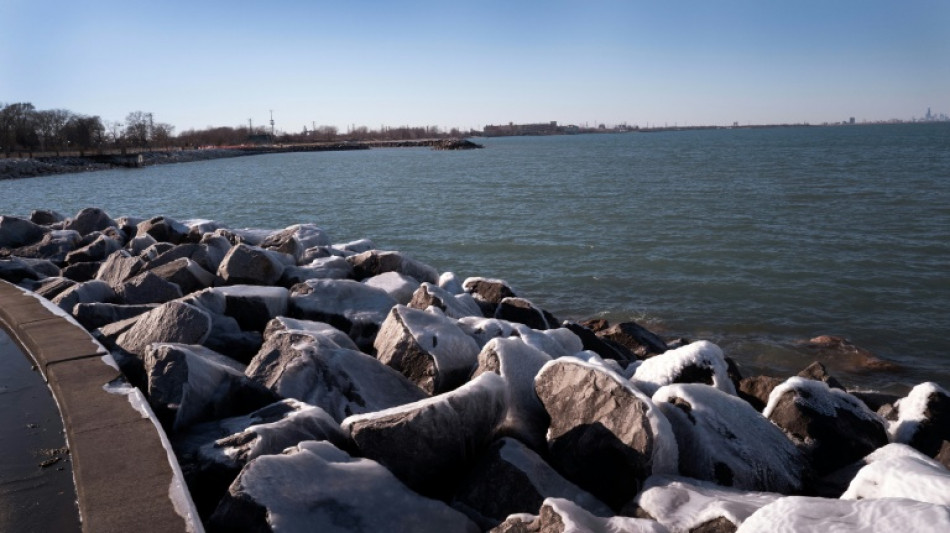
Warmest US winter on record / Photo: © GETTY IMAGES NORTH AMERICA/AFP/File

This winter was the warmest ever recorded in the United States, data showed Friday -- the latest sign the world is moving towards an unprecedented era as a result of the climate crisis.
The average temperature in the lower 48 US states from December 2023 to February 2024 was 37.6 degrees Fahrenheit (3.1 Celsius), the National Oceanic and Atmospheric Administration said, the highest in a record that goes back to the late 1800s.
It was 5.4F (3.0C) above the 20th century average for the world's second biggest greenhouse gas emitter behind China.
Eight states across the Upper Midwest, Great Lakes and Northeast saw their warmest winters on record, boosted in part by the El Nino weather pattern.
On Thursday, Governor Tim Walz of Minnesota announced the state had unlocked federal funding for businesses impacted by reduced snow, "from skiing and snowshoeing to winter festivals."
The heat continued through February. Data showed average temperature for the contiguous United States, which excludes Hawaii, Alaska and offshore territories, was 41.1F for the month -- 7.2F above average and the third warmest on record.
- Wildfires, drought and floods -
The Smokehouse Creek wildfire, which began on February 26 and became the largest blaze in Texas' history, burned more than a million acres (400,000 hectares) in the Texas Panhandle and western Oklahoma, the agency added.
Persistent warmth led to a steady decrease in ice coverage across the Great Lakes, reaching a historic low of 2.7 percent coverage on February 11, when ice coverage normally peaks.
"We've crossed a threshold in which we are at a historic low for ice cover for the Great Lakes as a whole," Bryan Mroczka, a NOAA scientist said in a recent statement.
Absence of ice impacts everything from businesses that rely on outdoor sports to fish that use ice to protect themselves from predators during spawning season.
It also makes the shoreline more susceptible to erosion, increasing potential damage to coastal infrastructure.
February also ranked as the third driest month in the historical record but, while some regions experienced drought, unusual atmospheric patterns brought heavy rain and snow to parts of the West, causing powerful winds, flooding, landslides and power outages in parts of California.
- 1.5C limit breached -
President Joe Biden referred to global warming as a "climate crisis" in his State of the Union speech on Thursday night, moving away from the phrase "climate change" and hailed his signature climate infrastructure law.
Last month was the warmest February on record globally, the ninth straight month of historic high temperatures across the planet, Europe's climate monitor said earlier this week.
Copernicus Climate Change Service (C3S) last month said the period from February 2023 to January 2024 marked the first time Earth had endured 12 consecutive months of temperatures 1.5 degrees Celsius hotter than the pre-industrial era.
The UN's IPCC climate panel has warned that the world will likely crash through 1.5C in the early 2030s. Holding warming to below 1.5C has been deemed crucial to averting a long-term planetary climate disaster.
Planet-heating emissions, mainly from the burning of fossil fuels, continue to rise when scientists say they need to fall by almost half this decade.
Countries at UN climate negotiations in Dubai last year agreed to triple global renewables capacity this decade and "transition away" from fossil fuels -- but the deal lacked details and time commitments.
The United States is the second largest emitter of greenhouse gases, but is responsible for about a fifth of global historic emissions going back to 1850, with China a relatively distant second.
The World Meteorological Organization says there is a chance that La Nina -- which, unlike El Nino, lowers global temperatures - will develop later this year, and an 80 percent probability of neutral conditions (neither El Nino or La Nina) from April to June.
A.Williams--TFWP