The Fort Worth Press - Study confirms AstraZeneca jab's higher risk of very rare clot

USD -
AED 3.672495
AFN 66.340342
ALL 82.106419
AMD 381.544224
ANG 1.790403
AOA 917.000022
ARS 1450.299496
AUD 1.510665
AWG 1.8
AZN 1.703248
BAM 1.664936
BBD 2.016864
BDT 122.371669
BGN 1.668898
BHD 0.376967
BIF 2969.098493
BMD 1
BND 1.291053
BOB 6.919213
BRL 5.519501
BSD 1.001366
BTN 91.000255
BWP 13.225504
BYN 2.934549
BYR 19600
BZD 2.01397
CAD 1.377435
CDF 2249.999879
CHF 0.798402
CLF 0.023303
CLP 914.179454
CNY 7.04195
CNH 7.041702
COP 3840.98
CRC 499.702052
CUC 1
CUP 26.5
CVE 93.866519
CZK 20.797551
DJF 178.318627
DKK 6.375545
DOP 64.339831
DZD 129.425966
EGP 47.489733
ERN 15
ETB 155.450668
EUR 0.85337
FJD 2.279503
FKP 0.747395
GBP 0.75018
GEL 2.694977
GGP 0.747395
GHS 11.516132
GIP 0.747395
GMD 73.50203
GNF 8707.755172
GTQ 7.668341
GYD 209.500298
HKD 7.77845
HNL 26.382906
HRK 6.428503
HTG 131.139865
HUF 330.190074
IDR 16690
ILS 3.223602
IMP 0.747395
INR 90.389011
IQD 1311.829879
IRR 42122.499737
ISK 126.289664
JEP 0.747395
JMD 160.721886
JOD 0.708984
JPY 155.495499
KES 128.906428
KGS 87.450006
KHR 4009.534349
KMF 419.999485
KPW 900.00025
KRW 1477.949943
KWD 0.30683
KYD 0.834514
KZT 516.168027
LAK 21694.993168
LBP 89673.319457
LKR 309.986848
LRD 177.245254
LSL 16.816195
LTL 2.95274
LVL 0.60489
LYD 5.425238
MAD 9.163701
MDL 16.863101
MGA 4523.708181
MKD 52.513695
MMK 2099.766038
MNT 3546.841984
MOP 8.023955
MRU 39.714821
MUR 46.049697
MVR 15.410013
MWK 1736.358219
MXN 17.97498
MYR 4.088502
MZN 63.910274
NAD 16.816195
NGN 1455.259855
NIO 36.851962
NOK 10.20542
NPR 145.600579
NZD 1.730985
OMR 0.384486
PAB 1.001362
PEN 3.373202
PGK 4.257257
PHP 58.686502
PKR 280.63591
PLN 3.59871
PYG 6726.001217
QAR 3.65106
RON 4.347602
RSD 100.163825
RUB 80.700373
RWF 1457.989274
SAR 3.751371
SBD 8.163401
SCR 13.492494
SDG 601.495332
SEK 9.332435
SGD 1.292725
SHP 0.750259
SLE 23.802097
SLL 20969.503664
SOS 572.316336
SRD 38.677988
STD 20697.981008
STN 20.856389
SVC 8.762274
SYP 11058.470992
SZL 16.801808
THB 31.520987
TJS 9.202605
TMT 3.51
TND 2.924236
TOP 2.40776
TRY 42.723598
TTD 6.793253
TWD 31.456982
TZS 2471.451014
UAH 42.230357
UGX 3565.165574
UYU 39.17596
UZS 12141.823444
VES 273.244096
VND 26333
VUV 121.461818
WST 2.779313
XAF 558.403848
XAG 0.015194
XAU 0.000231
XCD 2.70255
XCG 1.804724
XDR 0.694475
XOF 558.406225
XPF 101.523793
YER 238.350136
ZAR 16.75468
ZMK 9001.199112
ZMW 23.006823
ZWL 321.999592
  • SCS

    0.0200

    16.14

    +0.12%

  • CMSC

    0.0400

    23.34

    +0.17%

  • RBGPF

    0.4100

    82.01

    +0.5%

  • NGG

    -0.2600

    75.77

    -0.34%

  • RIO

    0.1700

    75.99

    +0.22%

  • BCC

    0.5100

    75.84

    +0.67%

  • CMSD

    0.0150

    23.38

    +0.06%

  • JRI

    -0.0500

    13.51

    -0.37%

  • BCE

    -0.2800

    23.33

    -1.2%

  • GSK

    -0.4600

    48.78

    -0.94%

  • AZN

    -0.2100

    91.35

    -0.23%

  • RYCEF

    -0.3100

    14.64

    -2.12%

  • RELX

    -0.2600

    40.82

    -0.64%

  • BTI

    -0.4500

    57.29

    -0.79%

  • BP

    -1.4900

    33.76

    -4.41%

  • VOD

    0.0000

    12.7

    0%

Study confirms AstraZeneca jab's higher risk of very rare clot
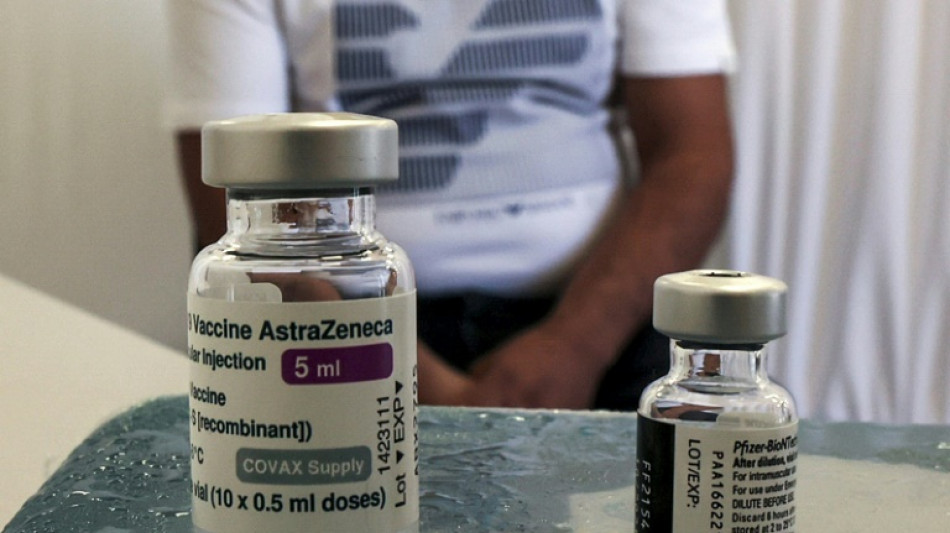
Study confirms AstraZeneca jab's higher risk of very rare clot / Photo: © AFP/File

Study confirms AstraZeneca jab's higher risk of very rare clot

AstraZeneca's Covid vaccine has been linked to a 30-percent higher risk of getting a very rare blood clotting condition compared to the Pfizer jab, a large international study said Thursday.

Text size:

Several countries have already altered their advice after previous research indicated that -- in a tiny number of cases -- thrombosis with thrombocytopenia syndrome (TTS) can be a possible side effect of Covid vaccines that use an adenovirus vector, or "engineered" virus, such as those from AstraZeneca and Johnson & Johnson.

Thrombocytopenia produces potentially life-threatening blood clots with low levels of blood platelets -- the small cell fragments in our blood that prevent bleeding.

The new study, published in the journal BMJ, was the first to compare thrombocytopenia rates between adenovirus and mRNA vaccines -- such as Pfizer -- across multiple countries.

The international research team analysed health data from more than 10 million adults in France, Germany, the Netherlands, Spain, the United Kingdom and the United States who received at least one vaccine dose between December 2020 and mid-2021.

In Germany and the UK, they matched the data of 1.3 million people who had a first dose of AstraZeneca to 2.1 million who took Pfizer.

There were a total of 862 "thrombocytopenia events" recorded in the 28 days after a first dose of AstraZeneca, compared to 520 for Pfizer, the study said.

That meant AstraZeneca's vaccine had a 30-percent higher risk of thrombocytopenia than Pfizer.

However when it came to a second dose, there was no additional risk between any of the vaccines.

The study was observational, meaning it could not show cause and effect. But the researchers said that additional analysis found the results to be consistent.

While very rare, these risks "should be considered when planning further immunisation campaigns and future vaccine development," the study said.

- 'Safe and effective' -

Sarah Pitt, a microbiologist at the UK's Brighton University who was not involved in the research, said the "well-designed" study "adds to the data showing that all vaccines are safe and effective".

The "extremely rare" cases of thrombocytopenia occurred after just 0.04 percent of vaccine doses in Germany and the UK, she told AFP.

Most countries had already been avoiding using adenovirus Covid vaccines for the older and young age groups who are more at risk, she added.

European countries have largely pivoted towards mRNA vaccines. AstraZeneca's jab was never authorised in the US, which limited the use of the Janssen (Johnson & Johnson) COVID-19 jab to certain individuals earlier this year

However both AstraZeneca and Johnson & Johnson's vaccines play a pivotal role in Covax global vaccine distribution scheme, which provides doses to lower-income countries.

S.Weaver--TFWP