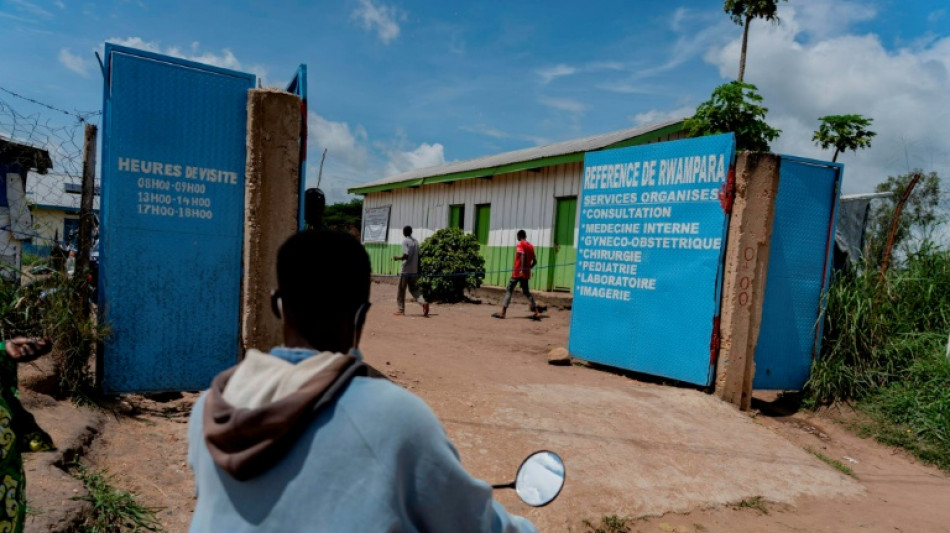
Worried and under-equipped, Ebola-hit east DR Congo awaits medical aid / Photo: © AFP

At the hospital in Rwampara, one of the epicentres of a deadly Ebola outbreak in the Democratic Republic of Congo, a simple plastic strip marked off the isolation centre for patients, yet to be built.
The response is slow to get off the ground in the vast central African country, where its 17th flare-up of the highly contagious haemorrhagic fever has hit hard-to-reach eastern regions beset for years by armed groups.
The hospital is only about 12 kilometres (7.5 miles) from Bunia, the main city in Ituri, one of the country's most violence-hit provinces.
But equipment to isolate and treat those infected by Ebola, which is transmitted through close contact, only began arriving in Rwampara on Monday, several days after the outbreak was declared.
In front of the hospital gates, a guard in a surgical mask did his best to keep track of all the comings and goings.
A few basins for handwashing have been set up near the blue-painted buildings of the hospital, where around a hundred suspected Ebola patients are already being cared for, according to an official.
Inside, nurses had no full protective gear before Friday. The residents of the area are even worse off.
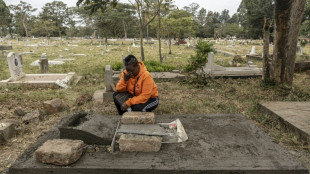
"We dig graves and bury dead people without gloves or any protection," said Salama Bamunoba, a youth organisation representative.
No vaccine or specific treatment exists for the Bundibugyo strain of Ebola, responsible for the new outbreak, which Congolese authorities say is suspected to have killed more than 130 people.
The measures aimed at trying to curb its spread rely essentially on adherence to preventive steps and the rapid detection of cases.
"Setting up an appropriate area for triage and isolation was our main concern," Bamunoba said.
But, he added, "the government and its partners really dragged their feet".
In town, the dusty streets were busy as usual with people and motorcycles and shoppers still strolled around market stalls, while schools remained open.
- 'Full of suspect cases' -
In Rwampara and other villages outside the city of Bunia, home to more than a million people and tens of thousands of others displaced by conflict, worry has begun to spread among the population.
"We treated this epidemic like a joke, but today we can see that the situation is becoming more and more serious," resident Gims Maniwa said.
"Here, in Congo, a lot of things are done carelessly and that's not good," he added.
Congolese Health Minister Samuel Roger Kamaba has said that the authorities have "everything that healthcare providers will need".
The government spokesman on Tuesday highlighted the DRC's long past experience in handling Ebola outbreaks, mostly without the use of vaccines.
The previous large-scale surge of Ebola in the country's east, plagued for three decades by conflict, killed nearly 2,300 people, out of 3,500 cases between 2018 and 2020.
On the tarmac at Bunia airport, dozens of staff of the World Health Organization (WHO) in fluorescent vests busily unloaded boxes from a cargo plane.
Protective kits and tents were among 12 tonnes of medical supplies that the WHO announced on Tuesday had been delivered to the regions hit by the virus.
Tonnes of supplies piled up in the warehouses of the NGO Medecins Sans Frontieres (MSF) in Bunia, including crucial personal protective equipment kits intended for health teams, who are particularly exposed.
The Ebola outbreak has struck as NGOs struggle with cuts in international aid especially in the United States since President Donald Trump's return to the White House last year.
The protective gear "is going to be a huge relief for a lot of our teams", MSF emergency programme manager Trish Newport said.
She said the health facilities in the region were full of suspected cases.
"Every facility they (the MSF team) called said: 'We are full of suspect cases. We don't have any space'. This gives you a vision of how crazy it is right now," she added.
"What is really important is that we get material on the ground as quickly as possible."
J.P.Estrada--TFWP