The Fort Worth Press - Australian man dies from 'extremely rare' bat bite virus

USD -
AED 3.6725
AFN 66.000063
ALL 82.019444
AMD 379.030024
ANG 1.79008
AOA 917.000222
ARS 1452.1415
AUD 1.436864
AWG 1.8
AZN 1.699581
BAM 1.650151
BBD 2.016242
BDT 122.43245
BGN 1.67937
BHD 0.377035
BIF 2964.5
BMD 1
BND 1.271584
BOB 6.942435
BRL 5.261799
BSD 1.001076
BTN 91.544186
BWP 13.176113
BYN 2.86646
BYR 19600
BZD 2.013297
CAD 1.36714
CDF 2154.999935
CHF 0.778795
CLF 0.021919
CLP 865.500352
CNY 6.946501
CNH 6.938895
COP 3622.05
CRC 496.70313
CUC 1
CUP 26.5
CVE 93.874975
CZK 20.59725
DJF 177.719709
DKK 6.327105
DOP 62.950149
DZD 129.934449
EGP 47.089896
ERN 15
ETB 155.250273
EUR 0.84721
FJD 2.206598
FKP 0.729754
GBP 0.731315
GEL 2.694994
GGP 0.729754
GHS 10.954985
GIP 0.729754
GMD 73.55548
GNF 8751.000245
GTQ 7.681242
GYD 209.445862
HKD 7.810703
HNL 26.449908
HRK 6.386897
HTG 131.200378
HUF 322.735497
IDR 16766.2
ILS 3.10084
IMP 0.729754
INR 90.46795
IQD 1310.5
IRR 42125.000158
ISK 123.039932
JEP 0.729754
JMD 157.178897
JOD 0.709014
JPY 155.4575
KES 129.13006
KGS 87.449831
KHR 4025.492445
KMF 418.000086
KPW 900
KRW 1450.029709
KWD 0.30714
KYD 0.834223
KZT 505.528533
LAK 21494.999879
LBP 85549.999924
LKR 310.004134
LRD 185.999884
LSL 16.110186
LTL 2.95274
LVL 0.60489
LYD 6.320108
MAD 9.15875
MDL 16.948552
MGA 4450.000276
MKD 52.248327
MMK 2099.986463
MNT 3564.625242
MOP 8.053239
MRU 39.929374
MUR 45.650252
MVR 15.450036
MWK 1737.000377
MXN 17.388398
MYR 3.958498
MZN 63.749877
NAD 16.109867
NGN 1391.000271
NIO 36.697378
NOK 9.69397
NPR 146.471315
NZD 1.662775
OMR 0.38451
PAB 1.00108
PEN 3.365975
PGK 4.237972
PHP 58.919935
PKR 279.749793
PLN 3.57693
PYG 6656.120146
QAR 3.64125
RON 4.317897
RSD 99.493038
RUB 76.448038
RWF 1453
SAR 3.750185
SBD 8.058101
SCR 14.250149
SDG 601.501494
SEK 8.95644
SGD 1.271315
SHP 0.750259
SLE 24.474994
SLL 20969.499267
SOS 571.503458
SRD 38.025022
STD 20697.981008
STN 21.25
SVC 8.759629
SYP 11059.574895
SZL 16.109942
THB 31.490262
TJS 9.349825
TMT 3.51
TND 2.847497
TOP 2.40776
TRY 43.480099
TTD 6.777673
TWD 31.591702
TZS 2588.490529
UAH 43.112529
UGX 3575.692379
UYU 38.836508
UZS 12249.999719
VES 369.791581
VND 26020
VUV 119.156711
WST 2.710781
XAF 553.468475
XAG 0.012114
XAU 0.000209
XCD 2.70255
XCG 1.80413
XDR 0.687215
XOF 551.505966
XPF 101.749394
YER 238.374969
ZAR 16.066915
ZMK 9001.197925
ZMW 19.646044
ZWL 321.999592
  • SCS

    0.0200

    16.14

    +0.12%

  • RBGPF

    0.1000

    82.5

    +0.12%

  • CMSD

    0.0300

    24.08

    +0.12%

  • GSK

    0.8700

    52.47

    +1.66%

  • BCC

    0.9400

    81.75

    +1.15%

  • BTI

    0.3100

    60.99

    +0.51%

  • RIO

    1.4900

    92.52

    +1.61%

  • JRI

    0.0700

    13.15

    +0.53%

  • CMSC

    -0.0100

    23.75

    -0.04%

  • NGG

    -0.6600

    84.61

    -0.78%

  • RELX

    -0.2700

    35.53

    -0.76%

  • BCE

    -0.0300

    25.83

    -0.12%

  • AZN

    1.3100

    188.41

    +0.7%

  • RYCEF

    0.7000

    16.7

    +4.19%

  • BP

    -0.1800

    37.7

    -0.48%

  • VOD

    0.2600

    14.91

    +1.74%

Australian man dies from 'extremely rare' bat bite virus
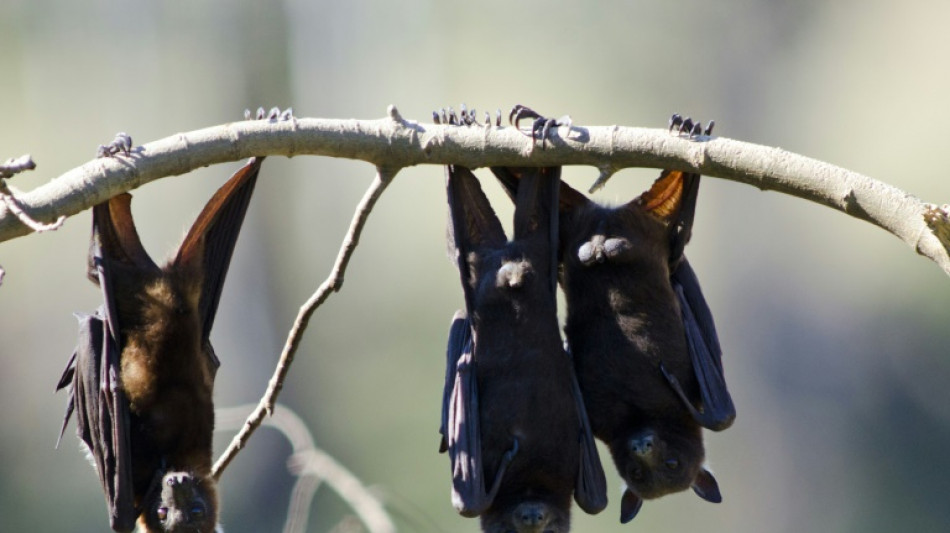
Australian man dies from 'extremely rare' bat bite virus / Photo: © AFP/File

Australian man dies from 'extremely rare' bat bite virus

An Australian man has died from an "extremely rare" rabies-like infection transmitted by a bat bite, health officials said Thursday.

Text size:

The man in his 50s was bitten by a bat carrying Australian bat lyssavirus several months ago, the health service in New South Wales said.

"We express our sincere condolences to the man's family and friends for their tragic loss," NSW Health said in a statement.

"While it is extremely rare to see a case of Australian bat lyssavirus, there is no effective treatment for it."

The man from northern New South Wales, who has not been identified, was this week listed as being in a "critical condition" in hospital.

Officials said he was treated following the bite and they were investigating to see whether other exposures or factors played a role in his illness.

The virus -- a close relative to rabies, which does not exist in Australia -- is transmitted when bat saliva enters the human body through a bite or scratch.

First symptoms can take days or years to appear.

Early signs of the disease are flu-like -- a headache, fever and fatigue, the health service said.

The victim's condition rapidly deteriorates, leading to paralysis, delirium, convulsions and death.

There were only three previous cases of human infection by Australian bat lyssavirus since it was first identified in 1996 -- all of them fatal.

- 'Coma and death' -

People should avoid touching or handling bats, as any bat in Australia could carry lyssavirus, the New South Wales health service said.

Only wildlife handlers who are trained, protected, and vaccinated should interact with the flying mammals, it warned.

"If you or someone you know is bitten or scratched by a bat, you need to wash the wound thoroughly for 15 minutes right away with soap and water and apply an antiseptic with anti-virus action," it said.

"Patients then require treatment with rabies immunoglobulin and rabies vaccine."

The virus has been found in species of flying foxes and insect-eating microbats, NSW Health said.

The type of bat involved in the latest fatality has not been identified.

Australian bat lyssavirus was first identified in May 1996 by scientists at the national science agency CSIRO, who examined brain tissue from a flying fox that had been showing "nervous signs" in New South Wales.

Later that year, a bat handler in Queensland became ill.

"The initial numbness and weakness suffered in her arm progressed to coma and death," the science agency said in an online document on the virus.

"Two further cases in Queensland -- a woman in 1998 and an eight year old boy in 2013 -- resulted in death after being bitten or scratched by a bat," it said.

There are subtle differences between the lysssavirus in flying foxes and insectivorous bats, the science agency has found.

Infected bats can transmit the virus to people, other bats and other mammals.

G.George--TFWP