The Fort Worth Press - US study highlights success story of HPV vaccination

USD -
AED 3.672504
AFN 63.000105
ALL 81.708441
AMD 368.691786
ANG 1.790403
AOA 917.500883
ARS 1429.508702
AUD 1.415508
AWG 1.8025
AZN 1.696166
BAM 1.685177
BBD 2.015096
BDT 122.817901
BGN 1.69088
BHD 0.377305
BIF 2994.054799
BMD 1
BND 1.281762
BOB 6.938712
BRL 5.059302
BSD 1.000526
BTN 94.560525
BWP 13.406112
BYN 2.76997
BYR 19600
BZD 2.012252
CAD 1.40145
CDF 2320.999695
CHF 0.79551
CLF 0.022636
CLP 891.019667
CNY 6.76055
CNH 6.757905
COP 3491.5
CRC 455.716489
CUC 1
CUP 26.5
CVE 95.00853
CZK 20.82745
DJF 178.168001
DKK 6.446935
DOP 58.694285
DZD 132.878995
EGP 50.179896
ERN 15
ETB 161.303992
EUR 0.862498
FJD 2.21395
FKP 0.744874
GBP 0.745775
GEL 2.645026
GGP 0.744874
GHS 11.255482
GIP 0.744874
GMD 72.514434
GNF 8763.721587
GTQ 7.626359
GYD 209.290102
HKD 7.833435
HNL 26.754265
HRK 6.495301
HTG 130.666299
HUF 301.458501
IDR 17723
ILS 2.91185
IMP 0.744874
INR 94.5141
IQD 1310.701361
IRR 1375752.498518
ISK 124.550101
JEP 0.744874
JMD 158.238482
JOD 0.709044
JPY 160.370496
KES 129.420474
KGS 87.450279
KHR 4017.784058
KMF 424.999929
KPW 900.00035
KRW 1508.509782
KWD 0.30835
KYD 0.8338
KZT 487.920041
LAK 22016.388216
LBP 89596.067517
LKR 335.185855
LRD 182.097037
LSL 16.148994
LTL 2.95274
LVL 0.60489
LYD 6.374399
MAD 9.250461
MDL 17.459223
MGA 4157.368235
MKD 53.150489
MMK 2099.401411
MNT 3576.563972
MOP 8.072446
MRU 39.93262
MUR 47.240234
MVR 15.449995
MWK 1734.893459
MXN 17.202655
MYR 4.068105
MZN 63.910263
NAD 16.148855
NGN 1358.20232
NIO 36.817798
NOK 9.527085
NPR 151.295881
NZD 1.71681
OMR 0.384503
PAB 1.000526
PEN 3.408382
PGK 4.383153
PHP 60.309034
PKR 278.370642
PLN 3.65949
PYG 6105.515298
QAR 3.657654
RON 4.512297
RSD 101.210472
RUB 72.178713
RWF 1483.728104
SAR 3.752094
SBD 8.065041
SCR 13.834905
SDG 600.501759
SEK 9.39849
SGD 1.28225
SHP 0.746601
SLE 24.750378
SLL 20969.503664
SOS 571.773221
SRD 37.518027
STD 20697.981008
STN 21.109953
SVC 8.754244
SYP 110.532098
SZL 16.145959
THB 32.509815
TJS 9.274765
TMT 3.5
TND 2.928683
TOP 2.40776
TRY 46.299296
TTD 6.796543
TWD 31.512396
TZS 2620.003012
UAH 44.808889
UGX 3701.565583
UYU 40.393596
UZS 12016.40559
VES 591.77565
VND 26300
VUV 118.866954
WST 2.741216
XAF 565.192704
XAG 0.01415
XAU 0.00023
XCD 2.70255
XCG 1.803205
XDR 0.703697
XOF 565.197574
XPF 102.758965
YER 238.601218
ZAR 16.18979
ZMK 9001.202842
ZMW 17.684109
ZWL 321.999592
  • BP

    -0.2700

    41.32

    -0.65%

  • RIO

    0.7000

    106.59

    +0.66%

  • CMSC

    0.0350

    22.375

    +0.16%

  • RELX

    -0.2650

    32.575

    -0.81%

  • RBGPF

    2.1500

    62.87

    +3.42%

  • RYCEF

    0.5500

    18.75

    +2.93%

  • GSK

    0.1400

    52.37

    +0.27%

  • NGG

    0.5800

    82.15

    +0.71%

  • BTI

    0.5800

    61.64

    +0.94%

  • BCC

    0.8400

    72.43

    +1.16%

  • VOD

    0.0800

    15.08

    +0.53%

  • AZN

    0.9500

    178.22

    +0.53%

  • BCE

    -0.3400

    23.7

    -1.43%

  • CMSD

    0.0400

    22.36

    +0.18%

  • JRI

    0.0000

    12.78

    0%

US study highlights success story of HPV vaccination
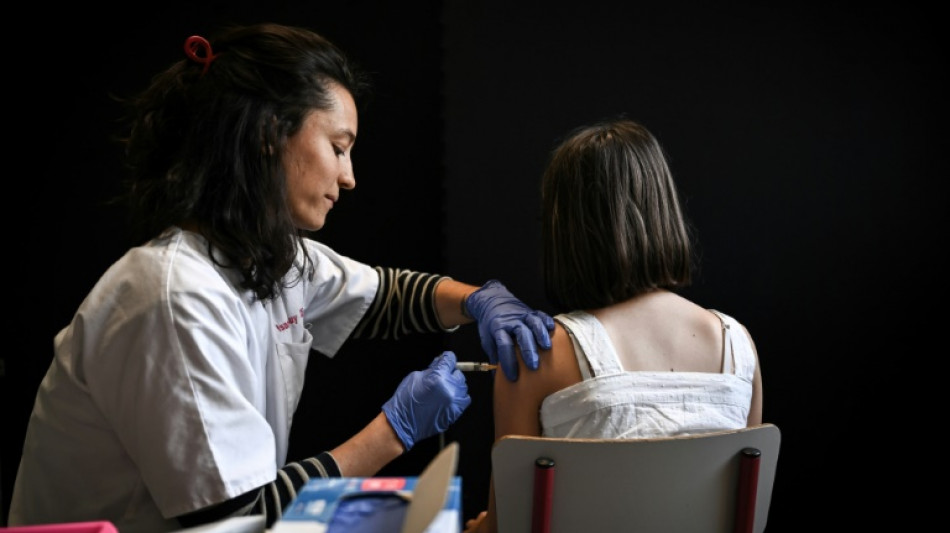
US study highlights success story of HPV vaccination / Photo: © AFP/File

US study highlights success story of HPV vaccination

A new study published Thursday by researchers at the US Centers for Disease Control and Prevention (CDC) highlights the powerful impact of the human papillomavirus (HPV) vaccine, first approved in 2006, in preventing precancerous lesions detected through cervical screening.

Text size:

HPV is the most common sexually transmitted infection, and certain strains can lead to cervical, vulvar, vaginal, and other cancers later in life. Each year, around 14 million Americans contract HPV, and the virus is responsible for approximately 10,800 cases of cervical cancer annually.

Since 2008, the CDC's Human Papillomavirus Vaccine Impact Monitoring Project has tracked trends in precancerous cervical lesions to evaluate the vaccine's effectiveness.

The findings are striking. Among women aged 20–24 screened for cervical cancer between 2008 and 2022, rates of moderate-to-high-risk precancerous lesions dropped by about 80 percent.

For women aged 25–29, the decline was 37 percent -- a smaller reduction the researchers attributed to many in this age group receiving the vaccine later in life as part of a "catch-up" vaccination effort, which is less effective.

In the US, the HPV vaccine was first approved in 2006 for girls and women, with boys and men added to the recommendations in 2011. Today, the CDC recommends routine HPV vaccination for boys and girls ages 11–12 to prevent infections that can lead to cancer later in life.

HPV includes over 200 different strains, some of which cause genital warts. Two particular strains -- 16 and 18 -- are classified as high-risk for cancer.

While cervical cancer is treatable if caught early, it is still responsible for around 4,400 US deaths per year.

The US Preventive Services Task Force recommends women ages 21 to 65 receive a Pap smear test once every three years and that women over 30 get high-risk HPV test every five years.

"The data are consistent with a considerable impact from the US HPV vaccination program on cervical precancers, with the largest decreases in the youngest age group for which benefit of vaccination would first be observed," wrote the authors in the CDC's Morbidity and Mortality Weekly Report.

They added that as vaccinated women age, further declines in cervical precancers are expected in older groups.

One limitation of the study was that individual vaccination status was not recorded, meaning the study could not directly confirm causality. However, the authors noted that "no other plausible explanations" have been identified for the sharp decline in precancers.

The study's positive findings come as outspoken anti-vaccine advocate Robert F. Kennedy Jr. begins his tenure as US health secretary.

Under his leadership, the Food and Drug Administration abruptly canceled a scheduled meeting with experts on Wednesday to discuss the development of next year's flu vaccines.

T.Mason--TFWP