The Fort Worth Press - US bans red food dye over possible cancer risk: health authorities

USD -
AED 3.672504
AFN 65.503991
ALL 81.893517
AMD 377.703986
ANG 1.79008
AOA 917.000367
ARS 1431.463704
AUD 1.424075
AWG 1.8
AZN 1.70397
BAM 1.658906
BBD 2.014216
BDT 122.30167
BGN 1.67937
BHD 0.377004
BIF 2963.603824
BMD 1
BND 1.273484
BOB 6.910269
BRL 5.23885
BSD 1.000025
BTN 90.583306
BWP 13.239523
BYN 2.873016
BYR 19600
BZD 2.011247
CAD 1.36432
CDF 2230.000362
CHF 0.775404
CLF 0.021785
CLP 860.180396
CNY 6.93805
CNH 6.93014
COP 3691.11
CRC 495.76963
CUC 1
CUP 26.5
CVE 93.526553
CZK 20.49104
DJF 177.720393
DKK 6.318604
DOP 63.114413
DZD 129.915817
EGP 46.860804
ERN 15
ETB 155.46494
EUR 0.84612
FJD 2.209504
FKP 0.738005
GBP 0.734505
GEL 2.69504
GGP 0.738005
GHS 10.990102
GIP 0.738005
GMD 73.000355
GNF 8778.001137
GTQ 7.670255
GYD 209.225001
HKD 7.81355
HNL 26.416279
HRK 6.375104
HTG 131.004182
HUF 319.673504
IDR 16847.65
ILS 3.110675
IMP 0.738005
INR 90.60355
IQD 1310.041816
IRR 42125.000158
ISK 122.690386
JEP 0.738005
JMD 156.517978
JOD 0.70904
JPY 157.06304
KES 129.004623
KGS 87.450384
KHR 4035.7261
KMF 419.00035
KPW 900.002243
KRW 1462.730383
KWD 0.30717
KYD 0.833355
KZT 494.785725
LAK 21489.944613
LBP 89557.410282
LKR 309.387392
LRD 188.003087
LSL 16.133574
LTL 2.95274
LVL 0.60489
LYD 6.332646
MAD 9.180641
MDL 17.050476
MGA 4439.468349
MKD 52.169828
MMK 2100.00747
MNT 3580.70414
MOP 8.047618
MRU 39.542143
MUR 46.060378
MVR 15.450378
MWK 1734.055998
MXN 17.260975
MYR 3.947504
MZN 63.750377
NAD 16.133574
NGN 1367.390377
NIO 36.803155
NOK 9.658735
NPR 144.932675
NZD 1.659792
OMR 0.384466
PAB 1.000025
PEN 3.364787
PGK 4.288489
PHP 58.458038
PKR 279.633919
PLN 3.568365
PYG 6607.462446
QAR 3.645108
RON 4.308404
RSD 99.305038
RUB 77.002259
RWF 1459.579124
SAR 3.750159
SBD 8.058149
SCR 13.731545
SDG 601.503676
SEK 9.004245
SGD 1.271104
SHP 0.750259
SLE 24.450371
SLL 20969.499267
SOS 570.497977
SRD 37.818038
STD 20697.981008
STN 20.780851
SVC 8.750011
SYP 11059.574895
SZL 16.130113
THB 31.539504
TJS 9.370298
TMT 3.505
TND 2.900328
TOP 2.40776
TRY 43.592904
TTD 6.771984
TWD 31.613038
TZS 2575.000335
UAH 42.955257
UGX 3558.190624
UYU 38.652875
UZS 12280.366935
VES 377.985125
VND 25950
VUV 119.988021
WST 2.726314
XAF 556.381418
XAG 0.012857
XAU 0.000201
XCD 2.70255
XCG 1.802328
XDR 0.692248
XOF 556.381418
XPF 101.156094
YER 238.403589
ZAR 16.024104
ZMK 9001.203584
ZMW 18.62558
ZWL 321.999592
  • SCS

    0.0200

    16.14

    +0.12%

  • RBGPF

    0.1000

    82.5

    +0.12%

  • AZN

    5.8700

    193.03

    +3.04%

  • GSK

    1.0600

    60.23

    +1.76%

  • NGG

    1.1700

    88.06

    +1.33%

  • BTI

    0.8400

    62.8

    +1.34%

  • CMSC

    -0.0400

    23.51

    -0.17%

  • CMSD

    0.0600

    23.95

    +0.25%

  • BP

    0.8400

    39.01

    +2.15%

  • RIO

    2.2900

    93.41

    +2.45%

  • BCE

    -0.4900

    25.08

    -1.95%

  • JRI

    0.0900

    12.97

    +0.69%

  • RELX

    -0.7100

    29.38

    -2.42%

  • RYCEF

    0.2600

    16.88

    +1.54%

  • BCC

    1.8700

    91.03

    +2.05%

  • VOD

    0.4900

    15.11

    +3.24%

US bans red food dye over possible cancer risk: health authorities
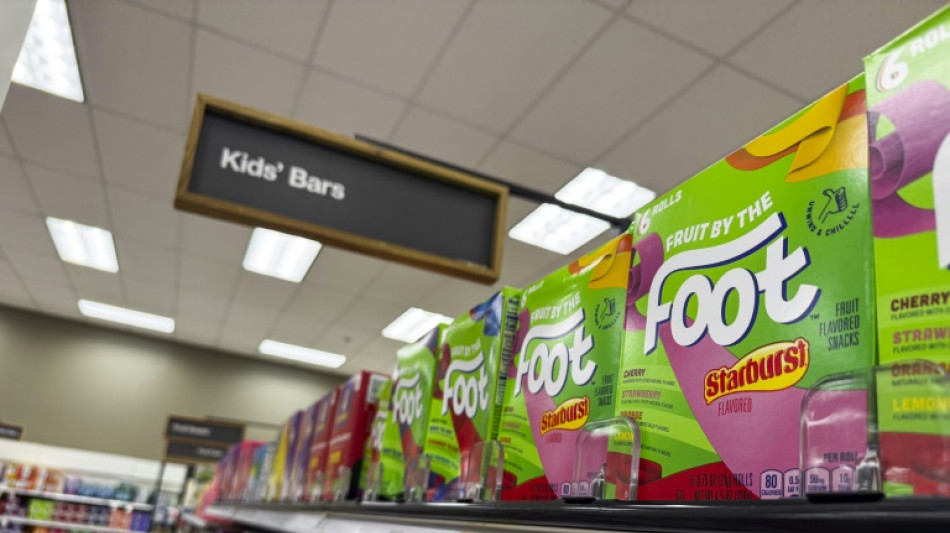
US bans red food dye over possible cancer risk: health authorities / Photo: © AFP

US bans red food dye over possible cancer risk: health authorities

Outgoing US President Joe Biden's administration on Wednesday announced a ban on Red Dye No 3, a controversial food and drug coloring long known to cause cancer in animals.

Text size:

Decades after scientific evidence first raised alarm, Red 3, as it is also called, is currently used in nearly 3,000 food products in the United States, according to the nonprofit Environmental Working Group.

"FDA is revoking the authorized uses in food and ingested drugs of FD&C Red No 3 in the color additive regulations," said a document from the Department of Health and Human Services, published in the Federal Register on Wednesday.

The decision follows a petition filed in November 2022 by the Center for Science in the Public Interest (CSPI) and other advocacy groups, which cited the "Delaney Clause" -- a provision mandating the prohibition of any color additive shown to cause cancer in humans or animals.

Notably, the FDA determined as early as 1990 that Red 3 should be banned in cosmetics because of its link to thyroid cancer in lab rats.

However, the additive continued to be used in foods, largely due to resistance from the food industry. Manufacturers of maraschino cherries, for example, relied on Red 3 to maintain the iconic red hue of their products.

It's also present in thousands of candies, snacks and fruit products.

The United States is one of the last major economies to take action on the dye. The European Union prohibited its use in 1994, with similar bans implemented in Japan, China, the UK, Australia and New Zealand.

CSPI hailed the decision as overdue and expressed hope it would lead to further action against other potentially harmful chemicals in food.

"They don't add any nutritional value, they don't preserve the food -- they're just there to make food look pretty," Thomas Galligan, a scientist with CSPI, told AFP.

"There's growing discussion across the political spectrum about food additives and chemicals, which reflects ongoing failures by the FDA."

T.Harrison--TFWP