The Fort Worth Press - California wildfire pollution killed 52,000 in a decade: study

USD -
AED 3.67295
AFN 65.501836
ALL 80.628757
AMD 365.798767
AOA 917.000275
ARS 1498.374295
AUD 1.417254
AWG 1.8
AZN 1.691712
BAM 1.692916
BBD 2.014568
BDT 123.588552
BHD 0.37722
BIF 2985
BMD 1
BND 1.279944
BOB 11.902742
BRL 5.116499
BSD 1.000186
BTN 95.272595
BWP 13.474481
BYN 2.973639
BYR 19600
BZD 2.011625
CAD 1.394455
CDF 2262.505864
CHF 0.81001
CLF 0.023252
CLP 915.210159
CNY 6.7476
CNH 6.746675
COP 3138.83
CRC 454.083156
CUC 1
CUP 26.5
CVE 95.444394
CZK 21.015699
DJF 177.720096
DKK 6.47556
DOP 58.31411
DZD 132.770256
EGP 49.878199
ERN 15
ETB 161.732285
EUR 0.86623
FJD 2.2115
FKP 0.741752
GBP 0.740335
GEL 2.610428
GGP 0.741752
GHS 11.742659
GIP 0.741752
GMD 73.494963
GNF 8783.979711
GTQ 7.631949
GYD 209.473935
HKD 7.84565
HNL 26.810468
HRK 6.527502
HTG 130.781582
HUF 315.802013
IDR 17780
ILS 2.99815
IMP 0.741752
INR 95.395998
IQD 1310.320352
IRR 1374724.999654
ISK 123.180197
JEP 0.741752
JMD 158.842547
JOD 0.709032
JPY 159.134003
KES 129.380099
KGS 87.449522
KHR 4055.276404
KMF 426.000475
KRW 1418.115016
KWD 0.30901
KYD 0.833557
KZT 466.315817
LAK 22589.133464
LBP 89569.586725
LKR 335.223191
LRD 180.535539
LSL 16.184058
LTL 2.952741
LVL 0.60489
LYD 6.374185
MAD 9.327349
MDL 17.383589
MGA 4283.754366
MKD 53.255488
MMK 2099.549591
MNT 3594.253507
MOP 8.082819
MRU 40.117892
MUR 47.000101
MVR 15.449727
MWK 1734.362219
MXN 17.147645
MYR 4.090596
MZN 63.905023
NAD 16.183988
NGN 1361.669565
NIO 36.804771
NOK 9.497106
NPR 152.43466
NZD 1.699855
OMR 0.384504
PAB 1.00019
PEN 3.37859
PGK 4.422247
PHP 60.920482
PKR 277.683276
PLN 3.72717
PYG 5953.509307
QAR 3.646216
RON 4.540801
RSD 101.627973
RUB 82.499664
RWF 1469.321688
SAR 3.744856
SBD 8.065696
SCR 14.419949
SDG 600.494587
SEK 9.5009
SGD 1.280701
SLE 24.600282
SOS 571.628891
SRD 37.750502
STD 20697.981008
STN 21.206705
SVC 8.751915
SZL 16.181149
THB 33.002505
TJS 9.236988
TMT 3.51
TND 2.932016
TRY 47.712965
TTD 6.784444
TWD 32.267901
TZS 2649.997982
UAH 44.866895
UGX 3725.519898
UYU 40.293437
UZS 11934.665755
VES 755.762399
VND 26155
VUV 119.366412
WST 2.733717
XAF 567.78312
XAG 0.015349
XAU 0.000229
XCD 2.70255
XCG 1.802664
XDR 0.70614
XOF 567.788035
XPF 103.229492
YER 238.400135
ZAR 16.203797
ZMK 9001.197547
ZMW 18.708803
ZWL 321.999592
  • RBGPF

    0.8600

    70.6

    +1.22%

  • RELX

    -0.0240

    35.496

    -0.07%

  • RIO

    0.6100

    101.71

    +0.6%

  • CMSC

    -0.1838

    21.56

    -0.85%

  • NGG

    -1.5000

    79.38

    -1.89%

  • BTI

    -2.3410

    56.989

    -4.11%

  • AZN

    0.2400

    161.66

    +0.15%

  • GSK

    -1.0750

    51.885

    -2.07%

  • RYCEF

    -0.1000

    20.9

    -0.48%

  • BCE

    -0.2100

    22.54

    -0.93%

  • BCC

    -1.7900

    84.81

    -2.11%

  • BP

    1.2300

    42.86

    +2.87%

  • JRI

    -0.0200

    12.79

    -0.16%

  • CMSD

    -0.1240

    21.696

    -0.57%

  • VOD

    -0.4400

    15.75

    -2.79%

California wildfire pollution killed 52,000 in a decade: study
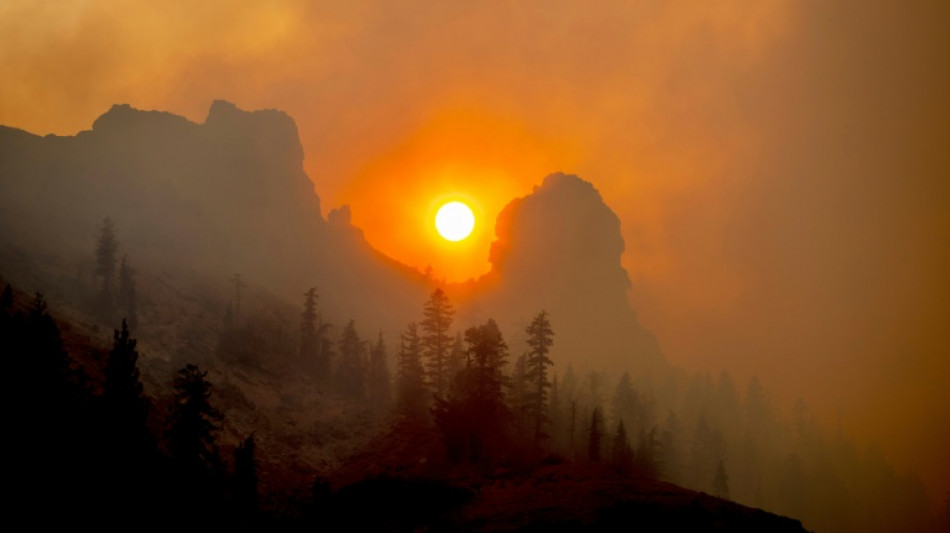
California wildfire pollution killed 52,000 in a decade: study / Photo: © AFP

California wildfire pollution killed 52,000 in a decade: study

Pollution from California wildfires killed more than 52,000 people in a decade, a new study claimed Friday, as the western United States girds for a hot summer that could bring more blazes.

Text size:

Vast areas of forest and grassland are scorched every year in California and other parts of the country, causing millions of dollars of destruction and sometimes costing lives.

But researchers say particulate matter released by the fires has a devastating effect on local populations that far outweighs the number of deaths directly attributable to them.

A study led by Rachel Connolly of the University of California Los Angeles found these tiny airborne pollutants -- known as PM2.5 because they are 2.5 micrometers or less -- are killing large numbers of people.

The team looked at data from 2008 to 2018 and isolated the amount of PM2.5 released specifically by wildfires, as opposed to that generated by other sources, like transport and manufacturing.

They found at least 52,480 premature deaths could be attributed to this specific pollution. The cost of treating people affected by the pollutants was calculated at $432 billion.

"The importance of wildfire management will only grow in the coming decades as aridification intensifies with climate change and more regions are susceptible to fires," the researchers wrote in their paper, published Friday by Science Advances, a peer-reviewed journal of The American Association for the Advancement of Science.

"These findings have direct implications for California, a state at the forefront of climate policy development with many fire-prone regions and a diverse population to protect," they added.

"Growing the evidence base on health impacts from wildfires and other climate-related exposures is critical."

The study comes as much of California and other parts of the American West are sweltering under the first heatwave of the year.

Temperatures as high as 120 degrees Fahrenheit (49 Celsius) scorched Death Valley on Thursday, while Las Vegas was broiling under 111 F heat.

The early summer heatwave has raised concerns that the fire season could be a fierce one in 2024 after two relatively benign years, thanks to wet winters.

For now, the blazes breaking out have tended to be grass fires, which are easier to control and do not burn as hot.

But as the summer heats up and the larger shrubs and trees start to dry out, they become vulnerable to downed power lines or discarded cigarettes.

After around 20 years of drought, and in a climate that is slowly aridifying, California has seen an alarming number of megafires this century -- 18 of the 20 biggest fires in the state's recorded history have occurred in the last two decades.

Wildfires are a natural -- and necessary -- part of the life cycle of wilderness.

But climate change, caused by humanity's unchecked burning of fossil fuels that pumps greenhouse gases into the atmosphere, is making them bigger, hotter and more unpredictable.

D.Johnson--TFWP