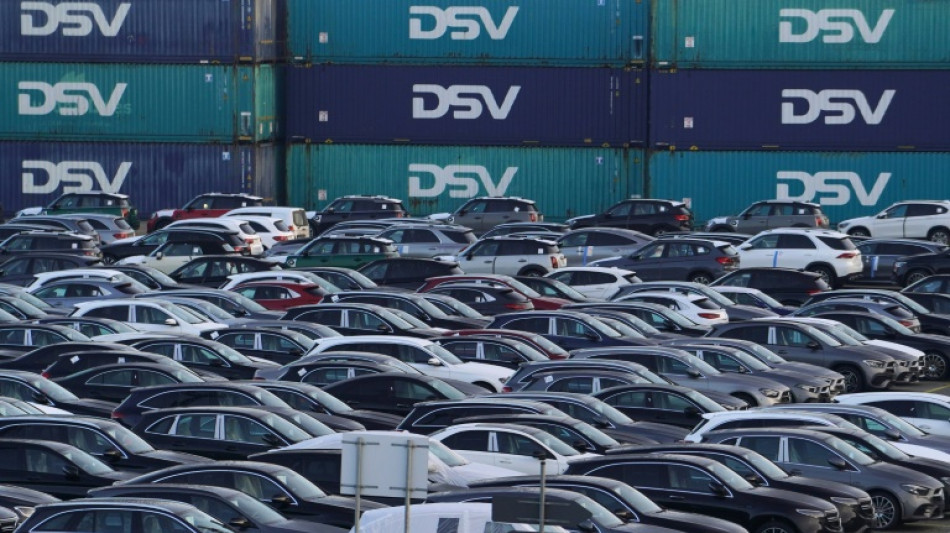
Chip crisis pushes European car sales to new low

EU car sales fell to a new low last year as the auto sector was hobbled by the Covid pandemic and a shortage of computer chips, industry figures showed Tuesday.
Registrations of new passenger cars in the EU slid by 2.4 percent in 2021, to 9.7 million vehicles, the worst performance since statistics began in 1990, according to data from the European Automobile Manufacturers Association (ACEA).
That follows the historic fall of nearly 24 percent suffered in 2020 due to pandemic restrictions, and brought new car registrations in the EU to 3.3 million below the pre-crisis sales of 2019.
The lack of semiconductors, the computer chips used in a multitude of car systems in both traditional and electric vehicles, was the main reason holding the industry back.
"This fall was the result of the semiconductor shortage that negatively impacted car production throughout the year, but especially during the second half of 2021," said the ACEA.
Car manufacturers initially downplayed the impact of the chip shortage, but it eventually led them to slow production and even idle factories.
EU car sales did rebound strongly in the second quarter, but for most of the second half they were down by around 20 percent.
The short-term perspectives for supplies are not good.
"The start of 2022 will still be difficult in terms of supplies of chips," Alexandre Marian at the AlixPartners consultancy told AFP.
"The situation should improve in the middle of the year, but that doesn't mean other problems won't crop up, concerning raw materials, supply chains and labour shortages," he said.
The chip shortage is a consequence of the pandemic as manufacturers were disrupted by lockdowns and sick employees, as well as supply chain problems and increased global demand for electronics.
The pandemic has also sent prices for many raw materials soaring and caused labour shortages in some areas.
- Germany stuck in reverse -
If the markets in France, Italy and Spain posted modest gains, a 10.1-percent drop in Germany dragged down the overall EU figure.
Germany is by far Europe's largest car market, accounting for a quarter of total sales at over 2.6 million last year.
If the shortage of semiconductors was the major factor holding back a rebound, the EU also underperformed compared to the other major markets where the recovery from the pandemic was stronger.
The Chinese car market grew by 4.4 percent and the US market by 3.7 percent.
The decline in European sales may also reflect "the sharp increase in the average price of cars as well as an expectant attitude by consumers concerning electric vehicles which is pushing them to put off purchases and hold on to their current vehicle longer," said analysts at Inovev, an automotive data analytics firm.
- Renault hits sales pothole -
Europe's top three auto manufacturers all saw a drop in sales in the bloc.
Volkswagen managed to retain the top spot, but a 4.8-percent drop in sales to 1.4 million vehicles caused its market share to dip to 25.1 percent.
Stellantis, which was formed from the merger of Italy's Fiat group and France's Peugeot-Citroen, suffered a smaller 2.1-percent drop to 2.1 million units, nudging its market share higher to 21.9 percent.
Renault group suffered a 10-percent drop, with sales of its eponymous brand tumbling by 16 percent, while sales of both its low-cost Dacia brand and sporty Alpine brands rose.
The French automotive group saw its market share narrow to 10.6 percent.
Germany's BMW managed a 1.5-percent increase in registrations, but Daimler -- the owner of the Mercedes and Smart brands -- suffered a 12.4-percent drop.
Korea's Hyundai Group -- which includes both the Hyundai and Kia brands -- solidified its position as the number-four carmaker in the EU with an 18.4-percent gain to over 828,000 vehicles.
Its market share rose to 8.5 percent.
The data, which are supplied by ACEA members, do not include sales by US electric vehicle manufacturer Tesla.
The ACEA data also did not include a breakdown by petrol, diesel and electric vehicles, which are provided in a separate quarterly report.
S.Weaver--TFWP