The Fort Worth Press - Climate change spurring surge in dengue, chikungunya: WHO

USD -
AED 3.672499
AFN 62.506428
ALL 82.669181
AMD 376.230888
ANG 1.790083
AOA 916.999898
ARS 1397.438963
AUD 1.434216
AWG 1.80225
AZN 1.698731
BAM 1.684191
BBD 2.010067
BDT 122.460754
BGN 1.709309
BHD 0.377549
BIF 2964.056903
BMD 1
BND 1.276953
BOB 6.911428
BRL 5.219601
BSD 0.997972
BTN 93.511761
BWP 13.674625
BYN 2.954524
BYR 19600
BZD 2.007225
CAD 1.379045
CDF 2277.560893
CHF 0.788285
CLF 0.023168
CLP 914.819733
CNY 6.892701
CNH 6.896815
COP 3705.22
CRC 464.994123
CUC 1
CUP 26.5
CVE 94.953305
CZK 21.031597
DJF 177.721517
DKK 6.434015
DOP 59.786189
DZD 132.496617
EGP 52.610098
ERN 15
ETB 154.279108
EUR 0.86114
FJD 2.24025
FKP 0.747226
GBP 0.744805
GEL 2.704971
GGP 0.747226
GHS 10.903627
GIP 0.747226
GMD 73.495784
GNF 8747.24442
GTQ 7.642594
GYD 208.863457
HKD 7.816545
HNL 26.426305
HRK 6.490797
HTG 130.855608
HUF 335.092497
IDR 16874
ILS 3.11496
IMP 0.747226
INR 94.01855
IQD 1307.361768
IRR 1313025.000172
ISK 123.859562
JEP 0.747226
JMD 157.486621
JOD 0.708967
JPY 158.778019
KES 129.750191
KGS 87.449198
KHR 4005.063378
KMF 425.99973
KPW 900.014346
KRW 1496.680243
KWD 0.30647
KYD 0.831676
KZT 481.782876
LAK 21486.820464
LBP 89375.339068
LKR 313.699656
LRD 183.13807
LSL 17.013787
LTL 2.95274
LVL 0.60489
LYD 6.362944
MAD 9.303745
MDL 17.455028
MGA 4166.899883
MKD 53.104551
MMK 2100.167588
MNT 3569.46809
MOP 8.04266
MRU 39.802636
MUR 46.459693
MVR 15.460316
MWK 1730.481919
MXN 17.730503
MYR 3.964988
MZN 63.910023
NAD 17.013787
NGN 1377.903141
NIO 36.726715
NOK 9.725698
NPR 149.61272
NZD 1.71587
OMR 0.3845
PAB 0.997963
PEN 3.451997
PGK 4.309899
PHP 59.985973
PKR 278.8205
PLN 3.674825
PYG 6511.920293
QAR 3.639338
RON 4.388203
RSD 101.148972
RUB 80.876407
RWF 1459.995436
SAR 3.751309
SBD 8.041975
SCR 13.769339
SDG 601.000445
SEK 9.270365
SGD 1.27794
SHP 0.750259
SLE 24.58613
SLL 20969.510825
SOS 570.306681
SRD 37.340127
STD 20697.981008
STN 21.09741
SVC 8.732681
SYP 110.948257
SZL 17.012336
THB 32.478014
TJS 9.575933
TMT 3.51
TND 2.927264
TOP 2.40776
TRY 44.357297
TTD 6.780508
TWD 31.907202
TZS 2570.059022
UAH 43.82926
UGX 3737.239351
UYU 40.671515
UZS 12175.463071
VES 458.87816
VND 26350
VUV 119.508072
WST 2.738201
XAF 564.849586
XAG 0.01366
XAU 0.000218
XCD 2.70255
XCG 1.798634
XDR 0.702492
XOF 564.869043
XPF 102.697908
YER 238.59782
ZAR 16.842011
ZMK 9001.211096
ZMW 18.887324
ZWL 321.999592
  • RBGPF

    -13.5000

    69

    -19.57%

  • NGG

    0.2700

    82.33

    +0.33%

  • CMSC

    -0.0100

    22.87

    -0.04%

  • BCE

    0.0700

    25.83

    +0.27%

  • RELX

    -1.3500

    32.46

    -4.16%

  • BCC

    1.6900

    73.57

    +2.3%

  • AZN

    1.7100

    185.78

    +0.92%

  • BTI

    -0.1600

    57.76

    -0.28%

  • GSK

    0.9600

    52.95

    +1.81%

  • RIO

    0.9300

    86.77

    +1.07%

  • BP

    1.2200

    44.79

    +2.72%

  • RYCEF

    -0.2800

    15.69

    -1.78%

  • JRI

    0.1800

    11.86

    +1.52%

  • VOD

    0.1800

    14.66

    +1.23%

  • CMSD

    -0.1100

    22.63

    -0.49%

Climate change spurring surge in dengue, chikungunya: WHO
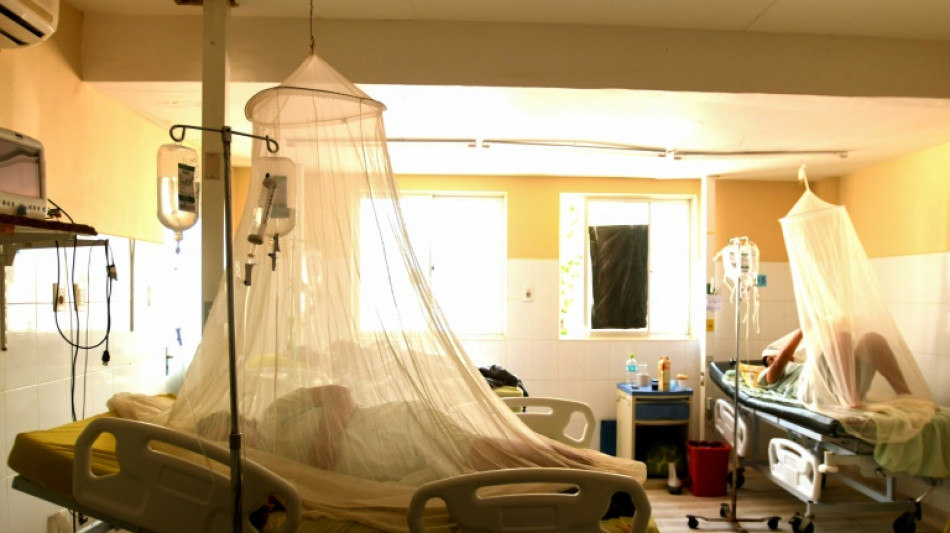
Climate change spurring surge in dengue, chikungunya: WHO / Photo: © AFP/File

Climate change spurring surge in dengue, chikungunya: WHO

The World Health Organization warned Wednesday that dengue and other diseases caused by mosquito-borne arboviruses were spreading far faster and further amid climate change, warning global outbreaks could be looming.

Text size:

Experts with the United Nations health agency sounded the alarm over swelling numbers of cases of dengue and chikungunya, and warned new epidemics of zika could also be expected.

All three are caused by arboviruses carried by Aedes aegypti mosquitos, which have been spreading into new territory as the planet warms.

"Climate change has played a key role in facilitating the spread of the vector mosquitoes," said Raman Velayudhan, who coordinates WHO's dengue and arbovirus initiative.

He and colleague Diana Rojas Alvarez, WHO's technical lead on chikungunya and zika, stressed the need for urgent action to rein in the spread of the mosquitos, amid fears of larger outbreaks in new areas.

A full 129 countries are already at risk from dengue, including 100 countries where the disease is endemic.

And case numbers have grown exponentially in recent years, jumping from around half a million in 2000 to some 5.2 million in 2019, the worst year on record, Velayudhan told reporters.

Cases were not properly recorded during the Covid pandemic, but he warned that numbers remained high.

In parallel, chikungunya, which to date has been reported in 115 countries since it was discovered in the 1950, is experiencing a dramatic surge in the Americas, Rojas Alvarez told reporters.

So far this year, around 135,000 cases have been reported there, compared to 50,000 cases reported during the first half of 2022, she said.

- 'Alarming' -

Most concerning perhaps is the expanding geographic spread of both diseases, which are being reported further south in the Americas and are also moving into the northern hemisphere, including a number of European countries.

"The mosquitos and these diseases have with climate change been increasing ... by altitude and by latitude," Rojas Alvarez said, describing the situation as "alarming".

"This high transmission (in the Americas) could be an anticipation of what the next summer season in the northern hemisphere might look like," she warned.

The two diseases often cause just mild symptoms like fever, body ache and a rash.

But while most people who catch chikungunya experience symptoms for about a week, a full 40 percent will feel the effects for months and even years.

"It can cause lifelong disability," Rojas Alvarez warned.

With dengue, which comes in four closely related serotypes, people who are reinfected with another serotype often develop severe disease.

This "can lead to organ failure and death", Velayudhan warned, adding that "this is a big threat to the world, because most of the countries now have all four serotypes in circulation."

He called for countries to boost mosquito control and "be on the alert" to detect when the diseases are spreading.

"We really want to avoid any major outbreak."

W.Knight--TFWP