The Fort Worth Press - AI making cyber attacks costlier and more effective: Munich Re

USD -
AED 3.672502
AFN 65.000288
ALL 79.92783
AMD 363.200558
ANG 1.790365
AOA 916.99996
ARS 1512.724296
AUD 1.405896
AWG 1.8
AZN 1.701759
BAM 1.70475
BBD 2.015105
BDT 122.866121
BGN 1.683441
BHD 0.377158
BIF 3009.975725
BMD 1
BND 1.276579
BOB 10.179685
BRL 5.132305
BSD 1.000449
BTN 95.931629
BWP 13.567684
BYN 3.041441
BYR 19600
BZD 2.012246
CAD 1.39962
CDF 2310.0002
CHF 0.82448
CLF 0.024171
CLP 954.419682
CNY 6.706402
CNH 6.70556
COP 3134.56
CRC 447.578413
CUC 1
CUP 26.5
CVE 96.109511
CZK 21.1723
DJF 178.159742
DKK 6.51085
DOP 59.260873
DZD 133.876605
EGP 52.161402
ERN 15
ETB 163.423038
EUR 0.87102
FJD 2.24075
FKP 0.743677
GBP 0.747565
GEL 2.604997
GGP 0.743677
GHS 11.515883
GIP 0.743677
GMD 73.999749
GNF 8795.70108
GTQ 7.633807
GYD 209.2854
HKD 7.845245
HNL 26.85343
HRK 6.5669
HTG 130.759174
HUF 316.173502
IDR 17733
ILS 3.03294
IMP 0.743677
INR 95.77355
IQD 1310.636666
IRR 1374575.000327
ISK 121.769736
JEP 0.743677
JMD 157.885791
JOD 0.70903
JPY 155.678496
KES 129.590798
KGS 87.450162
KHR 4074.837551
KMF 428.000211
KPW 900.000318
KRW 1382.815037
KWD 0.30861
KYD 0.833795
KZT 445.677328
LAK 22408.751171
LBP 89594.128747
LKR 331.841379
LRD 173.581452
LSL 16.298676
LTL 2.95274
LVL 0.60489
LYD 6.355114
MAD 9.52989
MDL 17.564075
MGA 4345.078556
MKD 53.623182
MMK 2099.664815
MNT 3596.851201
MOP 8.084808
MRU 40.080539
MUR 47.659514
MVR 15.409852
MWK 1734.87843
MXN 17.19097
MYR 4.0986
MZN 63.903695
NAD 16.298676
NGN 1330.980258
NIO 36.817998
NOK 9.42809
NPR 153.487582
NZD 1.74142
OMR 0.384505
PAB 1.000458
PEN 3.377685
PGK 4.451379
PHP 62.716015
PKR 277.316313
PLN 3.79595
PYG 5918.423381
QAR 3.647021
RON 4.583802
RSD 102.225971
RUB 84.725008
RWF 1476.267885
SAR 3.713538
SBD 8.000512
SCR 13.793554
SDG 601.483424
SEK 9.816345
SGD 1.27541
SHP 0.746965
SLE 24.639878
SLL 20969.491881
SOS 571.784692
SRD 37.752499
STD 20697.981008
STN 21.354764
SVC 8.754581
SYP 13002.000254
SZL 16.292377
THB 33.304993
TJS 9.229529
TMT 3.5
TND 2.943174
TOP 2.40776
TRY 48.67542
TTD 6.792558
TWD 31.893029
TZS 2653.280206
UAH 44.708507
UGX 3931.959922
UYU 40.225402
UZS 11781.061917
VES 845.45495
VND 26012
VUV 118.307083
WST 2.742913
XAF 571.351358
XAG 0.015409
XAU 0.00023
XCD 2.70255
XCG 1.803158
XDR 0.707052
XOF 571.351358
XPF 103.951572
YER 236.650164
ZAR 16.254503
ZMK 9001.190528
ZMW 19.635051
ZWL 321.999592
SSP 5658.175743
MXV 1.949099
  • CMSC

    0.1400

    20.48

    +0.68%

  • RBGPF

    0.0000

    69.99

    0%

  • BCE

    -0.4000

    22.5

    -1.78%

  • NGG

    1.1000

    76.03

    +1.45%

  • BCC

    -0.6200

    75.31

    -0.82%

  • RIO

    -1.4700

    95.79

    -1.53%

  • AZN

    1.0400

    162.89

    +0.64%

  • JRI

    -0.1200

    11.5

    -1.04%

  • GSK

    0.2800

    50.29

    +0.56%

  • RYCEF

    -0.0100

    19.29

    -0.05%

  • BTI

    -0.4300

    56.09

    -0.77%

  • RELX

    0.0500

    34.27

    +0.15%

  • CMSD

    0.1785

    20.29

    +0.88%

  • VOD

    -0.2200

    17.46

    -1.26%

  • BP

    -1.5800

    45.38

    -3.48%

AI making cyber attacks costlier and more effective: Munich Re
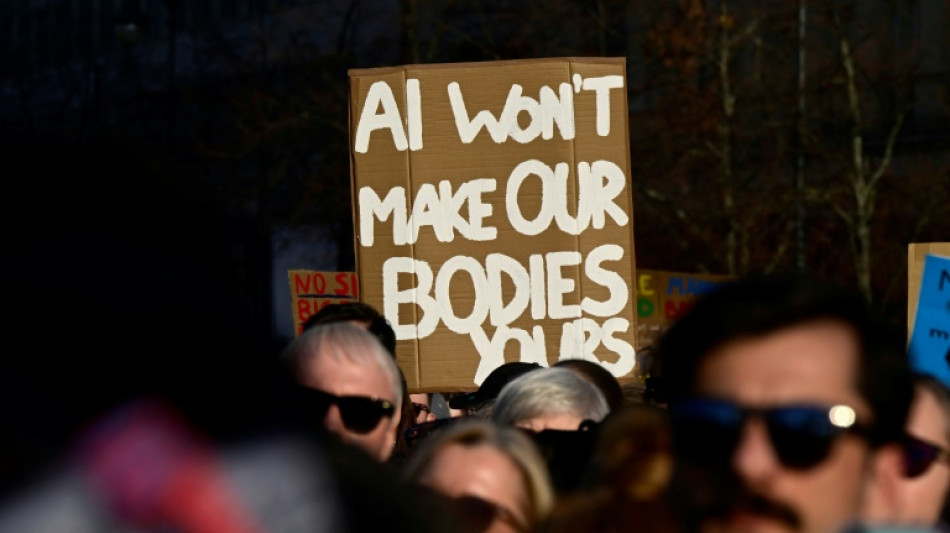
AI making cyber attacks costlier and more effective: Munich Re / Photo: © AFP/File

AI making cyber attacks costlier and more effective: Munich Re

Artificial intelligence is making cyberattacks increasingly sophisticated and costlier for businesses, reinsurer Munich Re said Wednesday, warning of methods ranging from highly personalised phishing emails to computer-generated, convincing fake identities.

Text size:

"If cybercrime were a country, it would be the third-largest economy in the world", behind only the United States and China, the reinsurer said in a report.

Citing figures from market analysis firm Statista, Munich Re projected cybercrime will generate global losses of some $14 billion (12.07 bn euros) in 2028.

Martin Kreuzer, head of cyber risks at Munich Re, told AFP that "automation now plays a central role", enabling attackers to operate "efficiently and in a more targeted way".

"They rely on highly personalised phishing emails, automatically generated malware, and synthetic identities that appear deceptively real," he said.

The trend of "agentic AI" means the advent of systems that can "act autonomously, make decisions, and even circumvent defensive mechanisms," according to Kreuzer.

The most widespread cyberattacks are still ransomware, in which hackers lock systems and demand money to release them.

Munich Re's study says that the number of publicly reported attacks of this kind "increased by nearly 50 percent in 2025 and... continue unabated in 2026".

Coordinated attacks via networks of hijacked devices, used to overwhelm systems, also more than doubled in 2025 and are becoming more common thanks to services available for hire.

At a more advanced level, criminals are collaborate with states, concealing the origin of attacks and accelerating their global operations.

"Nation-state actors are among the most professional players in the cyber threat landscape," said Kreuzer.

"Here we are seeing both an evolution of tools and methods, and the emergence of hybrid warfare driven by geopolitical motives," he said, adding that "disinformation is increasingly being used as a weapon".

The study notes that while attacks on large businesses attract most public attention, "the majority of cyber incidents and claims affect micro-companies and SMEs".

Compared with risks from natural catastrophes, for which almost half of all losses were insured in 2025, Kreuzer said that "cyber risk coverage is still far too low, with only a fraction insured".

B.Martinez--TFWP