After three years, Covid 'here to stay' / Photo: © AFP/File

While the World Health Organization hopes Covid-19 will soon no longer be considered a public health emergency, it has warned the virus itself is here to stay.
Three years after the first case was identified in China in December 2019, experts say the world must learn the lessons of this pandemic to prepare for potential future outbreaks.
- Is the pandemic nearly over? -
"We have come a long way. We are hopeful that at some point next year, we will be able to say that Covid-19 is no longer a global health emergency," WHO chief Tedros Adhanom Ghebreyesus said on Wednesday.
"This virus will not go away. It's here to stay and all countries will need to learn to manage it alongside other respiratory illnesses," he added.
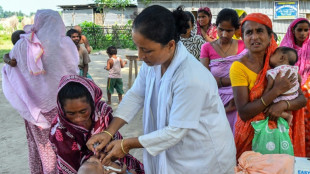
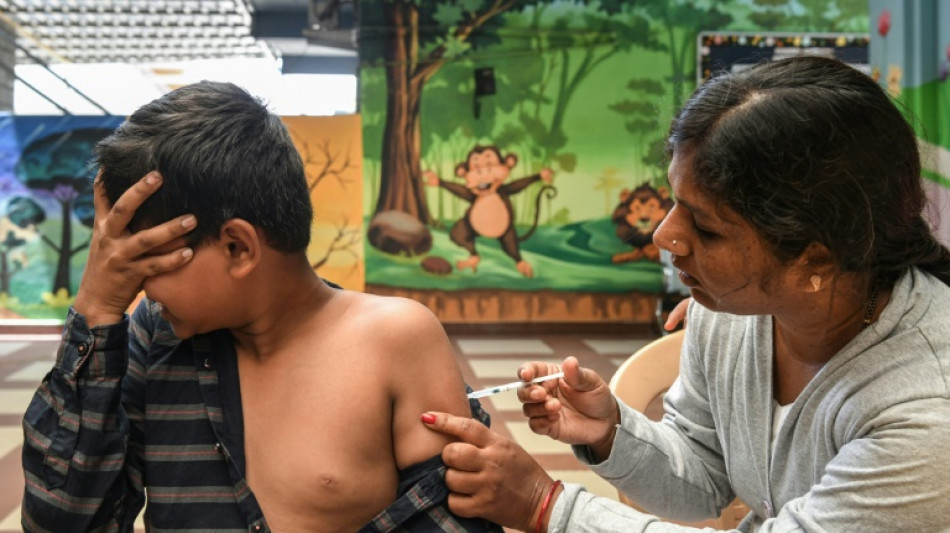
Around 90 percent of the global population now have some level of immunity against Covid, either through vaccination or previous infection, the WHO estimates.
The weekly death toll is around a fifth of what it was a year ago and the remaining deaths are largely among those who are not fully vaccinated, it says.
The WHO's emergency committee on Covid will meet in January to discuss the criteria for whether it still constitutes a public health emergency of international concern.
- Can Covid be eradicated? -
Some experts anticipate that Covid will eventually move from a pandemic to an endemic stage, in which it would continue to circulate widely and spark regular resurgences, as is currently the case with seasonal flu.
But there are a number of reasons why the total eradication of Covid looks unlikely.
Smallpox meanwhile remains the only human infectious disease to be officially eradicated, which was declared by the WHO in 1980.
"To eradicate a virus, the disease must be clinically visible, there must be no animal reservoir, and there must be a highly effective vaccine that offers life-long protection," French microbiologist Philippe Sansonetti told a conference at France's Pasteur Institute last week.
"Covid-19 ticks all the wrong the boxes," he added.
For Covid, isolation measures are undermined by the fact that some infected people exhibit no symptoms, meaning they are not aware they should isolate.
Unlike smallpox, Covid can be transmitted to animals, where it can circulate before later reinfecting humans, creating a virus reservoir that is difficult to snuff out.
And while Covid vaccines help prevent against severe forms of the disease, they offer little protection against reinfection -- and their effectiveness wanes with time, meaning booster doses are required.
- Biggest risks ahead? -
Etienne Simon-Loriere, head of the Pasteur Institute's evolutionary genomics of RNA viruses unit, said that "currently the virus is being allowed to circulate far too much".
Every new infection raises the chance the virus could mutate to become more transmissible or severe, he warned.
"Even if we would all like to believe it, we have no reason to think that it will become more friendly," Simon-Loriere said.
And there is a looming threat that new infectious diseases could jump from animals over into humans.
Since the emergence of SARS, MERS and Covid, "a good dozen coronaviruses have been found in bats that could potentially infect humans," warned Arnaud Fontanet, a specialist in emerging diseases at the Pasteur Institute.
More than 60 percent of emerging diseases are zoonotic, meaning they can be transmitted between humans and animals.
The risk from zoonotic diseases has increased due to human-induced upheavals to the animal world including deforestation, climate change and mass livestock farming.
- Preparation for next pandemic? -
Fontanet said that in the case of a possible future pandemic, "a lot can and must be done at the beginning of the outbreak".
He gave the example of Denmark, which imposed a lockdown early during the first wave of the Covid pandemic, allowing it to later lift the measure more quickly.
Another key factor is the ability to quickly test for emerging diseases, allowing those infected to isolate as soon as possible.
"Unfortunately, today we are still reacting, not anticipating," Fontanet said.
The 194 WHO member states have agreed to start thrashing out an early draft of a pandemic treaty in February aiming to ensure the flawed response that turned Covid into a global crisis does not happen again.
T.Harrison--TFWP