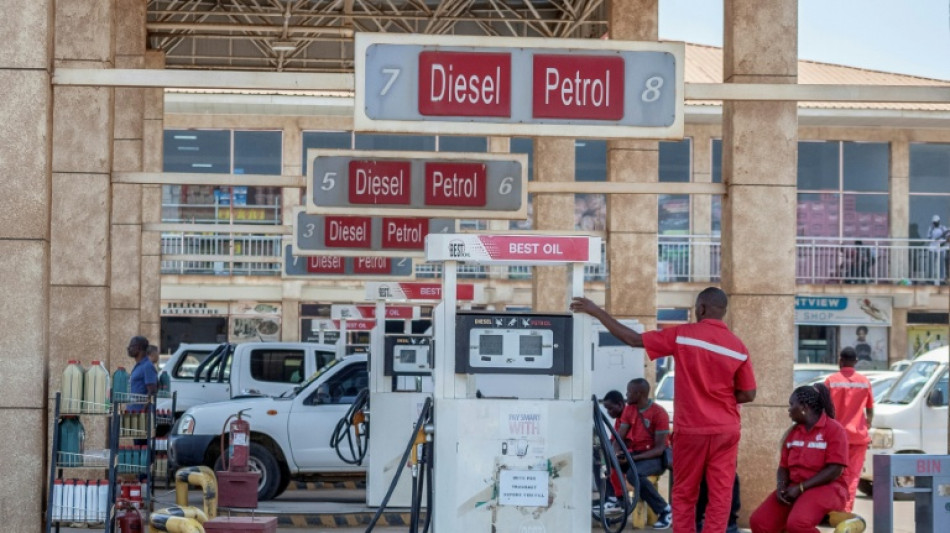
Malawi's fuel shortages, record prices deepen economic crisis / Photo: © AFP

Word spread that a fuel tanker was nearing a filling station in Malawi's capital, Lilongwe, and the snaking queue surged as drivers jockeyed for position and motorcyclists pressed in.
After years of chronic fuel shortages, the southern African nation also has the highest petrol prices on the continent, disrupting livelihoods and straining an economy starved of foreign currency.
"I have been spending more time on the fuel queue than on my business and it is not sustainable," said McDonald Kachule, a motorcycle taxi operator in central Lilongwe for six years.
As the war in the Middle East pushes up fuel prices, the cost of petrol in the largely poor country has risen to $3.24 a litre.
This is the highest in Africa and the second-highest globally, at more than twice the global average, according to GlobalPetrolPrices, an energy-price data provider tracking retail fuel prices in more than 100 countries.
With uncertain supplies and tight rationing, many motorists -- like Kachule -- have turned to the black market where petrol can cost as much as 20,000 kwacha ($11.50) a litre.
"At those prices, it doesn't make business sense," the 33-year-old father of two told AFP.
The government, elected into office last year on a pledge to revive the struggling economy, blames the fuel crisis on a shortage of foreign currency needed to pay for imports.
Officials say international supply disruptions linked to the Iran war have compounded the problem, with banks struggling to honour letters of credit and some overseas suppliers demanding upfront payment.
The country consumes about two million litres (more than half a million US gallons) of fuel a day, requiring $49 million a month in foreign currency, according to the National Oil Company of Malawi.
That amounts to about $588 million a year -- more than the $545 million Malawi earned from tobacco, its largest export, in 2025, according to the International Monetary Fund.
- 'Everyone is scrambling' -
The government has sought emergency financing, including through the sale of gold reserves, to pay suppliers.
Energy Minister Jean Mathanga said on Monday that more than 23 million litres of petrol and diesel had been procured, with nearly half in transit and some already reaching filling stations.
"When we receive the product, everyone is scrambling to get it," said Dyton Ganiza, operations manager at the Best Oil retailer.
The company allows motorcycle taxi operators only two litres at a time while small cars can get up to 20 litres.
Elita Mtiyesa, a teacher, arrived at a filling station after collecting her children from school.
"I have been here since 4:00 pm. Now it is 8:00 pm," she said. "Everything has stopped."
She expected to have to repeat the process within a few days.
Motorcycle taxi operator Steven Mbeta said riders could spend days and nights queueing, while WhatsApp groups helped to track deliveries from one filling station to the next.
Economist Milward Tobias warned that the lack of supply threatened food security by disrupting the delivery of fertiliser and other essentials to farmers in the largely agricultural economy.
"When there is scarcity, you end up using the whole 100,000 kwacha (about $58) on fuel and yet there is no food at home," he said.
The squeeze is hitting a population already struggling to make ends meet.
The World Bank estimates that 76 percent of Malawians lived below the international poverty line of three US dollars a day in 2025.
- Alternatives -
The crisis exposes a deeper structural problem in Malawi, Tobias said.
"The environment is far from getting ready to industrialise," he said, citing unreliable energy supplies, foreign-exchange constraints and recurring import shortages.
Yet amid the disruption, some businesses see an opportunity.
A Malawi-based company that assembles and converts electric motorcycles, SGV, said demand had grown as conventional fuel became harder to obtain.
Electric bikes can dramatically reduce operating costs for high-mileage riders, it said, although expansion was constrained by the same foreign-exchange shortages affecting the wider economy.
It calculated that electricity for a heavily used motorcycle could cost less than 750 kwacha a day, compared with up to 30,000 kwacha for petrol.
H.Carroll--TFWP