Famine-scarred southern Madagascar braces for El Nino / Photo: © AFP

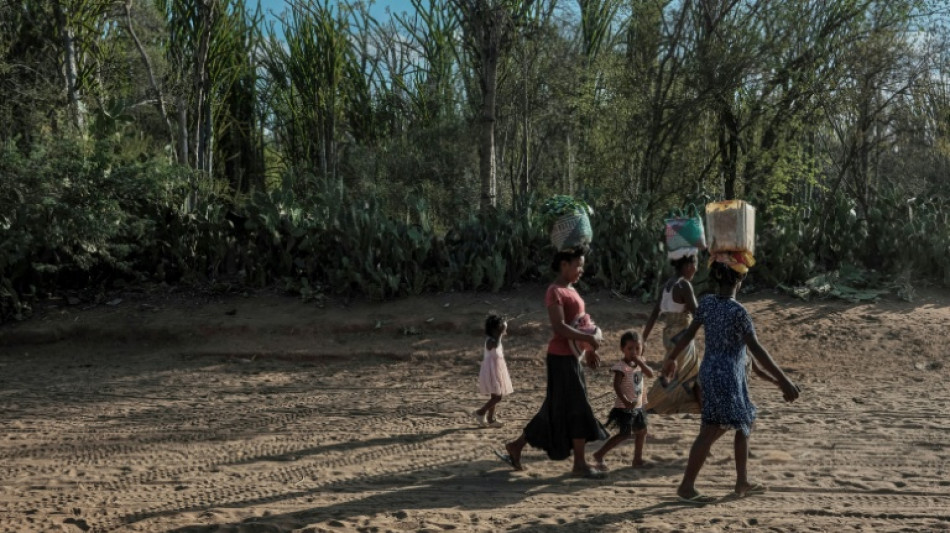
With scrawny arms and bellies swollen by malnutrition, a dozen children waited for a meal at a World Food Programme centre in an arid area of southern Madagascar scarred by famine and bracing for the looming El Nino.
Flour porridge simmered on a stove at the site that opened in the small town of Ifotaka the year after a 2021–2022 famine then described by the United Nations as the first in the world caused by climate change.
A staffer member had to slip away: she had just learned of the death of a malnourished two-year-old.
Even before the full impact due in the coming months of the El Nino warming pattern, which experts have said is on course to be the strongest on record, people in Madagascar's far south are already going hungry.
The World Meteorological Organization has warned of "increased drought risk" in southern Africa as the months-long phenomenon begins in October, with countries across the planet -- from Brazil to India -- also vulnerable.
In Madagascar, international aid cuts and spiking inflation caused by the Middle East war add to the threat of severe hunger.
Ifotaka -- an inland town of wooden shacks and corrugated iron huts -- was the epicentre of the 2021–2022 "kere", as periods of hunger are known here.
Around 30,000 people in the surrounding region of sandy soil and bristling cacti suffered from a life-threatening lack of food. To survive, they boiled pieces of cactus and scraps of animal hide.
- Fragile climate context -
"There has been a dramatic increase in climate-related events in Madagascar," WFP country director Tania Goosens told AFP.
"In 20 years, there have been 35 cyclones, eight floods and five severe droughts," she said, triple the climate events of the previous 20 years.
"So we're really in a very, very fragile context," Goosens said.
In the nearby coastal village of Manindra, where the ocean taunts people working dry land, rainfall was normally expected from late September, said 46-year-old farmer James Tsirimalaza.
"Unfortunately, there's no rain," he said.
Anticipating a crisis, the Save the Children NGO has doubled its normal budget for Madagascar, country representative Tatiana Dasy told AFP.
By April next year, 39 percent of children under the age of five will be suffering from acute malnutrition in Madagascar's "Grand South", according to predictions by the UN-backed Integrated Food Security Phase Classification (IPC).
This amounts to nearly 270,000 children.
The conflict between the United States, Israel and Iran that is driving up the price of oil and fertiliser will only add to the risks, it warned in July.
These increases will "directly affect the costs of transport, pumping, fertilisers, fuel for fishing, agricultural inputs and food prices," it said.
Annual food inflation in the large Indian Ocean island stood at 10.4 percent in July, compared with 6.8 percent in January.
- 'Even worse' -
An hour away in a 4x4 vehicle -- which no local owns -- the hospital in Amboasary-Atsimo has recorded six deaths this year of malnourished children with medical complications.
In 2022, when the famine continued until harvests in early May, 15 children died there.
On a wall, the logo of USAID -- the US foreign aid agency dismantled in 2025 -- is a reminder that international help is also drying up.
The US funds covered patient transportation and health training via humanitarian agency Medecins du Monde, but ended two months earlier, an official told AFP.
The WFP predicts around 3.7 million people in Madagascar will experience "crisis-level food insecurity", Goosens said. "We haven't seen that in the country before, so it's even worse than in 2021–2022."
The programme aimed to support 720,000 people this year but funding had barely reached half of what was required, she said.
- Waiting for the sun -
At the WFP office, Eva Razafindrazaka held her grandson, being treated for malnutrition, and explained she could not water her crops because they were too far from the communal water point.
"But those who have solar pumps can," the 51-year-old said.
As cattle were returned to their enclosure for the night, a farmer struggled to transport solar panels on a wheelbarrow, its wooden wheels sinking into the sand.
"If I leave them, I won't find them again," said Manjomaro Andrianantenaina, 25. He only got the panels the day before.
Drilling a well with a solar-powered pump cost him more than two million ariary (about $450), unaffordable to most in the region where more than 90 percent of people live below the poverty line of $2.15 per day, according to the World Bank in 2023.
"I used to worry about the lack of rain when it was hot," he said. "Now I wait for the sun so I can pump water from underground."
L.Holland--TFWP