The Fort Worth Press - Resource rich PNG leaving its Pacific people behind: World Bank

USD -
AED 3.672504
AFN 65.503991
ALL 79.180391
AMD 364.204132
ANG 1.789783
AOA 917.000367
ARS 1499.052487
AUD 1.396258
AWG 1.80125
AZN 1.70397
BAM 1.673269
BBD 2.016426
BDT 122.342473
BGN 1.696366
BHD 0.377465
BIF 2979.42422
BMD 1
BND 1.270394
BOB 11.563503
BRL 5.139504
BSD 1.001155
BTN 95.810412
BWP 13.414895
BYN 2.994995
BYR 19600
BZD 2.013518
CAD 1.37725
CDF 2275.000362
CHF 0.801408
CLF 0.023248
CLP 924.387218
CNY 6.72125
CNH 6.721155
COP 3075.416007
CRC 455.575993
CUC 1
CUP 26.5
CVE 94.336313
CZK 20.648604
DJF 178.277794
DKK 6.40104
DOP 58.655944
DZD 132.82204
EGP 50.864525
ERN 15
ETB 161.91513
EUR 0.855604
FJD 2.191604
FKP 0.73304
GBP 0.733084
GEL 2.60504
GGP 0.73304
GHS 11.137443
GIP 0.73304
GMD 73.503851
GNF 8796.680498
GTQ 7.639988
GYD 209.453737
HKD 7.84135
HNL 26.847756
HRK 6.452604
HTG 130.97489
HUF 310.49504
IDR 17649.8
ILS 2.987204
IMP 0.73304
INR 95.700504
IQD 1311.545536
IRR 1374600.000352
ISK 121.250386
JEP 0.73304
JMD 158.891218
JOD 0.70904
JPY 158.97504
KES 129.6488
KGS 87.450384
KHR 4041.57933
KMF 422.00035
KPW 900.000294
KRW 1386.440383
KWD 0.30843
KYD 0.834324
KZT 460.94024
LAK 22551.225564
LBP 89657.013304
LKR 329.580357
LRD 181.708517
LSL 16.053899
LTL 2.95274
LVL 0.60489
LYD 6.362664
MAD 9.24661
MDL 17.234889
MGA 4281.131026
MKD 52.637208
MMK 2099.810874
MNT 3595.778501
MOP 8.084613
MRU 39.893913
MUR 46.603741
MVR 15.450378
MWK 1735.979809
MXN 16.917404
MYR 4.038504
MZN 63.880377
NAD 16.053899
NGN 1345.503725
NIO 36.839629
NOK 9.303975
NPR 153.29683
NZD 1.672241
OMR 0.384386
PAB 1.001155
PEN 3.356461
PGK 4.43684
PHP 61.665038
PKR 277.79544
PLN 3.69265
PYG 6030.71395
QAR 3.639475
RON 4.49875
RSD 100.406382
RUB 82.677332
RWF 1475.210677
SAR 3.761427
SBD 8.032258
SCR 13.734782
SDG 601.503676
SEK 9.462504
SGD 1.269504
SHP 0.740866
SLE 24.603667
SLL 20969.499227
SOS 572.186337
SRD 37.77037
STD 20697.981008
STN 20.960773
SVC 8.759892
SYP 13001.999906
SZL 16.043119
THB 33.045038
TJS 9.235659
TMT 3.5
TND 2.911836
TOP 2.40776
TRY 48.042504
TTD 6.790435
TWD 31.845038
TZS 2653.206143
UAH 44.735424
UGX 3724.173333
UYU 40.270351
UZS 11868.931001
VES 778.98225
VND 26125
VUV 117.750183
WST 2.715908
XAF 561.198614
XAG 0.014494
XAU 0.000217
XCD 2.70255
XCG 1.804338
XDR 0.707052
XOF 561.198614
XPF 102.031912
YER 237.075037
ZAR 16.01902
ZMK 9001.203584
ZMW 18.997305
ZWL 321.999592
  • BCE

    -0.0700

    23.71

    -0.3%

  • RIO

    3.1300

    105.3

    +2.97%

  • RBGPF

    0.0000

    68.56

    0%

  • BP

    -0.3800

    44.76

    -0.85%

  • CMSC

    -0.1780

    21.102

    -0.84%

  • BCC

    0.7000

    82.47

    +0.85%

  • AZN

    1.4900

    165.98

    +0.9%

  • BTI

    -0.4900

    56.21

    -0.87%

  • GSK

    0.4500

    52.41

    +0.86%

  • NGG

    -0.8600

    79.76

    -1.08%

  • JRI

    -0.0300

    12.38

    -0.24%

  • RELX

    0.5300

    35.91

    +1.48%

  • CMSD

    -0.1400

    20.98

    -0.67%

  • VOD

    -0.0500

    15.96

    -0.31%

  • RYCEF

    -0.2500

    20.25

    -1.23%

Resource rich PNG leaving its Pacific people behind: World Bank
Resource rich PNG leaving its Pacific people behind: World Bank / Photo: © WORLD BANK/AFP

Resource rich PNG leaving its Pacific people behind: World Bank

Gold and gas-driven economic growth in Papua New Guinea, the South Pacific's largest nation, is leaving its people behind, the World Bank said on Thursday.

Text size:

Papua New Guinea (PNG) saw strong economic growth of 5.6 percent last year, up from 3.4 percent in 2024, as world prices for its gold, copper and liquefied natural gas exports soared.

But these industries contribute only 6 percent of formal jobs, and foreign-invested gas projects largely kept earnings offshore, said a World Bank report.

When rapid population growth was taken into account, employment fell by 0.3 percent last year, the World Bank found.

It painted a dire picture of a nation where one-in-two children under five years has stunted growth, and nearly three-quarters of 10 year-olds leave school illiterate. Eighty percent of those with jobs are employed informally.

The report described "a growing economy that is leaving most of its people behind".

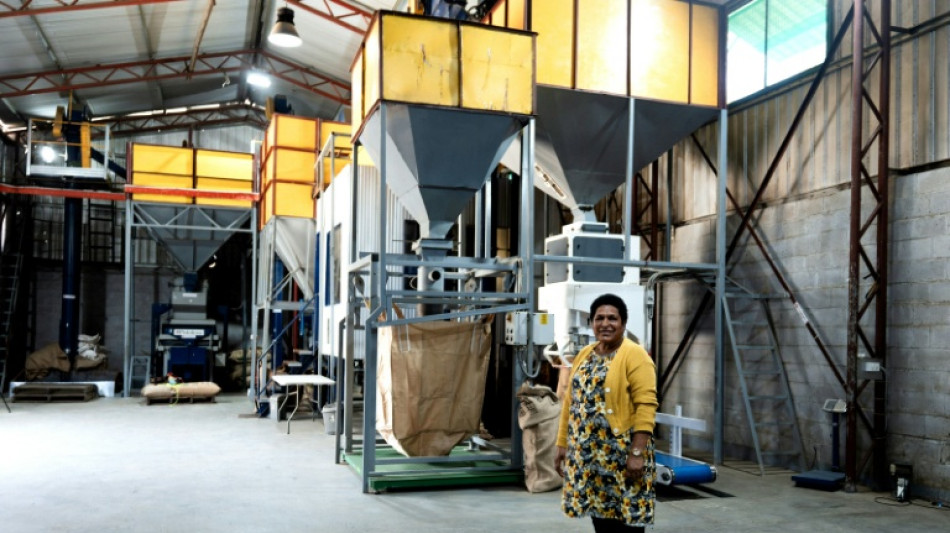
In the highlands of Goroka in central PNG, Maureen Ken says she is "struggling", out of sight and mind of government officials, as she provides jobs for 80 villagers at a coffee processing factory she built six years ago in her home town.

Women dry coffee in the sun and hand pick beans. Men move hundreds of sacks of beans that arrive from growers, preparing for export to Australia.

"The kids are going to school because they can pay for the school fees. They can pay for medical bills in the hospital and buy medicine," she told AFP in a telephone interview.

"They are working and supporting their families. They really appreciate that."

Her coffee company, Lass Malo, is also transforming life for growers.

"We drive into the remote areas with rugged roads and mountains with our own vehicles, we pay for our own fuel. Then we bring in the coffee to the factory, and they get a good door price at the factory," she said.

But she adds, "All my vehicles now have wear and tear. I am still struggling here."

Reshika Singh, the World Bank's senior economist for PNG, said the government needs to find ways to support private businesses, if it wants to create enough jobs.

"Agriculture is the key driver for job creation in Papua New Guinea, as the country moves up the value chain and commercialisation. But to reach there, several constraints need to be addressed and one of them is access to roads, access to transport," she said.

A third of PNG's population live more than 2 kilometres from all-season roads, cutting them off from markets, services and formal employment.

C.Dean--TFWP