Energy crisis fuels calls to cut methane emissions / Photo: © AFP/File

World officials pushed Monday for faster action to reduce methane emissions from the fossil fuel sector, arguing it would both help slow climate change and boost energy security as the Middle East war chokes off supply.
Using its role as rotating president of the Group of Seven industrialised powers, France convened government officials, industry leaders and experts to build momentum on cutting methane emissions ahead of the UN's COP31 climate summit in November.
Methane, the second biggest contributor to climate change, stays in the atmosphere for far less time than carbon dioxide, but its warming effect is roughly 80 times more potent over a 20-year period.
"I sincerely hope that the discussions we will have today will enable us to join our forces to accelerate the implementation of effective solutions to reduce methane emissions," French Ecological Transition Minister Monique Barbut said in a speech.
"Of course, action on methane is not a fight of any single actor and nobody can win it alone," Barbut said.
Under the Global Methane Pledge, launched at COP26 in Glasgow in 2021, nearly 160 countries committed to cutting global methane emissions by 30 percent by 2030 compared with 2020 levels.
But Barbut said the world remains "very far" from meeting that goal.
Around 60 percent of methane emissions are linked to human actions.
The fossil fuel sector -- oil, gas and coal -- accounts for 35 percent of methane emissions from human activity, the International Energy Agency said in a report on Monday.
"Yet there is still no sign that methane emissions from fossil fuel operations are falling, despite well-known and proven mitigation pathways," according to the IEA's Global Methane Tracker 2026.
Such emissions from the sector remained "near record highs", the report said.
- Time to 'pull this lever' -
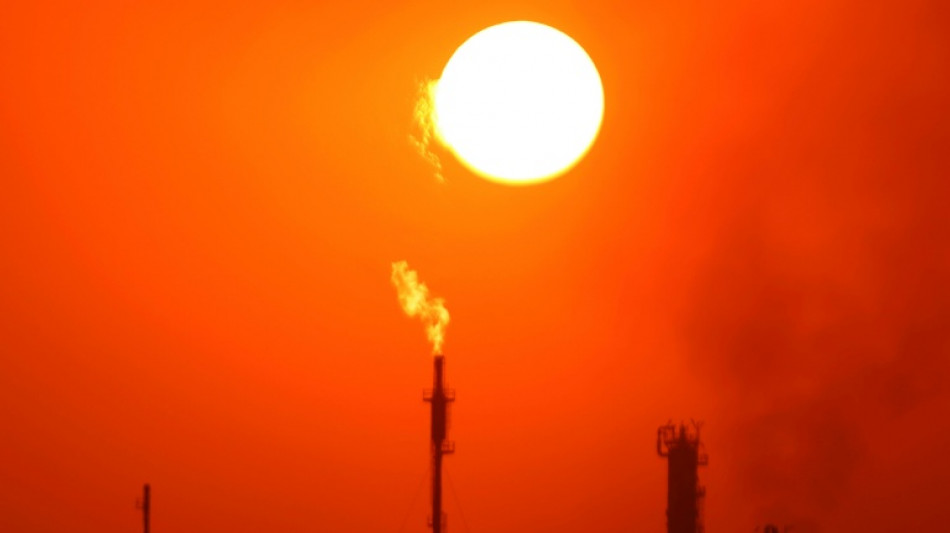
Methane emissions from the energy sector come from leaks from gas pipelines and other infrastructure, or are deliberately released during maintenance procedures.
Officials at the Paris conference said that cutting leaks and flaring from oil and gas operations could increase the availability of energy while slashing planet-heating emissions.
"We could have three times more gas on the market if we eliminated this waste," the European Union's energy commissioner, Dan Jorgensen, said. "This shows that methane abatement and energy security are not competing priorities."
"Methane is the single fastest lever we have to limit near-term warming. We can no longer wait to pull this lever," Jorgensen added.
Oil prices have soared since the United States and Israel launched the war against Iran in late February and Tehran closed the Strait of Hormuz in response.
The IEA said 20 percent, or around 110 billion cubic metres, of the world's liquefied natural gas (LNG) flowed through the Strait of Hormuz last year.
Nearly 100 billion cubic metres of natural gas could be made available annually through a global effort to cut methane from oil and gas operations, the IEA said.
A further 100 billion cubic metres would be unlocked through the elimination of non-emergency flaring worldwide, it added.
"Reducing methane emissions remains one of the best things we can do to slow global warming while cleaning up our air, improving public health, and increasing our energy security," British energy minister Ed Miliband said in a video message.
Agriculture is also a major emitter through livestock -- cows and sheep release methane during digestion and in their manure -- and rice cultivation, where flooded fields create ideal conditions for methane-emitting bacteria.
Discarded household waste also creates large amounts of methane if left to rot in landfills.
"We must, however, be clear the energy sector offers today the fastest and often the most cost effective reductions," Barbut said.
T.M.Dan--TFWP