Ismail Kadare: A bright light in Albania's darkest days
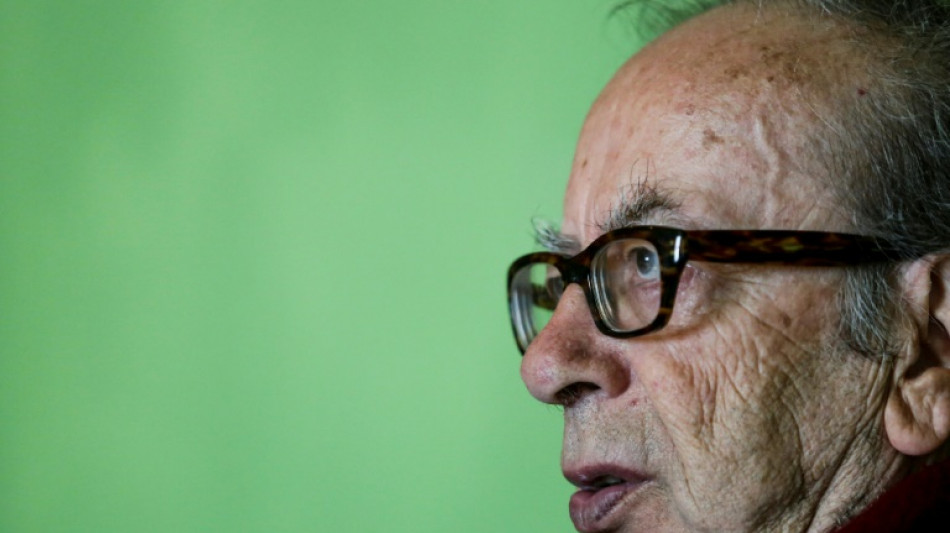
/ Photo: © AFP/File

Novelist Ismail Kadare -- who has died aged 88 -- used his pen as a stealth weapon to survive Albania's paranoid communist dictator Enver Hoxha.
His sophisticated storytelling -- often likened to that of George Orwell or Franz Kafka -- used metaphor and irony to reveal the nature of tyranny under Hoxha, who ruled Albania from 1946 until his death in 1985.
"Dark times bring unpleasant but beautiful surprises," Kadare told AFP.
"Literature has often produced magnificent works in the dark ages as if it were seeking to remedy the misfortune inflicted on people," he said.
He was often tipped to win a Nobel prize for his towering body of work which delved into his country's myths and history to dissect the mechanisms of totalitarianism.
Kadare's novels, essays and poems have been translated into more than 40 languages, making him the Balkans' best-known modern novelist.
The prolific writer broke ranks with isolated Albania's communists and fled to Paris a few months before the government collapsed in the early 1990s.
He wrote about his disillusionment in his book "The Albanian Spring -- The Anatomy of Tyranny".
- Demanded his death -
Born in Gjirokaster in southern Albania on January 28, 1936, Kadare was inspired by Shakespeare's "Macbeth" as a child and counted the playwright, as well as Dante and Cervantes, among his heroes.
Ironically, the dictator Hoxha hailed for the same mountain town.
Kadare studied languages and literature in Tirana before attending the Gorky Institute of World Literature in Moscow.
After returning to Albania in 1960, he initially won acclaim as a poet before publishing his first novel "The General of the Dead Army" in 1963, a tragicomic tale that was later translated into dozens of other languages.
His second novel, "The Monster", about townspeople who live in a permanent state of anxiety and paranoia after a wooden Trojan horse appears outside the town, was banned.
His 1977 novel "The Great Winter", though somewhat favourable towards the regime, angered Hoxha devotees who deemed it insufficiently laudatory and demanded the "bourgeois" writer's execution.
Yet while some writers and other artists were imprisoned -- or even killed -- by the government, Kadare was spared.
Hoxha's widow Nexhmije said in her memoirs that the Albanian leader, who prided himself on a fondness for literature, saved the internationally acclaimed author several times.
Archives from the Hoxha era show that Kadare was often close to being arrested, and after his poem "Red Pashas" was published in 1975 he was banished to a remote village for more than a year.
Kadare, for his part, denied any special relationship with the dictator.
"Against whom was Enver Hoxha protecting me? Against Enver Hoxha," Kadare told AFP in 2016 of the brutal, all-powerful ruler.
- 'Writers don't have to bow' -
Academics have often pondered whether Kadare was a darling of Hoxha or a brave author risking prison and death?
"Both are true," suggested French publisher Francois Maspero, who raised the question in his book "Balkans-Transit".
Writing such work under a government in which a single word could turn against its author "requires, above all, determination and courage", Maspero wrote.
"My work obeyed only the laws of literature, it obeyed no other law," Kadare said.
In 2005 he won the inaugural Man Booker International Prize for his body of work. He was described by chief judge John Carey as "a universal writer in a tradition of storytelling that goes back to Homer".
The father of two reflected on his native Balkans in "Elegy for Kosovo" published in 2000, a year after NATO went to war against Belgrade to end Serbian repression in the predominantly ethnic Albanian province.
Speaking to AFP in 2019, Kadare said he enjoys seeing his name "mentioned among the candidates" for the Nobel, even if the topic "embarrasses" him.
"I am not modest because, in principle, I am against modesty," he said.
"During the totalitarian regime, modesty was a call to submission. Writers don't have to bow their heads."
burs-rob-bme/ljv/gd/fg
D.Johnson--TFWP